Triund Trek Dharamshala is one of the most popular hikes near McLeod Ganj, but the online advice around it is surprisingly messy. Some guides measure the trek from Gallu, some from Dharamkot or McLeod Ganj, and that is why you will see different distance numbers, mixed-up starting points, and vague cost or permit details.
This guide is here to make Triund Trek Dharamshala clear before you go. It will help you understand where the trek actually starts, how far it really is, whether a one-day hike is enough, what the route feels like, and what costs or rules matter on the ground.
It is written for first-time trekkers, Dharamshala and McLeod Ganj visitors, DIY hikers, solo travelers, and anyone trying to decide whether Triund is the right trek for their trip. If you are still comparing it with other trails nearby, start with Best Treks in Dharamshala.
And if you are ranging further afield, the Bir to Billing trail an hour down the valley is another easy-to-moderate option, one of the things to do in Bir Billing beyond the famous flight.
If Triund is just one part of a wider visit, keep your Dharamshala Travel Guide 2026 in mind as you plan the rest of the trip, along with my guide to the rest of the Kangra Valley if you want to explore beyond Dharamshala itself.
Table of Contents
Quick answers before you start
- Main starting point: Gallu Devi Temple side above Dharamkot
- One-way distance: roughly 5.5 km from Gallu, 6.5–7 km from Dharamkot, and up to about 9 km from McLeod Ganj
- Time to ascend: about 4 to 6 hours
- Difficulty: easy to moderate for fit beginners
- One day or overnight: both are possible, but a one-day hike is enough for many early starters
One more thing matters here. Manoratham is written from a Dharamshala-first perspective, and this guide is shaped by the questions visitors actually ask before Triund: where the trek starts, how far it really is, whether one day is enough, and what the ground reality feels like once you leave McLeod Ganj behind.
What should you know before doing Triund Trek Dharamshala?
Triund Trek Dharamshala is a short but steady mountain hike above McLeod Ganj that most reasonably fit first-time trekkers can do. The important things to know before going are simple: the starting point is often misunderstood, the distance depends on where you begin, the last stretch feels steeper than many guides admit, and your experience changes a lot depending on whether you do it in one day or stay overnight.
Triund Trek Dharamshala quick facts
Before getting into route details, logistics, and timing, here are the basics most people actually need.
Triund Trek Dharamshala: Everything You Need to Know Before You Start
| Key Detail | Quick Answer |
|---|---|
| Trek name | Triund Trek |
| Main base area | McLeod Ganj / Dharamkot above Dharamshala |
| Most common starting point | Gallu Devi Temple side |
| Typical one-way distance | Roughly 5.5 to 9 km depending on where you start |
| Typical round trip | Around 11 to 18 km total |
| Time to ascend | About 4 to 6 hours |
| Time to descend | About 2.5 to 4 hours |
| Difficulty | Easy to moderate for fit beginners |
| Best for | First-time trekkers, weekend hikers, strong views without a multi-day trek |
| Best seasons | Spring, early summer, and post-monsoon |
| One day or overnight? | Both are possible |
| Guide required? | Usually no for the main trail |
| Most common planning mistake | Treating Dharamshala, McLeod Ganj, Dharamkot, and Gallu as the same start point |
Who is Triund Trek Dharamshala best for?
Triund Trek Dharamshala is a strong choice for travelers who want a real mountain trail without committing to a technical or multi-day expedition. It gives you effort, elevation, and rewarding views, but it still fits into a short Dharamshala trip if you plan it properly.
Triund Trek Dharamshala is usually a good fit for:
- First-time trekkers with basic fitness
- Travelers staying in McLeod Ganj, Dharamkot, Naddi, or upper Dharamshala
- People who want one serious outdoor day during a 2- to 5-day trip
- Solo travelers who prefer a known, busy trail over an isolated one
- Visitors who want Himalayan views without specialized gear
- Travelers choosing between a same-day hike and an overnight stay
This trek also works well inside a broader trip plan. If you are trying to fit Triund into a short visit, your Dharamshala Itinerary matters more than another generic trek list because timing is what usually makes or breaks the day.
Who should think twice before doing Triund Trek Dharamshala?
Triund Trek Dharamshala is often called an easy trek, but that label is too loose. It is better to think of it as accessible for fit beginners, not effortless for everyone.
You should plan more carefully, or at least manage expectations, if any of these apply:
- You are very sedentary and not used to 4 to 6 hours of steady uphill walking
- You are reaching Dharamshala after a long overnight journey and want to trek immediately
- You are going in heavy rain, uncertain winter weather, or poor visibility
- You struggle more with descents than climbs
- You are trekking with very young children, elderly parents, or anyone who tires quickly
- You are assuming Triund Trek Dharamshala will feel like a casual walk because it is popular
The part most people underestimate is not just the length. It is the continuous climb, especially once fatigue starts to build. That becomes much more obvious if you start late, carry too much, or try to force a same-day return without enough time in hand.
If weather is shaping your decision, check your wider Dharamshala Weather Guide before locking the plan. If you are trekking alone and want a fuller read on practical safety and local movement, pair this with Solo Female Traveller in Dharamshala.
Triund Trek Dharamshala is worth doing for the right traveler. The real mistake is not choosing the trek. The mistake is starting it with a vague idea of where it begins, how long it really is, and whether your version of “easy” matches the trail in front of you.
Where does Triund Trek Dharamshala actually start?
Triund Trek Dharamshala usually starts from the Gallu Devi Temple side above Dharamkot, not from central Dharamshala. That is the most common and most practical starting point for first-time trekkers. You can begin lower down from McLeod Ganj, Dharamkot, or even Bhagsu, but those versions change the distance, time, and effort.
If the local geography still feels blurred, that is normal. Many first-time visitors mentally merge Dharamshala, McLeod Ganj, Dharamkot, and Gallu into one area. They are connected, but they are not the same starting point.
Is Gallu Devi Temple the main starting point?
Yes. For most visitors, Gallu is the main and most useful starting point for the trek. It is the point from which the standard climb becomes clear, structured, and easier to measure.
That is why Gallu matters so much:
- It is the most commonly used base for the standard route
- It is where checkpoint logic usually becomes relevant
- It gives the cleanest version of the trek for a same-day plan
- It avoids inflating the distance unnecessarily if your real goal is Triund
Can you start Triund Trek Dharamshala from McLeod Ganj, Dharamkot, or Bhagsu?
Yes, but those are not identical versions of the trek.
Triund Trek Starting Points Compared: Distance, Route & What to Expect
| Starting point | Who usually uses it | Approximate one-way distance | What to know |
|---|---|---|---|
| Gallu Devi Temple | Most first-timers and standard-route trekkers | About 5.5 to 6 km | Cleanest and most practical main start |
| Dharamkot | People staying nearby or walking up instead of riding to Gallu | About 6.5 to 7 km | Very workable, but slightly longer than Gallu |
| McLeod Ganj | Visitors starting directly from town | About 8.5 to 9 km | Adds distance before the main trekking rhythm settles |
| Bhagsu side | People taking a less standard alternative approach | Variable | Usually longer-feeling and steeper in parts; less straightforward |
So when someone says they did Triund Trek Dharamshala from McLeod Ganj, that does not mean their numbers are wrong. It usually means they are measuring from a lower point than Gallu.
Which starting point makes the most sense for most trekkers?
For most people, Gallu makes the most sense. Dharamkot is the next cleanest option if you are already staying there and do not mind adding some uphill walking before the standard route settles in.
McLeod Ganj can still work, but it often makes the day feel longer than first-timers expect. Bhagsu is better treated as an alternative route choice, not the default option.
In simple terms:
- Choose Gallu if you want the most practical version
- Choose Dharamkot if you want a slightly longer but still logical start
- Choose McLeod Ganj only if you know you are deliberately adding distance
- Do not choose Bhagsu casually just because it looks nearby on the map
How do you reach the Triund trail from Dharamshala or McLeod Ganj?
To reach the Triund trail, most travelers first come up from Dharamshala to McLeod Ganj or Dharamkot, then continue to the Gallu side on foot or by a short local ride. In practical terms, the trek is not something you simply “start from Dharamshala town” unless you are intentionally building a much longer approach into the day.
This matters because many people plan Triund as if Dharamshala, McLeod Ganj, and Gallu are all one easy cluster. They are close enough to connect, but not close enough to ignore timing.
How to reach Gallu or Dharamkot from Dharamshala
If you are staying in lower or central Dharamshala, your first job is to get yourself up to the McLeod Ganj or Dharamkot side before the actual trekking logic begins.
The practical sequence is usually:
- Reach Dharamshala first using your wider article on How to Reach Dharamshala
- Move up toward McLeod Ganj or Dharamkot
- Continue toward Gallu if that is your chosen start
The important thing is not the mode of transport. It is not wasting the cool morning hours before the climb even begins.
How to reach the trailhead from McLeod Ganj
If you are already in McLeod Ganj, the trail is much easier to plan because you are close to the useful upper side of town. From there, most people either:
- Go up toward Gallu before starting the main trek
- Begin lower and accept the extra distance from McLeod Ganj or Dharamkot
This is why your base matters. If you want an early, cleaner start, it is often smarter to stay in the upper side of town the previous night instead of commuting up from lower Dharamshala in the morning. For that, your Best Dharamshala Hotels guide is more useful than last-minute improvisation.
Taxi, parking, and when to start
For most first-timers, the key question is not “Can I reach the trailhead?” It is “How much energy and daylight am I wasting before I even begin?”
The practical rule is simple:
- The higher and cleaner your starting point, the easier the day feels
- The earlier you begin, the better the climb and descent usually go
- If you are driving, think in terms of reaching the Gallu side cleanly, not just “somewhere near Triund”
A useful local truth: many tired Triund days start not on the trail, but in the morning confusion before the trail.
What is the real distance of Triund Trek Dharamshala?
The real distance of Triund Trek Dharamshala depends entirely on where you start measuring from. That is why you will see numbers like 5.5 km, 7 km, 9 km, and even more online. They are usually referring to different starting points, not describing one identical trek badly.
For most first-time readers, this is the cleanest way to understand it: Gallu gives you the shortest standard version, Dharamkot adds some distance, and McLeod Ganj adds more.
Distance comparison for Triund Trek Dharamshala
| Starting point | Approximate one-way distance | Approximate round trip | Typical ascent time |
|---|---|---|---|
| Gallu Devi Temple | About 5.5 to 6 km | About 11 to 12 km | About 4 to 5 hours |
| Dharamkot | About 6.5 to 7 km | About 13 to 14 km | About 4 to 5.5 hours |
| McLeod Ganj | About 8.5 to 9 km | About 17 to 18 km | About 5 to 6 hours |
| Bhagsu side | Variable | Variable | Usually slower and less straightforward for first-timers |
These are planning numbers, not stopwatch promises. Your pace, weather, breaks, and exact route choices still matter.
How far is Triund from Gallu?
From Gallu, Triund is usually treated as roughly 5.5 to 6 km one way. This is the number many people are actually looking for when they ask about the distance, because Gallu is the most practical main start.
How far is Triund from Dharamkot?
From Dharamkot, Triund is usually treated as roughly 6.5 to 7 km one way. This version makes sense if you are already based there and want to walk straight into the trek instead of moving first to Gallu.
How far is Triund from McLeod Ganj?
From McLeod Ganj, Triund is usually treated as roughly 8.5 to 9 km one way. That is why some blog posts make the trek sound much longer than others: they are starting lower down and folding that extra approach into the total.
Why do different guides quote different distances?
Because they are not always talking about the same start.
Most distance confusion happens for one of these reasons:
- One guide starts from Gallu
- Another starts from Dharamkot
- Another starts from McLeod Ganj
- Some people quote one-way distance
- Others quietly quote a longer route logic or fold in extra walking
So the internet is not always wrong about Triund. It is often just imprecise about where the trek begins.
What is the Triund Trek Dharamshala route like from start to top?
The standard Triund Trek Dharamshala route is straightforward to follow if you start from the Gallu side: you pass the forest checkpoint, move through a shaded uphill section, cross a sequence of rest points and tea stops, and then finish with a steeper final climb to the open ridge. For most trekkers, the route is not confusing, but the last stretch feels harder than the early part of the hike.
This section assumes the most commonly used route for Triund Trek Dharamshala: the Gallu Devi Temple side above Dharamkot and McLeod Ganj. That is the route most first-time trekkers end up using because it is the most practical and the easiest to explain clearly.
What happens at the Gallu checkpoint?
If you start Triund Trek Dharamshala from the Gallu side, expect a checkpoint before the main climb begins. In practical terms, this is where the trek starts feeling official rather than casual.
What usually matters at Gallu:
- Your name and basic details may be noted down
- You may be asked for an ID
- Bags may be checked, especially if local authorities are monitoring plastic or camping-related items
- Rules can change with season, weather, crowding, or local enforcement
- Starting late is a bad idea even if you are technically allowed onward
A local Dharamshala point that many visitors miss: Gallu is not the same as McLeod Ganj. People often sleep in McLeod Ganj, have breakfast late, take their time getting up to Gallu, and only then realize they have already lost the cool morning hours. If you are still planning the broader arrival into town, sort that first through How to Reach Dharamshala instead of treating Triund as a last-minute add-on.
What are the main landmarks on the Triund Trek Dharamshala trail?
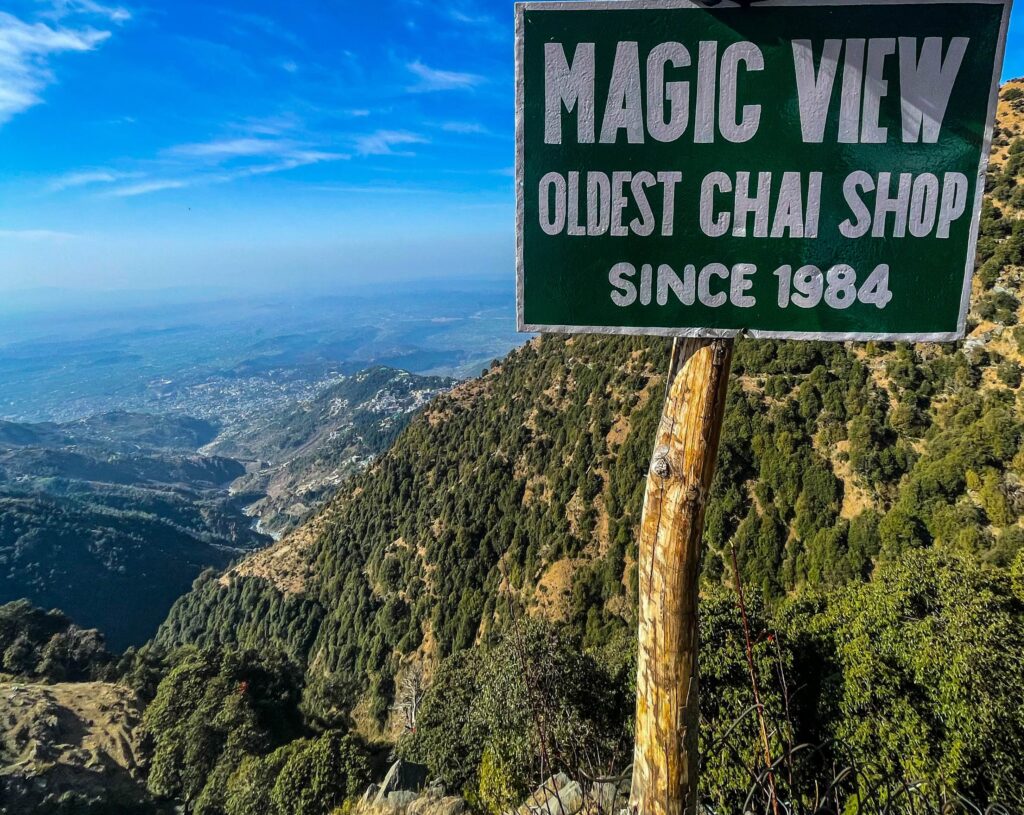
The Triund Trek Dharamshala route is easier to understand if you think of it in stages rather than as one continuous climb.
The usual flow looks like this:
- Gallu side starting point and checkpoint
- Initial forested trail with a gentler rhythm through the first main uphill stretch
- Midway rest points and small cafe stops where many people pause too long or too often
- A more tiring upper section with sharper effort and a more exposed feel
- Final steeper bends and switchback-like climbing where the trek starts feeling properly earned
- Final approach to the open Triund ridge
What most trekkers notice on the trail:
- The first section usually feels manageable and can create false confidence
- The path is well-known and usually easy to follow on the standard route
- There are rest stops where people pause, snack, and recalibrate
- As you gain height, the route feels more exposed and physically demanding
- The final climb matters more than the numbers on paper
One practical way to think about Triund Trek Dharamshala is this: the trail is simple, but the effort accumulates. That is why people who are otherwise okay in the first half suddenly slow down in the later section.
Which part of the Triund Trek Dharamshala route feels hardest?
For most people, the hardest part of Triund Trek Dharamshala is the later stretch after the easier rhythm of the first half is gone and fatigue has already set in. The final climb is where the trek stops feeling like a scenic uphill walk and starts feeling like real work.
This part feels toughest when:
- You started late and are climbing in stronger sun
- You climbed too fast in the first half
- You are carrying more weight than necessary
- You came straight from a long journey and are already tired
- The weather is humid, rainy, or cold enough to slow your body down
The route can also feel harder on the way down than many people expect. The descent is shorter in time, but it can be rougher on knees, ankles, and concentration, especially if you are tired or trying to beat daylight.
A practical Dharamshala insight: weekend trekkers often underestimate the combination of crowding, late starts, and fatigue. On a clear weekday, Triund Trek Dharamshala usually feels more manageable than on a crowded weekend when your breaks, pace, and descent timing become less clean.
How difficult is Triund Trek Dharamshala, and can beginners do it?
Triund Trek Dharamshala is best described as easy to moderate. It is beginner-friendly by Himalayan trekking standards because the trail is known, the route is fairly clear, and no technical climbing is involved, but it is still a continuous uphill mountain walk that can feel demanding if your fitness, timing, or expectations are off.
This is where many online guides oversimplify the trek. They call it easy and stop there. That is not precise enough. Triund Trek Dharamshala is easy compared with longer and higher Himalayan treks, but for a casual traveler who rarely hikes uphill for hours, it can still feel properly tiring.
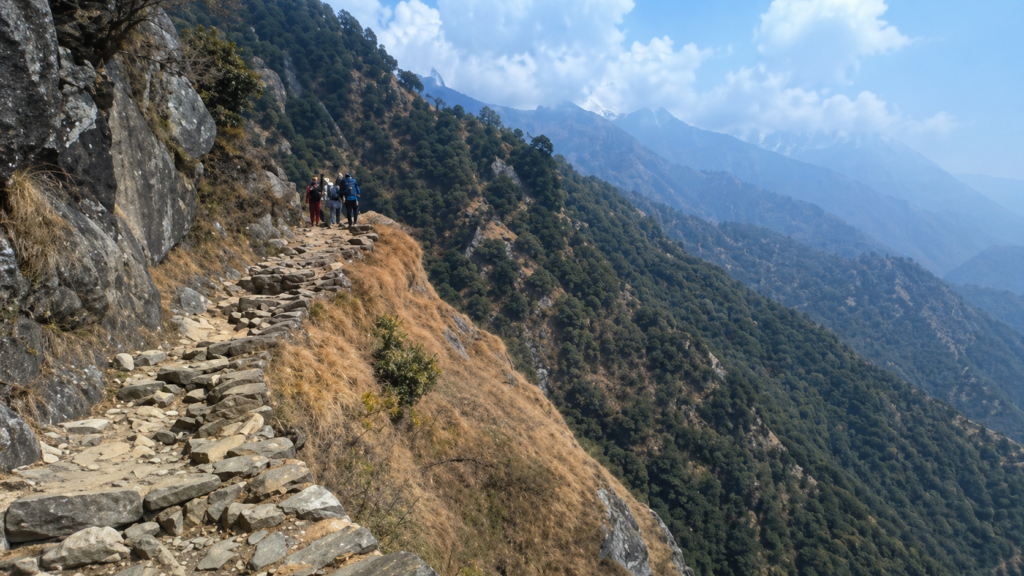
Is Triund Trek Dharamshala easy or moderate?
The most accurate answer is: Triund Trek Dharamshala is easy to moderate for fit beginners.
Why it gets called easy:
- The trail is popular and usually well-defined
- The standard route does not require technical gear
- Thousands of first-time trekkers do it successfully
- It can be completed in a day if you are reasonably fit and start on time
Why it also feels moderate:
- It is a sustained uphill climb, not a flat walk
- The later section feels steeper and more tiring
- Weather changes can make the trail feel harder
- Descending can be tougher than expected if your knees are weak
- Your experience depends heavily on start time and energy management
So the real answer is not just about terrain. It is about effort over time.
Can beginners do Triund Trek Dharamshala?
Yes, most beginners can do Triund Trek Dharamshala if they start early, pace themselves, carry only what they need, and do not mistake a popular trek for an effortless one.
Beginners are usually fine if they do these things well:
- Start early instead of beginning late in the day
- Wear proper shoes with grip
- Carry enough water but not an overloaded bag
- Take short, steady breaks rather than long lazy ones
- Accept a slower pace instead of trying to “push through”
- Check weather conditions before heading up
A beginner does not need to be athletic, but basic walking fitness matters. If you can handle long uphill walks without panicking about pace, Triund Trek Dharamshala is usually very doable. If your trip is still flexible and you are comparing it with other easier or harder options, go back to Best Treks in Dharamshala before locking your choice.
Who is likely to struggle on Triund Trek Dharamshala?
Some people struggle on Triund Trek Dharamshala not because the trail is extreme, but because the plan is poor.
You are more likely to struggle if:
- You are largely sedentary and not used to continuous uphill movement
- You start the trek after a late breakfast and lose the cooler morning window
- You are doing it on the same day you arrive tired from Delhi or Chandigarh
- You carry too much gear for a short trek
- You are nervous on descents or have weak knees
- You are attempting it in poor weather without adjusting your expectations
- You keep hearing “easy trek” and assume preparation does not matter
A useful rule: if your fitness is average but your timing is good, Triund Trek Dharamshala usually goes fine. If your fitness is average and your timing is bad, the same trek can feel much harder than the internet promised.
Should you do Triund Trek Dharamshala in one day or stay overnight?
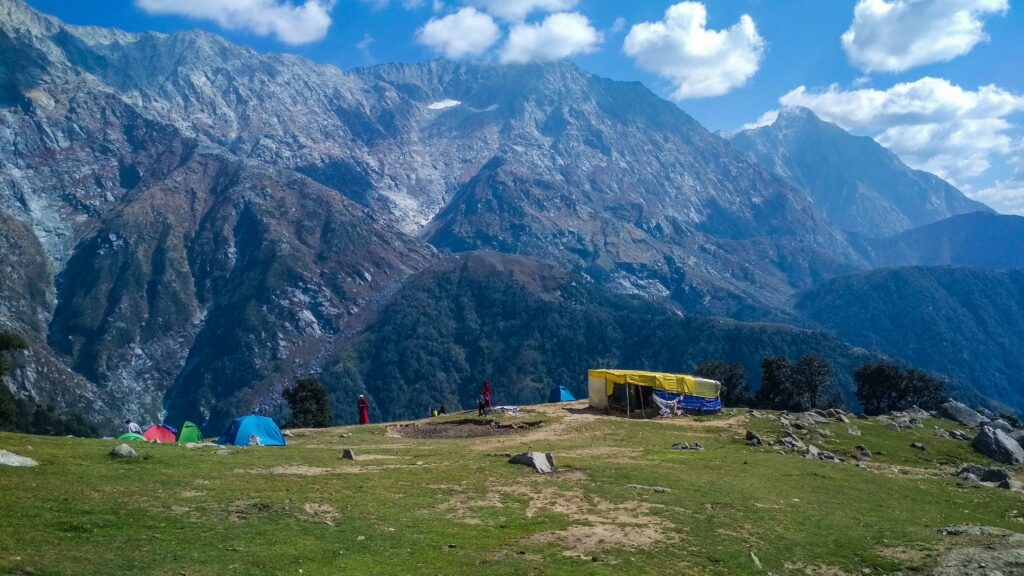
Most reasonably fit travelers can do Triund Trek Dharamshala in one day if they start early and keep moving at a sensible pace. Overnight is better if you want a less rushed experience with sunset or sunrise, but it only makes sense if weather, stay options, comfort level, and current on-ground rules all line up.
This is one of the most important planning decisions for Triund Trek Dharamshala because it changes everything: your start time, what you carry, how much you spend, and how tiring the day feels.
Triund Trek: One-Day vs Overnight Stay (Which Option Is Better?)
| Option | Best for | Main advantages | Main trade-offs |
|---|---|---|---|
| One-day Triund hike | Fit travelers with limited time, short Dharamshala itineraries, people who do not care about camping | Simpler logistics, lighter bag, lower cost, cleaner plan | Longer single-day effort, less margin for a late start, no sunset or sunrise at the top |
| Overnight Triund stay | Travelers who want a slower experience, sunrise or sunset views, photography, or a more relaxed pace | More time at the top, less rushed climb, stronger mountain feel | More planning, more gear or stay coordination, colder night, basic facilities, rules may matter more |
The important thing is not to romanticize either option. A one-day Triund Trek Dharamshala can be excellent if you are efficient. An overnight stay can be memorable, but only if you are actually comfortable with simple mountain conditions.
Who should choose a one-day Triund Trek Dharamshala?
A one-day Triund Trek Dharamshala hike is usually the better choice for:
- Travelers with a short 2- or 3-day Dharamshala trip
- People staying in McLeod Ganj, Dharamkot, or nearby and able to start early
- Trekkers who want the trail experience without worrying about night-stay logistics
- Visitors who prefer carrying less weight
- People unsure about cold nights, basic facilities, or overnight weather
A local planning point: if you are already trying to fit monasteries, cafes, local walks, and Triund into one short trip, a clean day hike often makes more sense than forcing an overnight stay. That is where your Dharamshala Itinerary matters more than another random trek checklist. And if you are trying to stay as close as possible to the upper part of town for an early start, your Best Dharamshala Hotels guide is more useful than figuring it out at the last minute.
Who should stay overnight at Triund trek in Dharamshala?
An overnight Triund Trek Dharamshala plan can work better for:
- Travelers who care deeply about sunset, sunrise, or night views
- People who want more time on top without feeling rushed
- Photographers and slower walkers
- Visitors who have one extra day and are comfortable with simple mountain stays
- Trekkers who want the emotional high point of sleeping above the valley, not just reaching the ridge and coming back
That said, overnight only improves the experience if you are prepared for what it involves. Cold, crowding, uncertain weather, and basic facilities can take away the romance quickly if your expectations are unrealistic.
If you are staying in Dharamshala for longer and using the town as a base for multiple slow days rather than one rushed adventure, a quieter Best Homestay in Dharamshala for Long-Term Stays can sometimes make more sense than trying to optimize everything around one night on the hill.
When is a same-day return on Triund Trek Dharamshala a bad idea?
A same-day Triund Trek Dharamshala return becomes a poor choice when the timing, weather, or group ability is wrong.
Avoid forcing a same-day return if:
- You are starting late
- Rain, fog, or winter conditions are already slowing movement
- You are trekking with children, older family members, or very slow walkers
- You are tired from travel and not fully fresh
- Your group keeps taking long breaks and losing momentum
- You are likely to descend close to dark
- Your knees already dislike downhill walking
The key mistake is not choosing a one-day hike. The key mistake is choosing it without enough margin.
For many travelers, the best version of Triund Trek Dharamshala is simple: start early, trek steadily, enjoy the ridge properly, and come back before your body and the light both start dropping. If you want that early start to go smoothly, sort your stay and breakfast plan the day before instead of improvising in the morning. A simple upper-town base and a sensible cafe choice usually work better than a slow, late start, which is where your Best Cafes in Dharamshala guide can quietly help.
What does Triund Trek Dharamshala cost?
Triund Trek Dharamshala is not an expensive trek by Himalayan standards, but the total cost depends on one decision more than anything else: are you doing it as a simple day hike or turning it into an overnight experience? A DIY same-day trek can stay fairly lean if you are already based in McLeod Ganj or Dharamkot, while overnight stays, tent charges, guides, and transport to the trailhead push the budget up quickly.
The biggest mistake people make here is mixing up three different things:
- The cost of the trek itself
- The cost of your wider Dharamshala trip
- The cost of optional extras like tents, guides, and transport
So before you plan Triund Trek Dharamshala, separate your trek budget from your trip budget. If Triund is just one part of a longer stay, your wider Cost of Living in Dharamshala will shape your decisions more than the trek itself.
Triund Trek Cost Breakdown: Self-Planned vs Guided (2026 Pricing Guide)
Before you plan your budget, here’s the simplest way to think about it: most people either do a self-planned Triund Trek (no guide, flexible setup) or choose a guided package (everything arranged).
Actual costs can vary based on season, crowd levels, and what’s operating on the ground—but the ranges below reflect what most travelers realistically spend.
| Trek style | Usually includes | Approximate cost per person | Best for |
|---|---|---|---|
| Self-planned day hike | Basic food, water, local transport if needed, and any checkpoint or entry-related charges if enforced | Roughly ₹300 to ₹800 | Fit travelers who want the simplest, lowest-effort version of the Triund Trek |
| Self-planned overnight | Day-hike basics plus tent or overnight stay arrangement, extra food, and warmer packing margin | Roughly ₹1,200 to ₹3,000+ | Travelers who want sunrise or sunset views without booking a full guided package |
| Guided package | Some mix of guide, meals, tent or stay coordination, and basic on-ground support | Roughly ₹1,500 to ₹3,500+ | First-time trekkers who want less planning friction and a more structured experience |
| Full trip-style budget | Trek cost plus your stay in Dharamshala or McLeod Ganj, transport into town, and meals before and after | Much higher and highly variable | Travelers planning a full Dharamshala trip rather than just the trek itself |
The reason online numbers for Triund Trek Dharamshala look messy is that many pages quietly include travel from Delhi or Chandigarh, hotel nights, and meals in town inside a “trek cost” answer. That is not useful planning.
What is the budget for a self-planned day hike?
A self-planned dday hike is usually the cleanest and most budget-friendly version of Triund Trek Dharamshala. If you are already staying in McLeod Ganj, Dharamkot, or nearby, your spend can stay relatively controlled.
A reasonable self-planned day-hike budget usually includes:
- Simple breakfast before starting
- Water and a few snacks
- Any checkpoint or entry-related payment if being collected
- Transport to Gallu only if you are not walking up to the start
- A small cash buffer for trail tea, snacks, or timing problems
For many people, the day-hike version works best because it keeps the plan simple. If you are trying to fit Triund into a short trip, your Dharamshala Itinerary matters more here than chasing the absolute cheapest number online.
What does an overnight Triund Trek Dharamshala cost?
An overnight Triund Trek Dharamshala plan costs more because you stop paying only for movement and start paying for mountain logistics.
That extra spend usually comes from:
- Tent or overnight stay arrangement
- More food and hot drinks
- Heavier or warmer packing needs
- Possible local price fluctuation in peak periods
- Higher margin for transport or coordination mistakes
Overnight can absolutely be worth it, but not because it is automatically “better.” It is worth it if you really care about sunrise, sunset, photography, or a slower pace at the top. If you do not care about those things, a clean day hike often gives better value.
A practical local alternative: if your real goal is to enjoy Dharamshala without rushing, staying in town and doing Triund as a day trek can be the smarter use of money. That is where your Best Dharamshala Hotels or Best Homestay in Dharamshala for Long-Term Stays can matter more than spending extra for a forced overnight on the ridge.
Is a guided package worth paying for?
A guided package for Triund Trek Dharamshala is worth paying for only if it removes a problem you actually have.
A guide or package may make sense if:
- You are uncomfortable planning the trail and timing yourself
- You are traveling with family or a mixed-ability group
- You want overnight logistics handled for you
- You are the kind of traveler who values convenience over the lowest possible cost
It may not be worth paying for if:
- You are fit, organized, and comfortable on known trails
- You are doing the standard route in normal conditions
- You are already staying close to the starting side
- You would rather keep the bag light and the plan simple
The real question is not “Do people hire guides for Triund Trek Dharamshala?” The real question is “What problem is the guide solving for me?” If the answer is unclear, paying for a package usually adds more cost than value.
What costs are mandatory on Triund Trek Dharamshala, and what can you skip?
On Triund Trek Dharamshala, the only costs that really matter are the ones your version of the trek actually requires. A same-day DIY hike has a very different cost structure from an overnight stay, and many online guides blur that difference badly.
The easiest way to plan this is to separate necessary spend, conditional spend, and comfort spend.
Triund Trek Costs Explained: Mandatory vs Optional Expenses (What You Really Need to Pay)
| Cost item | Mandatory or optional? | When it applies | Practical note |
|---|---|---|---|
| Basic food and water | Mandatory | For everyone | Even on a short Triund Trek Dharamshala plan, this is not skippable |
| Checkpoint / entry-related charge if enforced | Mandatory when being collected | Usually at the Gallu side if applicable that day | Do not assume old “free trek” advice is still accurate |
| Transport to trailhead | Optional | Only if you are not already close enough to walk | Walking can save money but costs time and energy |
| Guide | Optional | If you want help, coordination, or reassurance | Not essential for most standard-route trekkers |
| Overnight tent / stay cost | Mandatory only for overnight plans | If you are sleeping on or near the top | This is not part of a normal day-hike budget |
| Tea / snacks on trail | Optional | Depends on your style | Carrying a few basics from town is usually cheaper |
| Extra gear or rentals | Optional | If your own gear is not suitable | More relevant in cold or wet conditions |
This is where Triund Trek Dharamshala planning becomes much easier: stop asking “How much does the trek cost?” and start asking “Which version of the trek am I actually doing?”
Do you need a permit for Triund Trek Dharamshala, and what rules matter right now?
Do not assume Triund Trek Dharamshala is just a casual free-for-all walk with no checks. In practice, the Gallu side often functions as the control point for the standard route, ID can matter, and any exact fee or rule you read online should be treated as a planning range, not a forever-fact.
Last planning note: this guide is written for 2026 travel planning. Checkpoint fees, timing restrictions, and overnight enforcement can change locally, so verify the latest ground reality before you start.
This is the part of Triund Trek Dharamshala where bad blog content causes the most confusion. Some pages make the trek sound fully free. Others mix up checkpoint entry, permit language, and camping charges as if they are the same thing. They are not.
Do you need a permit or checkpoint entry for Triund Trek Dharamshala?
The practical answer is: expect a checkpoint on the standard Gallu-side route, carry ID, and do not rely on outdated “no fee, no checks” advice.
What usually matters most:
- Whether details are being recorded that day
- Whether any entry-related payment is being collected
- Whether weather or crowd conditions have tightened enforcement
- Whether overnight movement is being treated differently from a normal day hike
For Triund Trek Dharamshala, the safest planning mindset is simple: carry ID, carry some cash, and assume that what happened to another traveler last season may not exactly match your day.
What is the difference between entry fee and camping cost?
This is one of the biggest planning confusions around Triund Trek Dharamshala.
Keep the difference clear:
- Entry or checkpoint-related fee:
- This is about access, registration, or controlled movement on the route if applicable.
- Camping or overnight cost:
- This is what you pay because you are staying, pitching, or using some form of night arrangement above.
- Guide or package cost:
- This is a separate service choice and not the same thing as trail access.
Many online pages collapse all three into a single “Triund price.” That is exactly why the budgeting around Triund Trek Dharamshala feels confusing to first-time visitors.
What rules can change season to season on Triund Trek Dharamshala?
The rules around Triund Trek Dharamshala are not the kind of thing you should treat as permanently settled. Weather, crowding, local enforcement, environmental pressure, and administrative decisions can all affect how the trek is being managed.
These are the things most likely to change:
- Whether a fee is being collected and how much
- Checkpoint strictness
- Timing or late-start tolerance
- Plastic checks or bag checks
- Overnight or camping enforcement
- Restrictions in bad weather
- Movement beyond the main Triund section in rough conditions
A very practical Dharamshala rule: if the weather is unstable, do not plan Triund as if blog content written in ideal spring conditions still applies. Your Dharamshala Weather Guide matters more in those cases than any fixed trekking checklist.
The cleanest way to think about Triund Trek Dharamshala is this: separate your trek budget from your trip budget, separate your entry-related costs from your overnight costs, and treat rules as current working conditions rather than timeless facts. That alone removes most of the confusion people carry into this trek.
When is the best time to do Triund Trek Dharamshala?
The best time to do Triund Trek Dharamshala is usually spring, early summer, and the post-monsoon period, when the trail is clearer, the views are more reliable, and the climb is easier to manage. Monsoon is greener but riskier, and winter can be beautiful but is far less predictable for first-time trekkers.
For how Triund’s best months fit into the wider Dharamshala calendar, see the complete monthly travel planner.
If you’re planning the trek in summer, June is often considered the sweet spot before the full monsoon arrives. Our detailed guide to Dharamshala in June covers week-by-week weather patterns, trail conditions, mountain visibility, crowd levels, and what to expect on popular hikes like Triund.
For most travelers, the real question is not just Which month is best? It is What kind of Triund experience do I want? Clear mountain views, lighter trail conditions, fewer weather surprises, and a manageable same-day return do not always line up in every season.
Best Time for Triund Trek Dharamshala: Season-Wise Comparison (When to Go & Why)
| Season | What it is like | Best for | Main trade-offs |
|---|---|---|---|
| Spring | Pleasant temperatures, clearer mornings, more comfortable climbing | First-time trekkers, day hikes, cleaner views | Can still get busy in popular periods |
| Early summer | Strong access, long daylight, steady conditions in good weather | One-day hikes, first-timers, weekend travelers | Midday sun and crowding can make the climb feel harder |
| Monsoon | Greener slopes, dramatic clouds, misty mood | Repeat visitors, people comfortable with uncertainty | Slippery trail, blocked views, higher weather risk |
| Post-monsoon | Usually the cleanest mountain views and a sharper sky | View-focused trekkers, photography, strong weather windows | Can be colder, and conditions still need checking |
| Winter | Cold, sometimes stunning, but much less forgiving | Experienced or well-prepared trekkers with flexible plans | Ice, snow, slower movement, more uncertainty |
If you want the broader seasonal picture for the region, not just Triund, this section should naturally connect to your Dharamshala Weather Guide.
Which months are best for clear views?
If your priority is visibility, the best months for Triund Trek Dharamshala are usually the cleaner spring windows and especially the post-monsoon stretch when the air is less hazy and the mountains look sharper. For many visitors, June offers the best balance between clear Dhauladhar views, comfortable temperatures, and accessible trail conditions. Our Dharamshala in June guide explains how visibility, rainfall, and trekking conditions change across the month so you can pick the right week for your hike.
For most travelers, the best view-focused windows are:
- Spring, when temperatures are manageable and the climb feels more comfortable
- Post-monsoon, when skies often look clearer and the Dhauladhar backdrop feels more dramatic
- Stable-weather days with an early start, regardless of season
A practical Dharamshala point: even in a good month, Triund Trek Dharamshala can disappoint visually if you start too late, climb into cloud, or choose a day with unstable weather. Month matters, but same-day conditions matter more.
Is Triund worth doing in monsoon?
Yes, Triund Trek Dharamshala can still be worth doing in monsoon, but only if you accept what you are trading away. You may get lush greenery, moving clouds, and a more atmospheric trail, but you may also lose the big clear mountain views people usually expect.
Monsoon Triund can work if:
- You are flexible about visibility
- You are comfortable with slippery sections
- You are not treating the trek like a guaranteed postcard-view day
- You are prepared to turn back if the weather worsens
Monsoon Triund is a weaker choice if:
- This is your first Himalayan trek
- You are forcing a same-day return in uncertain weather
- You want clear, wide valley and ridge views
- You are not comfortable on wet descents
A lot of people underestimate the descent in rain. On Triund Trek Dharamshala, the way down can become more stressful than the climb if the trail is slick and your legs are already tired. If you are traveling in the rainy season, your wider Dharamshala Weather Guide matters more than generic “best time to visit” advice.
Can you do Triund in winter?
Yes, Triund Trek Dharamshala can be done in winter, but winter is where the trek stops being automatically beginner-friendly. Cold, snow, ice, and slower movement can change the feel of the trail dramatically.
Winter Triund can make sense if:
- You have some tolerance for cold and uncertainty
- You are carrying the right layers
- You are not building the day around a rigid timetable
- You are willing to change plans if the trail feels unsafe
Winter is a poor first choice if:
- You are a nervous first-timer
- You have weak shoes or weak confidence on slippery descents
- You are assuming a summer-style same-day rhythm will still work
- You are not ready for a colder, slower, more cautious trek
The main point is simple: Triund Trek Dharamshala in winter is not impossible, but it is less forgiving.
Weekday vs weekend: when is Triund less crowded?
If you have a choice, Triund Trek Dharamshala is usually easier to enjoy on a weekday. Crowds do not just affect the mood; they also affect pace, rest points, trail flow, start timing, and how tiring the day feels.
A weekday usually gives you:
- A cleaner trail rhythm
- Fewer bottlenecks at pauses and viewpoints
- Less noise at the top
- A more controlled same-day return
A weekend often means:
- Later and more crowded starts
- Busier rest points and cafes
- Slower movement on narrow sections
- A more chaotic feel overall
A local rule that holds up well: if your schedule allows only one Triund Trek Dharamshala attempt, choose a stable-weather weekday over a glamorous but crowded weekend.
Is Triund Trek Dharamshala safe, including for solo female trekkers?
Triund Trek Dharamshala is generally safe on the standard route in normal conditions, especially because it is popular, well-known, and regularly used by first-time trekkers. But it is not risk-free. Weather, late starts, fatigue, slippery sections, and poor judgment create more real danger here than the trail layout itself.
The safest way to think about Triund Trek Dharamshala is this: it is safe when your timing, weather sense, and expectations are sensible. It becomes less safe when you treat a mountain trail like a casual viewpoint walk.
What practical facilities are available on the Triund trail?
Triund Trek Dharamshala is popular enough that you can usually expect some basic support on the standard route, but the facilities are still limited and should never be treated like guaranteed urban conveniences. You should plan as if help is partial, not complete.
People go wrong here when they hear “there are cafes and stalls on the trail” and start assuming the route will solve their planning for them. It will not.
Triund Trek Facilities: What’s Available on the Trail (Reality vs Expectation)
| Facility | Usually available? | Practical reality |
|---|---|---|
| Tea / snack stops | Often yes on the standard route | Useful, but do not depend on them as your only backup |
| Water | Limited and variable | Carry your own and treat trail access as uncertain |
| Washrooms | Basic at best, sometimes absent or unreliable | Do not expect comfort or consistency |
| Mobile network | Patchy | Assume weak or inconsistent signal |
| Charging | Unreliable | Do not plan around charging on the trail |
| Cash payment acceptance | Cash is safer | Digital payment should never be your only plan |
The smart mindset for Triund Trek Dharamshala is simple: whatever the trail gives you is a bonus, not your core system.
Are food and water available on the trail?
Yes, on the standard Triund Trek Dharamshala route you may find tea, snacks, and some basic refreshments, especially on more commonly used stretches. But you should still carry your own water and enough basic food to avoid depending on trail availability.
Carry your own basics because:
- What is open can vary
- Prices higher up are rarely the cheapest way to fuel the trek
- Crowding can affect convenience
- Your own pace may not match where stops appear
A simple rule works well: start Triund Trek Dharamshala as if you will need to support yourself for the day, then use trail facilities only as extra help.
Are there washrooms, network, and charging points?
Treat all three as uncertain.
For most people, the cleanest assumption is:
- Washrooms may be basic, limited, or absent in the way you would want them
- Mobile signal may appear in patches but should not be trusted
- Charging access should not shape your plan at all
This matters more than people think. A lot of first-time trekkers behave as if Triund Trek Dharamshala is close enough to town to function like an extension of town. It is not.
What should you carry for Triund Trek Dharamshala?
For Triund Trek Dharamshala, carry enough to stay safe, steady, and weather-ready, but not so much that your own bag makes the climb harder than it needs to be. The most common packing mistake is overpacking for a short trek and underpacking for weather.
Most people do better when they pack for function, not for every imagined scenario.
| Item | Day hike | Overnight |
|---|---|---|
| Good shoes with grip | Essential | Essential |
| Water | Essential | Essential |
| Light snacks | Essential | Essential |
| Basic warm layer | Essential in most seasons | Essential |
| Rain layer in uncertain weather | Strongly recommended | Strongly recommended |
| Small cash buffer | Essential | Essential |
| ID | Essential | Essential |
| Torch / headlamp | Smart backup | Essential |
| Extra warm clothing | Minimal as needed | Essential |
| Overnight essentials / stay-related items | Not needed | Needed depending on stay setup |
| Heavy “just in case” extras | Usually unnecessary | Still keep controlled |
This is one place where discipline matters. On Triund Trek Dharamshala, a badly packed bag creates real fatigue.
Frequently asked questions
Where does the Triund trek actually start?
Triund Trek Dharamshala usually starts from the Gallu Devi Temple side above Dharamkot, not from central Dharamshala. Most people reach Gallu via McLeod Ganj or Dharamkot and begin the main climb there. That is one reason online distance numbers for Triund vary so much.
Can beginners do Triund trek without a guide?
Yes, most fit beginners can do Triund Trek Dharamshala without a guide on the standard route in normal weather. The trail is well known, but timing and footwear matter more than bravado. If you are still comparing difficulty levels, see Best Treks in Dharamshala.
Is Triund better as a one-day hike or overnight trek?
Triund is better as a one-day hike if you have a short trip, want simpler logistics, and can start early. Overnight is worth it only if you care about sunrise, sunset, or a slower pace. If you are fitting Triund into a short trip, use our Dharamshala Itinerary.
Is Triund trek free or paid?
Triund Trek Dharamshala is not reliably “free” in the way old blog posts suggest. Treat the Gallu side as a controlled route: carry ID, carry cash, and assume some checkpoint or entry-related payment may apply. Camping, guides, transport, and overnight stays are separate costs.
Is Triund safe for solo female trekkers?
Yes, Triund Trek Dharamshala is generally one of the safer local treks for solo female travelers because the standard route is popular and recognizable. Still, start early, avoid a late descent, and do not improvise in bad weather. For the wider local context, see Solo Female Traveller in Dharamshala.