Planning a trip to the mountains sounds dreamy, until you actually try to figure out how to plan it. Suddenly, you’re juggling questions like: How many days in Dharamshala are enough? Should you stay in McLeod Ganj or Dharamshala town? And with so many monasteries, cafés, hikes, and viewpoints, which things to do in Dharamshala are truly worth your limited time?
That’s exactly why having a clear Dharamshala itinerary makes all the difference.
Whether you’re coming for a quick weekend break, a slow mountain holiday, or a week of nature and culture, the way you structure your days can completely change your experience.
Distances in the hills take longer than they look on the map, weather can shift plans, and different areas from McLeod Ganj to Lower Dharamshala offer very different vibes.
If you’re planning this trip alone, this solo female traveller guide will help you understand safety, areas, and what pace works best. If your trip includes a cricket match, read where to stay near HPCA.
In this guide, you’ll find ready-made 2, 3, 5, and 7 day Dharamshala trip itineraries, designed for different travel styles and trip lengths. Instead of overwhelming you with endless lists, this post helps you understand how many days you really need in Dharamshala, what you can realistically cover in each timeframe, and how to make the most of every day in the mountains.
Table of Contents
🗓 Quick Dharamshala Trip Length Comparison
| Trip length | Best For | What You Can Cover |
|---|---|---|
| 2 Days | Quick mountain break | McLeod Ganj, monasteries, Bhagsu, one sunset |
| 3 Days | First-time balanced trip | Upper + Lower Dharamshala, nature walks, cultural |
| 5 Days | Nature + culture mix | Monasteries, tea gardens, temples, trek or Kangra |
| 7 Days | Slow travel & deep exploration | Villages, monasteries, valley drives, heritage sites, trekking |
Tip: If this is your first visit, 3–5 days gives the best balance between sightseeing and relaxed mountain time.
So, How Many Days Should You Spend in Dharamshala?
Only a weekend? Focus on McLeod Ganj, Bhagsu, and one sunset viewpoint.
3 days? Add Lower Dharamshala and cultural sites like HPCA Stadium or local museums.
5 days or more? You can include temples, tea gardens, monasteries, and even nearby heritage sites like Kangra Fort or Masroor.
The right answer depends less on how many places you want to tick off, and more on how slowly you want to experience the mountains.
Best Time to Visit Dharamshala (And How It Affects Your Itinerary)
The best time to visit Dharamshala is from March to June for pleasant weather and clear mountain views, and from September to November for post-monsoon greenery and fewer crowds. For a detailed month-by-month breakdown with exact temperatures, crowd patterns, and events for each season, see the complete seasonal travel guide
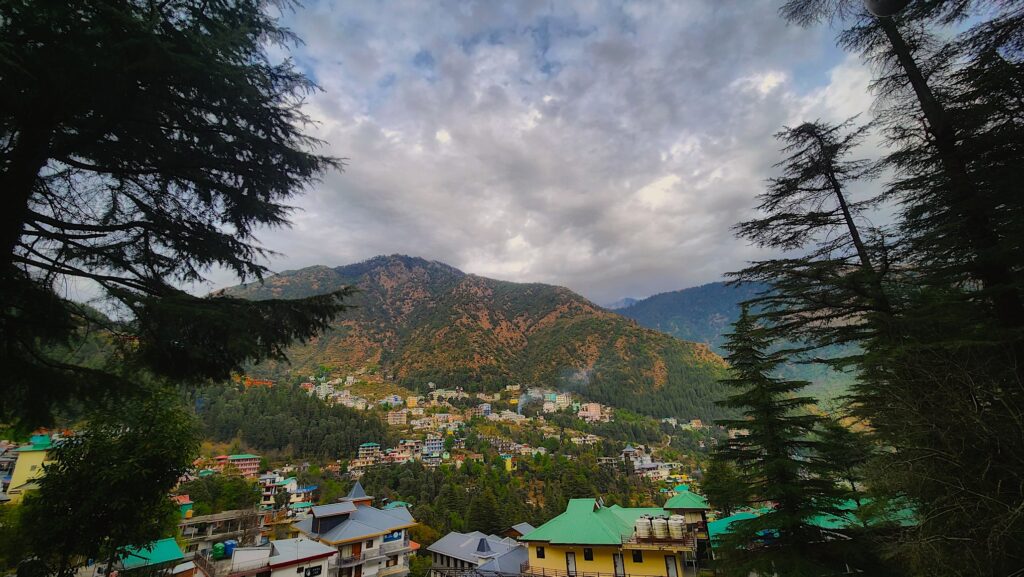
Winter is beautiful but cold, while monsoon brings lush landscapes along with heavy rainfall.
The ideal season for your trip depends on what kind of experiences you want; café hopping, mountain views, short treks, or peaceful monastery visits. Weather in Dharamshala directly affects road conditions, visibility, and how much you can realistically include in your Dharamshala itinerary.
For a detailed monthly breakdown of temperatures and rainfall, you can also refer to the Dharamshala Weather Guide: Monsoon Season, Rainfall, Safety & Travel Tips.
🌸 Spring & Early Summer (March to June): Best Overall Time
Best for: First-time visitors, sightseeing, short hikes, café hopping
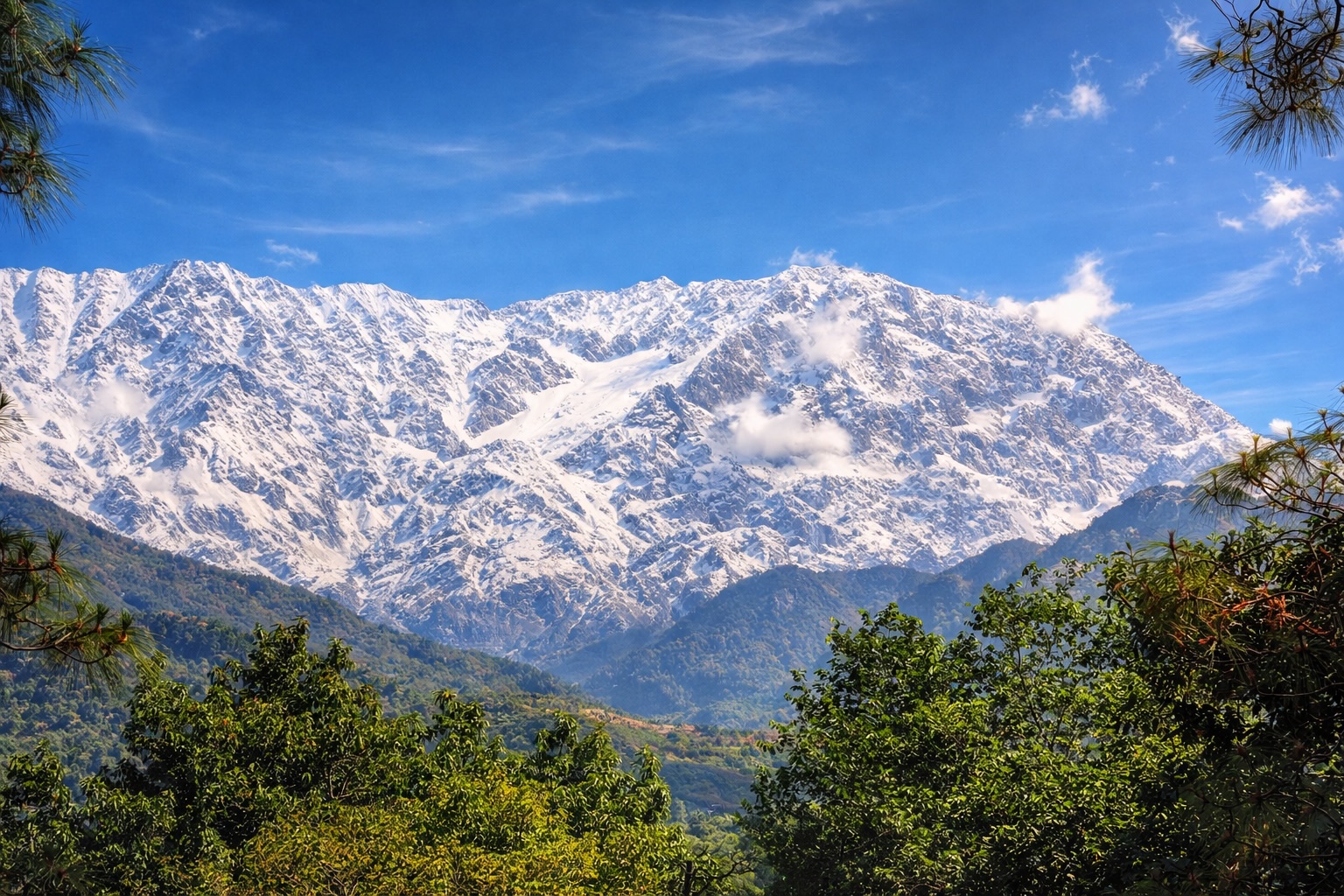
This is when Dharamshala is at its most comfortable. Days are mild, skies are clearer, and mountain views are often visible from places like Naddi and Dharamkot. If you want the clearest views of the Dhauladhar range, plan your viewpoints for early morning, clouds often start building up by afternoon, especially in late spring. Most things to do in Dharamshala are easily accessible during this period.
June deserves special mention because it combines clear mountain views, peak trekking season, Tibetan cultural experiences, and some of the year’s most pleasant weather. If you’re planning a summer trip, see our detailed guide to Dharamshala in June for week-by-week weather, crowd levels, places to visit, and local seasonal tips.
Your itinerary can comfortably include:
- McLeod Ganj and monasteries
- Bhagsu Waterfall and Dharamkot cafés
- HPCA Stadium visit
- Tea gardens and viewpoints
- Short walks or beginner hikes
🌧 Monsoon (July to September): Lush but Rainy
Best for: Slow travellers, café lovers, fewer crowds
Monsoon transforms Dharamshala into a green paradise, but it also brings frequent rain, mist, and occasional landslides. Travel between places can take longer, and outdoor-heavy plans may get disrupted, with fog often rolling in quickly around McLeod Ganj and Naddi and affecting sunset viewpoints.
During this season, your itinerary should focus more on:
- Monasteries and indoor cultural spots
- Cafés in McLeod Ganj and Dharamkot
- Museums like Kangra Art Museum
- Relaxed walks when weather permits
Treks and long outdoor days are harder to plan during this time.
One notable exception is the Dalai Lama birthday celebrations in McLeodganj, which still draws international visitors and Tibetan communities to Dharamshala every July despite the monsoon season.
🍁 Autumn (September to November): Clear Views & Pleasant Weather
Best for: Photography, viewpoints, relaxed sightseeing
After the monsoon clears, Dharamshala often has some of the year’s best mountain views. The air feels fresh, landscapes are green, and tourist crowds are lower than in peak summer.
By October, mornings and evenings start getting noticeably chilly, especially in higher areas like Dharamkot and Naddi, so carrying a light jacket becomes essential even if afternoons feel pleasant.
This is a great time for:
- Naddi sunset viewpoints
- Dharamkot walks
- Tea garden visits
- Exploring Lower Dharamshala sites like the War Memorial
❄️ Winter (December to February): Quiet & Cold
Best for: Snow lovers, peaceful stays, off-season travel
Winter brings cold temperatures, especially in McLeod Ganj and higher areas. Snow is occasional but possible in nearby higher altitudes. While mornings can be foggy, Dharamshala usually has bright, sunny winter days with clear blue skies. Early mornings and evenings are very cold, but the midday sunlight and crisp air feel rejuvenating.
Locals typically plan outings during the warmest hours of the afternoon to avoid the sharp temperature drop after sunset.
Your itinerary should be slower and more flexible:
- Monastery visits
- Café time
- Scenic drives when skies are clear
- HPCA Stadium and Lower Dharamshala spots
Outdoor hikes may not always be possible due to weather.
📌So, When Should You Visit Dharamshala?
Want the best balance of weather and sightseeing? Visit between March and June. Our Dharamshala in June guide covers weather conditions, trekking opportunities, monsoon transition patterns, and what to expect during the busiest month of the year.
Prefer greenery and don’t mind rain? Monsoon can be beautiful but unpredictable.
Love clear views and fewer tourists? Autumn is ideal.
Looking for quiet and cozy mountain time? Winter works if you’re okay with cold.
The season you choose should shape your Dharamshala trip itinerary, from the number of outdoor stops you include to how much buffer time you keep for weather changes.
2-Day Dharamshala Itinerary (Quick Mountain Escape)
Is 2 days enough for Dharamshala?
Yes, 2 days in Dharamshala are enough for a short mountain break focused on McLeod Ganj, nearby viewpoints, light walking, and cultural spots. You won’t cover everything, but you’ll experience the region’s spiritual atmosphere, mountain views, and relaxed café culture.
📍 2-Day Dharamshala Itinerary Map
To make planning easier, here’s a visual route map for this 2-day Dharamshala itinerary. It shows the locations in the order you’ll visit them, helping you understand distances and how the areas connect across Upper and Lower Dharamshala. For meal planning, refer to this guide on famous food in Dharamshala to decide where and what to eat each day.
Day 1: McLeod Ganj, Monasteries, Bhagsu & Optional Short Trek
Morning – Dalai Lama Temple & McLeod Ganj Walk
Start at the Tsuglagkhang Complex (Dalai Lama Temple), the spiritual heart of McLeod Ganj. If your trip overlaps early July, this area also becomes the centre of the Dalai Lama 91st birthday celebrations in McLeodganj, when thousands gather for public teachings, prayers, and Tibetan cultural events.
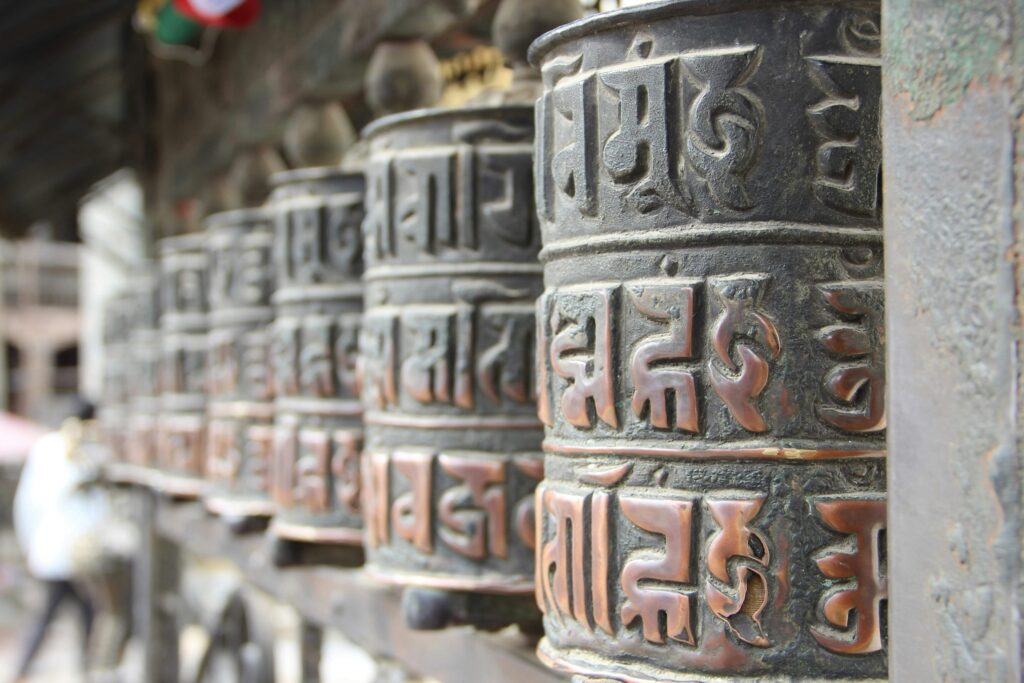
Step inside Namgyal Monastery, the Dalai Lama’s personal monastery at the heart of the complex, spin the prayer wheels, and
soak in the peaceful atmosphere. For the full temple visit, what to see inside, timings, dress code, and the kora walk, see our Dalai Lama Temple McLeodganj guide.
For background on the monasteries you’re visiting, read the complete guide to Tibetan Buddhist monasteries in and around McLeod Ganj. For meals today, especially around McLeod Ganj, refer to this guide on famous food in Dharamshala to find the best momos, thukpa, and local spots nearby.
Check Tsuglagkhang Complex website for visitor timings and etiquette.
Explore the small market streets of McLeod Ganj and stop for breakfast at a café.
Local tip: Mornings are the calmest time here before tour groups and day visitors arrive.
Late Morning / Afternoon – Bhagsu Waterfall & Dharamkot
Walk to Bhagsu Waterfall from Bhagsu village (short but scenic trail).
Continue uphill to Dharamkot, known for forest trails, open views, and relaxed cafés.
Have lunch in Dharamkot overlooking the valley and mountains.
Local tip: The Bhagsu-Dharamkot walk is uphill but shaded and scenic; comfortable walking shoes make it much easier.
Optional Add-On: Short Trek to Gallu Devi Temple
If you want to add a bit of adventure to your 2-day Dharamshala itinerary, you can continue walking from Dharamkot toward Gallu Devi Temple, located along the forest trail that leads toward Triund.
Even covering a short section of this route rewards you with peaceful pine forest views and a stronger sense of being in the mountains.
This stretch is part of the same trail system used for the popular Triund hike, and you can read more about it and other beginner-friendly routes in this guide to the best treks in Dharamshala. During major cricket weekends at HPCA, especially international day-night fixtures, these quieter upper-Dharamshala trails often become the contrast that makes the overall trip feel more balanced than a purely stadium-focused visit.
If your trip соincides with the Dharamshala IPL match 2026 season, consider planning your day around the evening match at HPCA Stadium.
Evening – Sunset at Naddi or Dal Lake
- Drive to Naddi View Point for sunset views over the Dhauladhar range.
- You can also stop at Dal Lake, which offers a quieter, wooded setting for an evening stroll.
Local tip: Arrive early for sunset, viewpoints in Naddi can fill up quickly during peak travel months.
Where to stay for a 2 Day Trip:
Staying in McLeod Ganj, Dharamkot, or Bhagsu will save you travel time and make this short Dharamshala itinerary much smoother.
If you’re deciding where to base yourself, this guide to the best areas and hotels in Dharamshala can help you choose a stay close to the places covered in this itinerary.
DAY2: Lower Dharamshala
Morning – Ropeway Ride to Dharamshala
Take the Dharamshala Skyway ropeway from McLeod Ganj down to Lower Dharamshala for panoramic views of the valley and surrounding hills.
🌍 Check the official Dharamshala Skyway website for current timings and ticket details.
Late Morning- HPCA Stadium
Visit the HPCA Cricket Stadium, one of the most scenic cricket grounds in the world, set against the Dhauladhar mountains.
👉 For a deeper look and visitor details, read Watching Cricket in the Himalayas: Inside Dharamshala’s Cricket Stadium.
🌍 You can also check the HPCA official website for match schedules or entry information.
Midday- Indru Nag Temple & Viewpoint
Head toward Indrunag Temple, a small hilltop temple known for its wide panoramic views of Dharamshala and the Kangra Valley.
This area is also a popular paragliding take-off point, and you may see gliders soaring over the valley on clear days.
The open landscape and views make it a refreshing contrast to the forested upper Dharamshala areas.
Local tip: Afternoons usually offer clearer valley views here, but it can get windy, carry a light layer even on warm days.
Afternoon- Kangra Art Museum (Kotwali Bazaar)
Head into Kotwali Bazaar in Lower Dharamshala to visit the Kangra Art Museum, which displays regional miniature paintings, sculptures, and artefacts from Himachal’s cultural history.
This stop adds a cultural layer to your Dharamshala itinerary, especially if you enjoy art and history. If it does, my full guide to Kangra painting covers what you are actually looking at, its history and themes, and how to tell a real miniature from the reproductions you’ll see in the markets.
Local tip: Kotwali Bazaar shows a more everyday side of Dharamshala beyond the tourist hubs of McLeod Ganj, making it a great place to observe local life.
Evening – Café Time Back in McLeod Ganj
Return to McLeod Ganj for your final evening. Relax at a café, try Tibetan dishes like thukpa or momos, and enjoy the cool mountain air.
Local tip: Choose your café based on your mood, some offer quiet valley views, while others have a lively street-facing vibe perfect for people-watching.
You can explore some of the best cafes in Dharamshala in the evening after sightseeing.
Where to Stay for a 2-Day Dharamshala Itinerary
For a short 2-day trip, it’s best to stay in McLeod Ganj, Bhagsu, or Dharamkot. These areas keep you close to monasteries, cafés, walking trails, and key viewpoints, which helps you avoid long travel times on winding mountain roads.
Being based here makes it easy to explore the spiritual and scenic highlights included in this Dharamshala itinerary without spending too much time commuting between Upper and Lower Dharamshala.
To make planning easier, here’s a visual route map for this 2-day Dharamshala itinerary. It shows the locations in the order you’ll visit them, helping you understand distances and how the areas connect across Upper and Lower Dharamshala.
📍 2-Day Dharamshala Itinerary Map
3-Day Dharamshala Itinerary (A Well-Rounded First Trip)
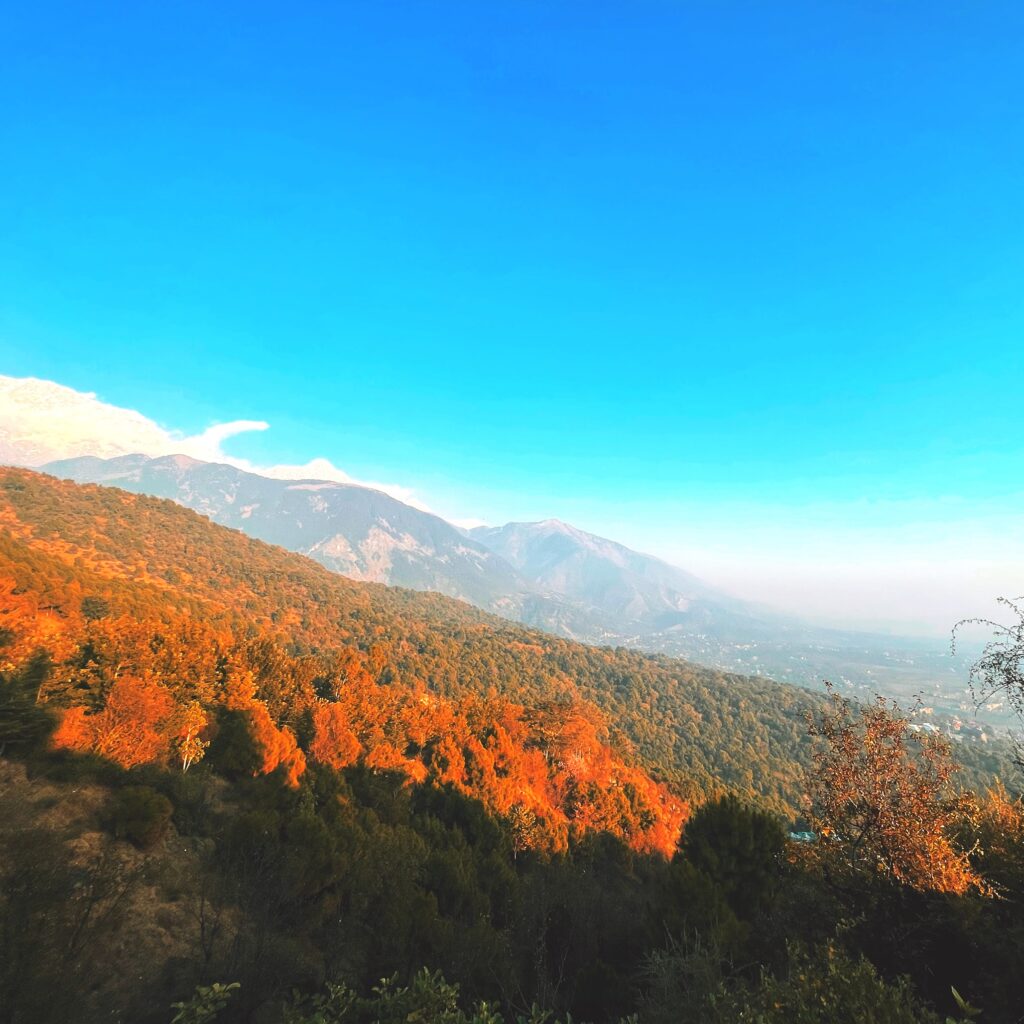
If you have three days in Dharamshala, you can move beyond the highlights and experience a better mix of nature, culture, and relaxed mountain time. This version of the Dharamshala itinerary gives you space to explore at a slower pace while still covering the region’s most rewarding spots.
You’ll build on the experiences from the 2-day plan, with one extra day for either a short hike, a scenic village walk, or more time in nature.
Day 1 – McLeod Ganj & Monasteries (Arrival + Orientation)
Follow the same plan as Day 1 in the 2-day itinerary:
Visit the Tsuglagkhang Complex (Dalai Lama Temple)
Walk through McLeod Ganj market
Explore Bhagsu Nag Temple and waterfall
This day helps you settle in, adjust to the mountain pace, and understand the layout of Upper Dharamshala.
Take a short detour to visit St. John in the Wilderness Church, a peaceful 19th-century church set among tall deodar trees. The quiet forest setting makes it a calm contrast to the busier market streets of McLeod Ganj.
👉 If you’d like deeper context on the spiritual sites you’re visiting, refer back to the guide to Tibetan Buddhist monasteries in and around McLeod Ganj.
Day 2 – Nature Walks & Mountain Views
With a full day available, you can explore the forested trails and viewpoints around Dharamkot and Naddi at a relaxed pace.
Option 1 – Dharamkot Forest Walks
Spend the morning walking along the pine forest trails above Dharamkot. These paths connect toward Gallu Devi Temple and offer peaceful stretches away from traffic. Even a short walk here gives you beautiful views and a stronger mountain feel.
Option 2 – Dal Lake, Naddi & Sunset Views
In the afternoon, drive toward Dal Lake, a small lake surrounded by cedar forest that’s ideal for a quiet walk.
From there, continue up to Naddi village for wide views of the Dhauladhar range. This area is one of the best spots for open mountain panoramas without committing to a long trek, especially around sunset when the peaks often glow in softer light.
Local tip: Weather can shift quickly in the mountains. Even on sunny days, carry a light jacket if you’re spending time outdoors. Dharamkot has great cafés, but for a deeper food experience, check this guide on what to eat in Dharamshala before planning your meals.
Day 3 – Lower Dharamshala & Cultural Experiences
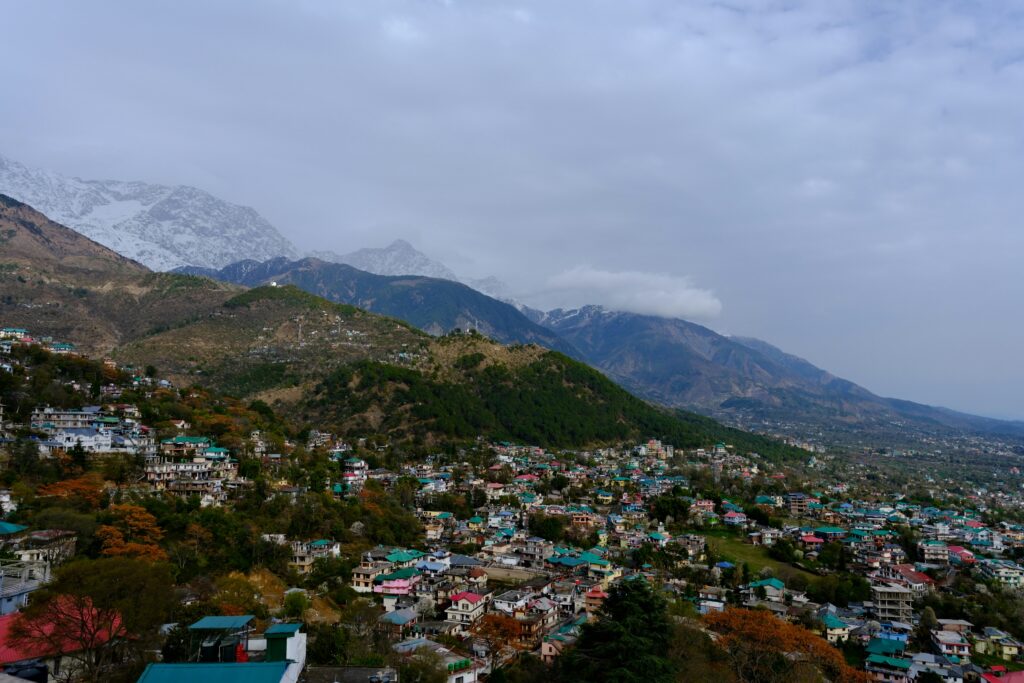
Use your third day to explore Lower Dharamshala, which feels very different from McLeod Ganj and shows another side of the region, with wider roads, local neighbourhoods, and cultural landmarks set against the backdrop of the Dhauladhar range.
Morning – Ropeway to Dharamshala
Take the Dharamshala Skyway ropeway for sweeping views of the valley as you descend toward the town below. The ride offers a great sense of how Upper and Lower Dharamshala are connected across the hillsides.
🌍 You can check timings and ticket details on the official Dharamshala Skyway website.
Late Morning – HPCA Cricket Stadium & War Memorial
Visit the HPCA Cricket Stadium, often described as one of the most scenic cricket grounds in the world. Even when no match is on, the dramatic mountain backdrop makes it worth a stop.
👉 For a deeper look and visitor tips, read Watching Cricket in the Himalayas: Inside Dharamshala’s Cricket Stadium.
Just nearby is the State War Memorial Dharamshala, set in a quiet, forested area. The memorial honors soldiers from Himachal Pradesh and has shaded walking paths where you can slow down for a while. It’s also a convenient place to sit, relax, and have a light snack before continuing your day.
Afternoon – Kotwali Bazaar
Head into Kotwali Bazaar in Lower Dharamshala to experience a more everyday side of town beyond the tourist hubs. The market streets here give you a glimpse of local life and the rhythm of the lower town. This is the best day to try local Himachali food, use this famous food in Dharamshala guide to find authentic dham and local dhabas.
Late Afternoon & Evening – Indrunag & Aghanjar Mahadev
Drive uphill toward Indru Nag Temple, a small hilltop temple known for its wide, open views of the entire Dharamshala valley. This is one of the best sunset points in the area, where you can watch the valley slowly light up as the sun dips behind the hills.
The open slopes around Indrunag are also used as a paragliding take-off site. If you’re looking to add a bit of adventure to your Dharamshala itinerary, this is one of the places where tandem paragliding flights are offered, depending on weather conditions. For the region’s world-class version, about two hours on at Asia’s highest launch, see my honest guide to Bir Billing paragliding.
From here, continue to Aghanjar Mahadev Temple, a cave temple associated with local legends from the Mahabharata era. Behind the temple flows a natural mountain stream with very cold, clear water; refreshing and surprisingly pleasant if you dip your hands or feet in.
Within the temple complex, there is also a small rock cave where devotees crawl through a narrow opening to receive blessings from the deities inside. This unique experience adds a strong spiritual and local cultural element to your Dharamshala itinerary.
Where to Stay for a 3-Day Trip
For three days, it’s still most convenient to stay in McLeod Ganj, Dharamkot, or Bhagsu, where you’re close to cafés, monasteries, and walking trails.
👉 This guide to the best areas and hotels in Dharamshala will help you choose a base depending on whether you prefer central access or quieter surroundings.
To help you visualize how the locations in this 3-day Dharamshala itinerary connect, here’s a custom map with all the places mentioned in the plan.
You can use it to understand travel distances, plan your daily route, and see how Upper and Lower Dharamshala fit together geographically.
📍 Tip: Open the map in full screen to follow each day’s route more easily.
5 Day Dharamshala Itinerary (Nature, Culture & Local Experiences)
With five days in Dharamshala, you can explore at a comfortable pace while covering monasteries, temples, scenic drives, local markets, tea gardens, and at least one adventure experience.
This version of the Dharamshala itinerary blends Upper and Lower Dharamshala with nearby villages and cultural landmarks.
Day 1- McLeod Ganj, Bhagsu & Sunset at Naddi
Start in McLeod Ganj, the cultural and spiritual center of Upper Dharamshala. Visit the Tsuglagkhang Complex (Dalai Lama Temple), walk around the monastery area, and explore the lively market streets.
From McLeod Ganj, head toward Bhagsu village and walk toward Bhagsu Waterfall or simply explore the surrounding trails and village lanes.
Continue uphill to Dharamkot if you’d like more forest views and a quieter atmosphere. For lunch options nearby, especially if you want to try authentic Tibetan dishes, check this Dharamshala food guide before choosing where to eat. If you want a more relaxed vibe with good food and views, this guide to the best cafés in Dharamshala covers spots perfect for sunsets and slow evenings.
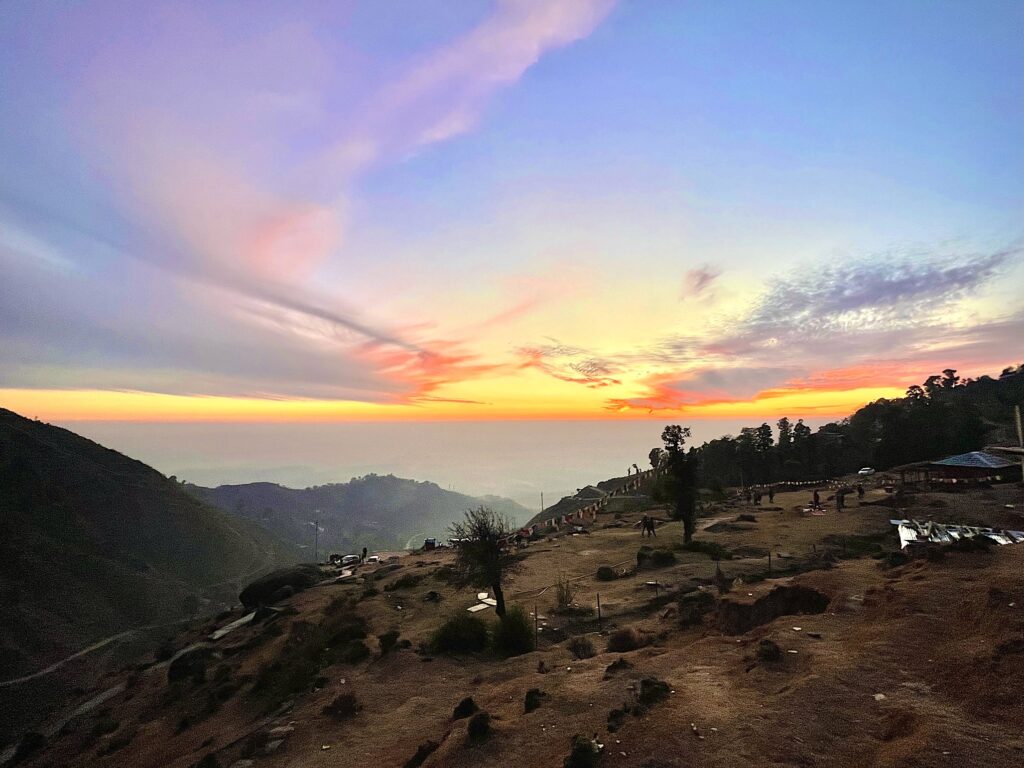
In the evening, drive toward Naddi View Point for open views of the Dhauladhar range.
Day 2 – Ropeway, Stadium, Tea Gardens & Forest Landmarks
Begin your day with the Dharamshala Skyway ropeway, which offers sweeping views as you descend from McLeod Ganj toward Lower Dharamshala.
Next, visit the HPCA Cricket Stadium, known for its dramatic Himalayan backdrop.
Nearby is the State War Memorial Dharamshala, set in a peaceful forested area with walking paths.
Continue toward the tea gardens in the Chilagari area, where you can see small-scale tea cultivation typical of the Kangra Valley.
If possible, stop at a local outlet to buy authentic Kangra tea directly from smaller producers.
On the way, visit Kunal Pathri Temple, a quiet hill temple associated with local goddess traditions.
Later, explore Kotwali Bazaar and visit the Kangra Art Museum to understand more about Himachal’s miniature painting tradition and regional history. For the full story behind the Kangra miniature painting you’ll see there, and where to buy an authentic piece, here is my local guide.
In the evening, drive toward Dal Lake for a quiet walk among cedar trees, and stop at St. John in the Wilderness Church, a peaceful 19th-century church set in a forest clearing.
Day 3 – Temples, Views & A Relaxed Pace
Start with a visit to Aghanjar Mahadev Temple, a cave temple associated with local legends.
Later, head up to Indru Nag Temple, known for its panoramic views over the entire Dharamshala valley.
Spend the rest of the day at a slower pace, revisiting Kotwali Bazaar, the oldest market area of Dharamshala, to experience local daily life beyond the main tourist zones.
Day 4 – Norbulingka, Gyuto & Scenic Village Drive
Visit the Norbulingka Institute in Sidhbari, dedicated to preserving Tibetan art and craftsmanship. The traditional architecture and gardens offer a peaceful cultural experience.
Continue to Gyuto Monastery, known for its large golden Buddha statue and tranquil setting.
In the evening, take a scenic drive through Rakkar village, a small artists’ village with quiet rural surroundings, and continue toward Kharota viewpoint for breathtaking sunset views over the valley and distant hills.
Day 5 – A Proper Himalayan Trek or Nature Day
With one full day left, this is the perfect time to experience one of Dharamshala’s classic treks.
Option 1 – Triund Trek
The Triund trek is one of the most popular hikes in the region, offering wide ridge views of the Dhauladhar range.
👉 You can find route details, difficulty level, and preparation tips in this guide to the best treks in Dharamshala.
Option 2 – Forest Walks Toward Gallu or Dharamkot Trails
If you prefer something less demanding, spend the day exploring the forest trails around Dharamkot and Gallu Devi Temple for a peaceful mountain experience.
Option 3 – History, Heritage & Kangra Valley Exploration (No Trekking)
If you don’t want to trek, use your final day to explore the wider Kangra Valley, which adds history, architecture, and a different landscape to your Dharamshala trip. If you don’t want to trek, use your final day to explore the wider Kangra Valley, which adds history, architecture, and a different landscape to your Dharamshala trip. If the valley pulls you in, my full Kangra Valley guide covers everything out here, from Kangra Fort and Masroor to Palampur, Bir and the tea gardens.
Morning – Kangra Fort
Drive about an hour to Kangra Fort, one of the oldest and largest forts in India. Set above the Banganga River with views of the surrounding valley, the fort offers a fascinating look into the region’s layered history, from ancient kingdoms to Mughal and British periods.
The walk inside involves stone pathways, temple ruins, and viewpoints overlooking the valley.
Midday – Masroor Rock Cut Temples
Continue further to the Masroor Rock Cut Temples, a group of monolithic rock temples carved out of a single rock face, often called the “Ellora of Himachal.”
The setting, with a water tank in front and hills behind, makes this one of the most unique heritage sites in the region.
This stop adds architectural and historical depth to your Dharamshala itinerary.
Afternoon – Kangra Town & Local Life
On your way back, pass through Kangra town for a glimpse of everyday valley life beyond tourist centers. You can stop briefly at local markets or viewpoints along the way.
Evening – Sunset Back Near Dharamshala
Return to Dharamshala by evening. If you still have energy, choose a nearby viewpoint you may not have visited earlier, or simply enjoy a relaxed final evening walk in your neighborhood.
Where to Stay for a 5-Day Trip
For a five-day Dharamshala itinerary, staying in Lower Dharamshala can be more convenient.
Since this plan includes drives toward Kangra Valley, tea gardens, Sidhbari, and heritage sites, being based lower down reduces daily travel time while still keeping Upper Dharamshala within easy reach.
To help you understand how the locations in this 5-day Dharamshala itinerary connect, here’s a custom map with all the places covered across the five days.
This map makes it easier to visualize travel distances, plan your daily routes, and see how Upper Dharamshala, Lower Dharamshala, nearby villages, and Kangra Valley sites fit together geographically.
📍 Tip: Open the map in full screen to follow each day’s route more clearly and plan your travel time between stops.
7-Day Dharamshala Itinerary (Slow Travel, Culture & Mountain Life)
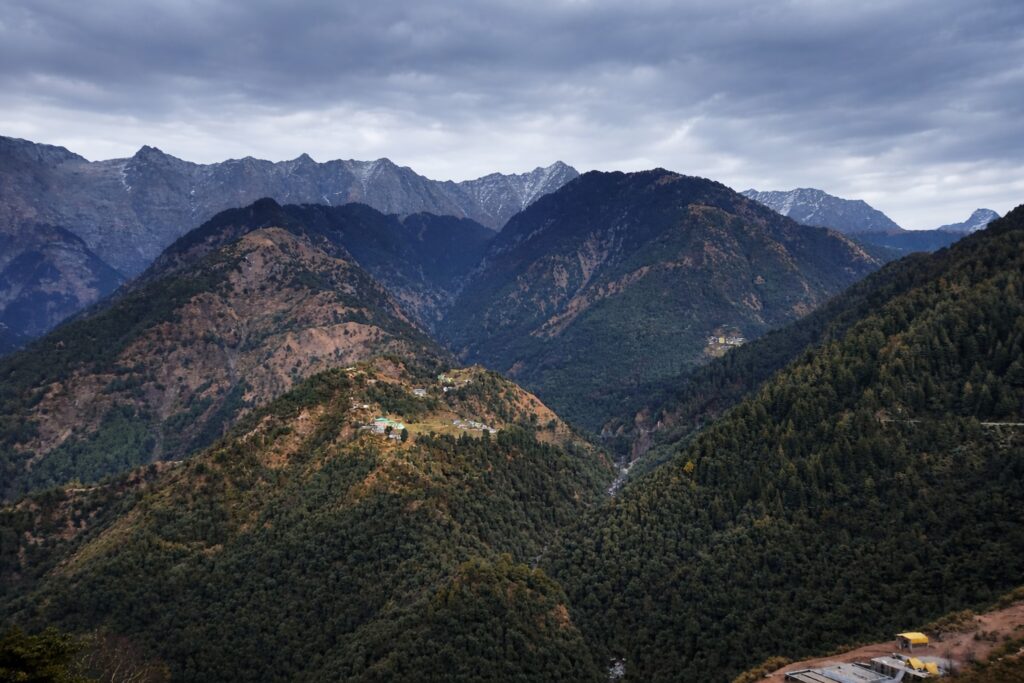
With seven days in Dharamshala, you have time to go beyond sightseeing and truly experience the rhythm of the mountains. This itinerary blends monasteries, villages, valley drives, markets, temples, and scenic viewpoints at a relaxed pace.
Day 1 – Norbulingka, Gyuto & Rakkar Countryside
Start your week near your base by visiting the Norbulingka Institute, known for its traditional Tibetan architecture, gardens, and craft workshops.
Continue to the nearby Gyuto Monastery, home to a large golden Buddha statue and a peaceful meditation environment.
Later, take a slow drive through Rakkar village, an artists’ village surrounded by fields and hills, offering a glimpse of rural Kangra life.
End your day with sunset at Khadota View Point, a quiet scenic spot overlooking the valley.
Day 2 – Lower Dharamshala, Stadium & Tea Gardens
Head toward Lower Dharamshala and visit the HPCA Cricket Stadium, famous for its dramatic Himalayan backdrop.
Nearby, stop at the State War Memorial Dharamshala, set among forested walking paths.
Drive through the Chilgari tea garden area, where you can see small tea plantations typical of Kangra Valley. If you find a local outlet, buy fresh Kangra tea directly from small producers.
Visit Kunal Pathri Temple, a quiet hill shrine with local religious significance.
Later, explore Kotwali Bazaar, Dharamshala’s oldest market area, and visit the Kangra Art Museum to understand regional art and history.
Day 3 – Aghanjar Mahadev, Indrunag & Market Time
Visit Aghanjar Mahadev Temple, a cave temple surrounded by forest.
Later, head to Indru Nag Temple, known for panoramic valley views.
Spend the evening exploring Kotwali Bazaar again at a slower pace to soak in local life. For dinner recommendations, from cozy cafés to local Tibetan kitchens, refer to this guide on best places to eat in Dharamshala.
Day 4 – Ropeway to McLeod Ganj, Bhagsu & Forest Landmarks
Take the Dharamshala Skyway ropeway up to McLeod Ganj for scenic valley views.
Walk through McLeod Ganj market, visit the Dalai Lama Temple, then continue to Bhagsunag Waterfall for a short uphill nature walk. Explore Bhagsu market afterward.
On your drive back, stop at Dal Lake for a forest walk and visit St. John in the Wilderness Church, a peaceful 19th-century church set among deodar trees.
Day 5 – Trekking Day & Naddi Sunset
Choose your level of adventure:
Option 1: Short forest trek to Gallu Devi Temple
Option 2: Full Triund trek for panoramic Himalayan ridge views
In the evening, unwind at Naddi View Point, one of the best places to watch the sun set over the Dhauladhar range.
Day 6 – Kangra Fort & Masroor Temples
Drive into the Kangra Valley to visit Kangra Fort, one of India’s oldest forts overlooking the Banganga River.
Continue to the Masroor Rock Cut Temples, a unique set of monolithic temples carved from a single rock face.
On your return, you can briefly explore Kangra town markets for a different local atmosphere.
Day 7 – Scenic Village Drive, Monastery Calm & Sunset at Juhal
Start your final day with a slow, scenic drive from Khaniyara toward Jiya and Palampur, following quieter countryside roads instead of the main highway. This route passes through small villages, terraced fields, and forest stretches, offering a peaceful look at rural life in the Kangra Valley.
Your morning destination is Dorzong Monastic Institute, a serene monastery set amidst forested hills near Palampur. The calm surroundings and traditional architecture make it an ideal place to pause, walk quietly, and soak in the peaceful atmosphere.
If you’d rather go deeper into Tibetan Buddhism on this final day, continue past Baijnath to spend it among the monasteries of
Bir, a whole Tibetan settlement of Nyingma, Kagyu, and Sakya gompas about 45 minutes on from Dorzong starting withChokling Monastery. It’s an easy swap for travellers who’d take monasteries over a market lunch.
And if Bir pulls you in, it easily fills a day or two of its own, here is my full guide to the things to do in Bir Billing beyond the gompas.
On your return toward Dharamshala, take the main Dharamshala–Palampur road and stop for lunch at Takri Natives’ Kitchen & Café, known for serving traditional Himachali dhaam-style meals. It’s a great way to experience regional cuisine in an authentic setting.
In the evening, end your week in the mountains with a drive to Juhal Viewpoint, a quiet and lesser-known sunset spot overlooking the valley. It’s a peaceful place to sit, relax, and reflect on your time in Dharamshala before your journey home.
Where to Stay for a 7-Day Trip
With a full week in Dharamshala, staying in Khaniyara or nearby quieter areas offers beautiful mountain views and a slower atmosphere while still being connected to the main town. These locations are ideal for travelers who want to experience village life while using Dharamshala as a base for day trips.
👉 Manoratham Villa in Rakkar offers a nature-filled setting ideal for relaxed stays, and provides a more personal local experience close to these quieter routes.
To help you plan a full week in the region, this custom map shows all the key locations included in the 7-day Dharamshala itinerary; from monasteries and temples to scenic drives, viewpoints, and nearby heritage sites.
You can use it to understand how different areas like McLeod Ganj, Lower Dharamshala, Khaniyara, Kangra Valley, and Palampur connect geographically, and to estimate travel distances for each day.
📍 Tip: Open the map in full screen and toggle the layers for each day to follow the route step-by-step.
This makes it much easier to plan your daily movement and avoid unnecessary backtracking in the hills.
Getting Around Dharamshala: Practical Transport Tips
Dharamshala is spread across different elevations, and travel time depends more on road type than distance. Understanding how transport works here will help you plan realistic days.
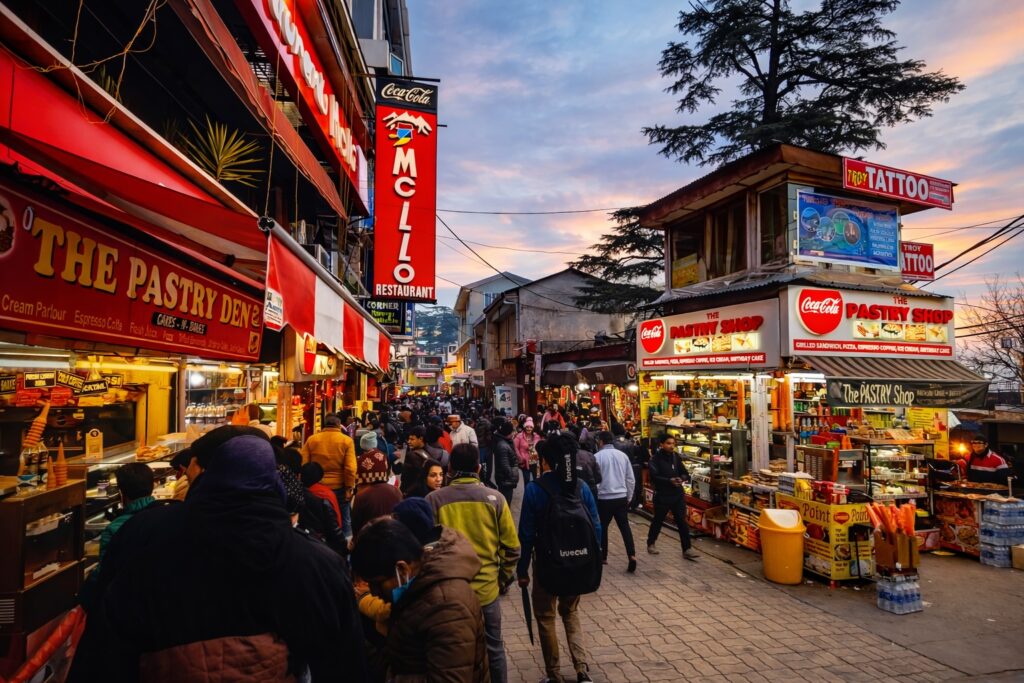
Upper vs Lower Dharamshala Travel Time
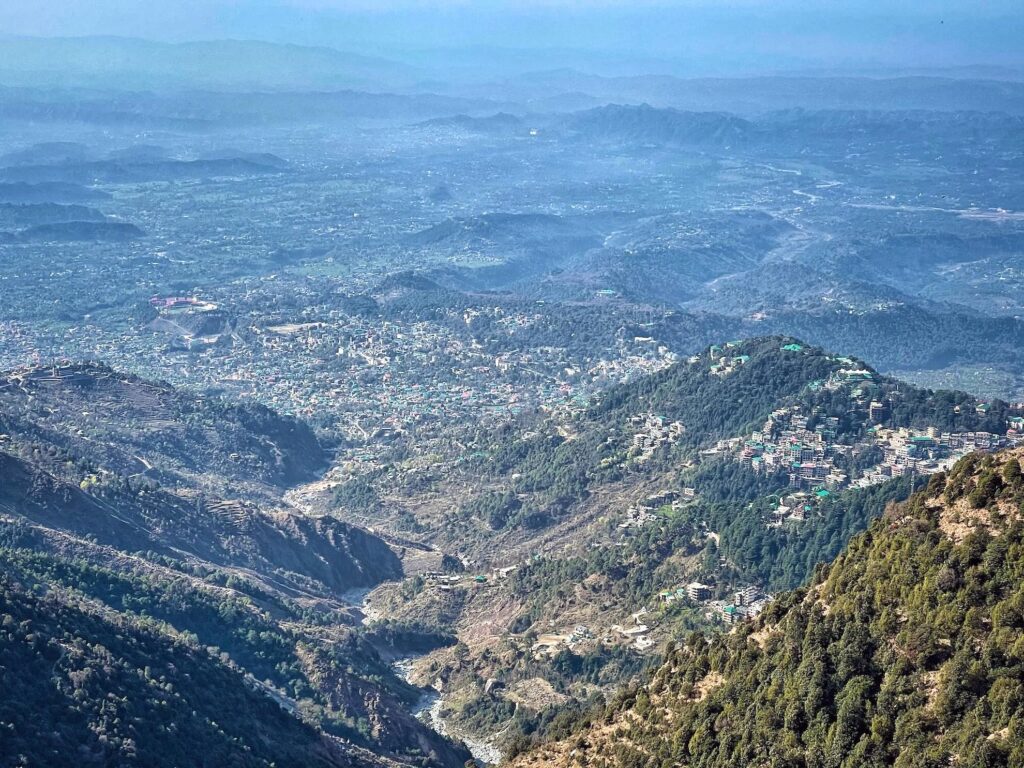
Upper Dharamshala (McLeod Ganj, Dharamkot, Bhagsu, Naddi) is about 25–35 minutes by road from Lower Dharamshala (Kotwali Bazaar, Civil Lines, stadium area). Roads are winding and often busy, so short distances can take longer than expected.
Traffic is usually at its peak on weekends and during evening hours, which can increase travel time further.
Taxi vs Self-Drive
For most visitors, taxis are the easiest option. Local drivers are used to steep climbs, blind curves, and limited parking in Upper Dharamshala.
Self-driving works best if you’re:
- Staying in Lower Dharamshala or Khaniyara
- Taking longer drives toward Kangra, Palampur, or Masroor
This becomes especially relevant if you’re following a 5-day or 7-day Dharamshala itinerary, where several days involve valley drives.
Parking in McLeod Ganj
Parking is limited in McLeod Ganj and Bhagsu, especially near markets and during peak travel months. There’s very limited parking inside the main McLeod Ganj market area, and most core streets don’t have designated parking spaces, making it difficult to find a spot once you enter.
There is a public paid parking area before the market, which can be used as the main parking option. However, even this lot often fills up during peak seasons and weekends, so availability isn’t guaranteed. Using taxis for Upper Dharamshala visits can save time and stress.
Using the Ropeway Between Lower Dharamshala and McLeod Ganj
The Dharamshala Skyway connects Lower Dharamshala with McLeod Ganj. It’s helpful for avoiding road traffic and offers scenic views, though you’ll still need local transport on both ends.
🌍 Check the official Dharamshala Skyway website for timings and operational updates.
Road Conditions for Day Trips
- Kangra & Palampur: Generally smoother, wider roads that are comfortable for most vehicles
- Masroor Rock Cut Temples: Narrower rural roads near the end, manageable in good weather
After heavy rainfall, road conditions in the hills can change, so it’s wise to review seasonal patterns in this Dharamshala Weather Guide before planning longer drives.
Key Planning Tip
In Dharamshala, travel time depends on terrain, traffic, and road width, not just kilometers. Plan fewer stops per day and keep buffer time between locations; especially on trekking days.
Mistakes to Avoid When Planning a Dharamshala Trip
Even a well-planned Dharamshala itinerary can feel rushed or stressful if you overlook how travel works in the mountains. Avoiding these common mistakes will make your trip smoother and more enjoyable.
Trying to Cover Too Many Places in One Day
Distances may look short on maps, but mountain roads are slow and winding. Overloading your schedule leads to more time in the car than enjoying locations. It’s better to explore fewer places at a relaxed pace.
Underestimating Travel Time Between Upper and Lower Dharamshala
Travel between McLeod Ganj and Lower Dharamshala can take 30 minutes or more, especially during weekends or evenings.
Plan your days by grouping nearby locations together instead of going up and down multiple times.
Ignoring Weather Before Treks or Long Drives
Mountain weather changes quickly. Rain can make trails slippery and reduce visibility on valley roads. Always check local forecasts before trekking or planning drives toward places like Masroor or Palampur.
Not Planning Parking in Upper Dharamshala
Parking in McLeod Ganj and Bhagsu is limited, especially in peak season. Arriving without a plan can waste time and cause unnecessary stress.
Skipping Buffer Time in Your Itinerary
Traffic, road work, and weather delays are common in the hills. Keeping extra time between activities ensures you don’t feel rushed and can actually enjoy the views.
Final Thoughts on Planning Your Dharamshala Trip
Dharamshala isn’t just a destination you “cover”; it’s a place you experience slowly. From monasteries and forest walks to valley drives and quiet village sunsets, each part of the region reveals something different depending on how much time you give it.
Whether you’re here for a quick mountain break or a full week of exploration, the key is to travel at the pace of the hills. Leave space in your itinerary, start early on travel days, and allow time to simply sit and enjoy the mountain views.
With the right balance of planning and flexibility, Dharamshala rewards you with more than sightseeing, it offers calm, culture, and a deeper connection to the landscape.
FREQUENTLY asked question
Is 3 days enough for Dharamshala?
Three days is the sweet spot for a first trip. It gives you one day for McLeod Ganj and the monasteries, one day for nature walks and viewpoints, and one day for Lower Dharamshala and cultural sites like Norbulingka. You will not feel rushed, and you will leave with a real sense of the place rather than just a checklist of
stops.
Is 2 days enough for Dharamshala?
Two days is enough for a quick first visit. You can cover McLeod Ganj, the Dalai Lama Temple, Bhagsu Waterfall, and Lower Dharamshala in two full days. But it will feel rushed. You will not have time for treks, day trips, or simply sitting still and taking in the mountains. If two days is all you have, focus on McLeod Ganj and Bhagsu on day one and Lower Dharamshala on day two. Skip trying to fit everything in.
How many days are enough for Dharamshala?
Three to five days is ideal for most travellers. Three days lets you cover McLeod Ganj, the monasteries, Bhagsu, and Lower Dharamshala without rushing. Five days adds room for a proper trek, a day trip to Kangra Fort or Palampur, and the kind of slow mornings that Dharamshala is actually made for. Two days works if that is all you have, but you will leave feeling like you only saw the surface.
What are the best places to visit in Dharamshala in 2 days?
In two days, focus on the essentials: Dalai Lama Temple, Namgyal Monastery, Bhagsu Waterfall, a short walk through Dharamkot, McLeod Ganj market, and one visit to Lower Dharamshala for the HPCA cricket stadium or Norbulingka Institute. Do not try to fit in a full-day trek or a day trip to Kangra, save those for a longer visit. Prioritise depth over distance.
Can I visit Dharamshala and McLeod Ganj in one day?
You can, but you will barely scratch the surface. Dharamshala town and McLeod Ganj are about 9 kilometres apart and feel like completely different places, one is a Himachali market town, the other is a Tibetan hillside settlement. If you only have one day, pick McLeod Ganj. Most key attractions like monasteries, Bhagsu, cafes, and viewpoints aren walkable from there.
What is the best time to visit Dharamshala?
March to June and September to November are the best months. Spring and early summer bring clear skies and comfortable temperatures, perfect for trekking and sightseeing. Autumn offers the clearest mountain views of the year with fewer crowds. Monsoon (July to September) brings heavy rain but also the greenest landscapes. Early July is also when the Dalai Lama 91st birthday celebrations in McLeodganj take place, making it one of the most culturally significant periods to visit Dharamshala despite the rain.Winter (December to February) is cold and quiet, with occasional snowfall at higher elevations.
What is the best Dharamshala itinerary for a family trip?
For families, a 3 to 4 day itinerary works best. Keep the pace slow and avoid strenuous treks with young children. Day one: McLeod Ganj: Dalai Lama Temple, short market walk, and a relaxed lunch. Day two: Norbulingka Institute and the HPCA cricket stadium in Lower Dharamshala. Day three: Bhagsu Waterfall in the morning and Naddi viewpoint for sunset. Add a fourth day for the Dharamshala Skyway ropeway and a visit to the tea gardens near Palampur.
What is the best Dharamshala itinerary for couples?
Couples usually enjoy a 3 to 5 day trip. Spend day one exploring McLeod Ganj including the Dalai Lama Temple, Namgyal Monastery, and dinner at one of the rooftop cafes. Day two: walk up to Bhagsu Waterfall, explore Dharamkot, and catch the sunset at Naddi. Day three: Norbulingka Institute and tea gardens. If you have more time, add a day trip to Kangra Fort or a sunrise trek to Triund. The slower your pace, the better Dharamshala feels for two.
Is Dharamshala safe for solo travellers?
Yes. Dharamshala is one of the safer hill destinations in India for solo travellers, including solo women. McLeod Ganj and Dharamkot are walkable, well-lit in the main areas, and have a strong community of backpackers and long-stay travellers. Standard precautions apply, avoid isolated trails after dark and let someone know your trekking plans. But overall, the area is welcoming and easy to navigate on your own.
What should I pack for a Dharamshala trip?
Pack in layers. Mornings and evenings are cool even in summer, and temperatures drop quickly after sunset. Essentials: comfortable walking shoes with good grip, a light jacket or fleece, sunscreen, a rain jacket or umbrella (especially between June and September), a reusable water bottle, and a small daypack for walks and short treks. If you plan to trek to Triund or higher, carry proper trekking shoes and a warm layer for the summit.
How do I get from Dharamshala to McLeod Ganj?
McLeod Ganj is about 9 kilometres uphill from Dharamshala town. You can take a shared taxi (around ₹50-100 per person, 20-30 minutes), a private taxi (around ₹300-500), or the Dharamshala Skyway ropeway which connects Lower Dharamshala to McLeod Ganj in about 5 minutes. Auto-rickshaws are also available but not always comfortable on the steep mountain roads. Most travellers use shared taxis, they run frequently throughout the day.
What is the best time to visit Dharamshala for snow?
Snowfall in Dharamshala usually happens between late December and early February, most commonly in January. McLeod Ganj and Dharamkot see snow more often than Lower Dharamshala because of the elevation difference. But snowfall is not guaranteed every year, and when it does happen, it usually melts within a day or two at lower elevations. If snow is your priority, aim for mid-January and stay at higher altitude areas like Dharamkot or upper Bhagsu.
Is Dharamshala worth visiting?
Yes, but it depends on what you are looking for. Dharamshala is not a place for nightlife, shopping malls, or amusement parks. It is a place where Tibetan monasteries sit next to Himachali temples, where mountain trails start from the edge of town, and where the pace is deliberately slower than the plains. If you want to experience Himalayan culture, eat well, walk through forests, and wake up to mountain views, Dharamshala is more than worth it.
Can I work remotely from Dharamshala?
Yes. Dharamshala has become one of India’s popular remote work destinations, especially around Dharamkot and McLeod Ganj. WiFi speeds in most cafes and co-working spaces range from 30 to 100 Mbps, and many homestays offer stable connections. Power cuts do happen, particularly during monsoon, but most accommodations have inverter or backup systems. If you are planning a long working stay, we have written a detailed guide on remote work in Dharamshala covering internet, costs, and the practical realities.
What is the difference between Dharamshala and McLeod Ganj?
Dharamshala is the broader town and the district headquarters of Kangra. McLeod Ganj is a smaller settlement about 9 kilometres uphill from Dharamshala town, and it is where most travellers actually stay. McLeod Ganj has the Dalai Lama Temple, Tibetan monasteries, backpacker cafes, and access to treks like Triund. Lower Dharamshala has the cricket stadium, Norbulingka Institute, local markets, and a more everyday Himachali-town feel. Most visitors spend their time between both.