The Dalai Lama birthday in Mc LeodGanj falls on July 6, 2026 and this one carried weight most years dont. It marks the closing of His Holiness’s Year of Compassion, a 12-month initiative announced at his 90th birthday. The celebration is open to non-Buddhists, but access is tighter than most blogs admit. Here’s what to actually expect.
Most travel guides tell you not to come to McLeodganj in July. They’re not wrong about the rain. What they leave out: it’s the only week of the year the Dalai Lama’s birthday celebration happens, and for one week, the rain becomes background noise.
We live here. Most blogs on this celebration are written by people who flew in for a weekend and called it a guide. This one’s from the other side, from people who’ve seen the celebration play out year after year.
This year marks his 91st birthday. At 91, His Holiness moves slower; the crowd’s thicker; access is tighter than tourism guides imagine. Yes, it’s monsoon. Yes, you might not see Him up close. Both can be true, and it can still be worth it. For the broader region, our Dharamshala Travel Guide 2026 sets the context.
Table of Contents
Why the Dalai Lama 91st Birthday in McLeodganj Matters in 2026
The 91st birthday on July 6, 2026 closes the Year of Compassion, a 12-month global initiative His Holiness announced at his 90th birthday last year. It’s not just an annual celebration; it’s a milestone marking the conclusion of a year-long program of teachings, prayers, and reflection on compassion in practice.
Some birthdays are bigger than others, even for someone who insists he’s “just a simple monk.”
The 90th was the obvious milestone: 90 years, the Year of Compassion announced. But the 91st has its own significance. It marks the formal closing of that 12-month initiative, which His Holiness asked the Tibetan exile community and global supporters to observe through teachings, prayer, and what the Central Tibetan Administration’s official Year of Compassion guidelines describe as compassion in practice.
Every Tibetan settlement, every supporting Buddhist center worldwide, has spent the year on this. July 6, 2026 is when it formally ends.
Closer to home, the Bir Tibetan Colony an hour east marks the day with its own community celebrations, quieter than McLeodganj but no less heartfelt.
That timing matters. Most years, the birthday is a beautiful but routine annual event. The 91st is the closing of a global initiative, which means the gathering carries weight that recent birthdays haven’t.
The international attention reflects this. Tibetan diaspora from 15+ countries fly in. Indian Union Ministers attend. The Chief Ministers of Arunachal Pradesh and Sikkim regularly come. Visiting delegations from the US State Department, the European Parliament, and Buddhist communities from Mongolia, Bhutan, Vietnam, and Korea all show up. Past birthdays have drawn video messages from former US Presidents and global heads of state.
There’s also a quieter reality worth naming. At 91, His Holiness’s schedule has tightened: he attends fewer events, and even at his 90th birthday last year, he walked with the aid of two monks. The Office of His Holiness confirms attendance for major celebrations roughly two weeks ahead. As of this writing, he’s expected to attend the 91st birthday, but it’s worth checking dalailama.com closer to your travel date.
Pilgrims who’ve been making this trip for years say they don’t take any of these birthdays for granted anymore.
What actually happens at the Dalai Lama birthday celebration in McLeodganj
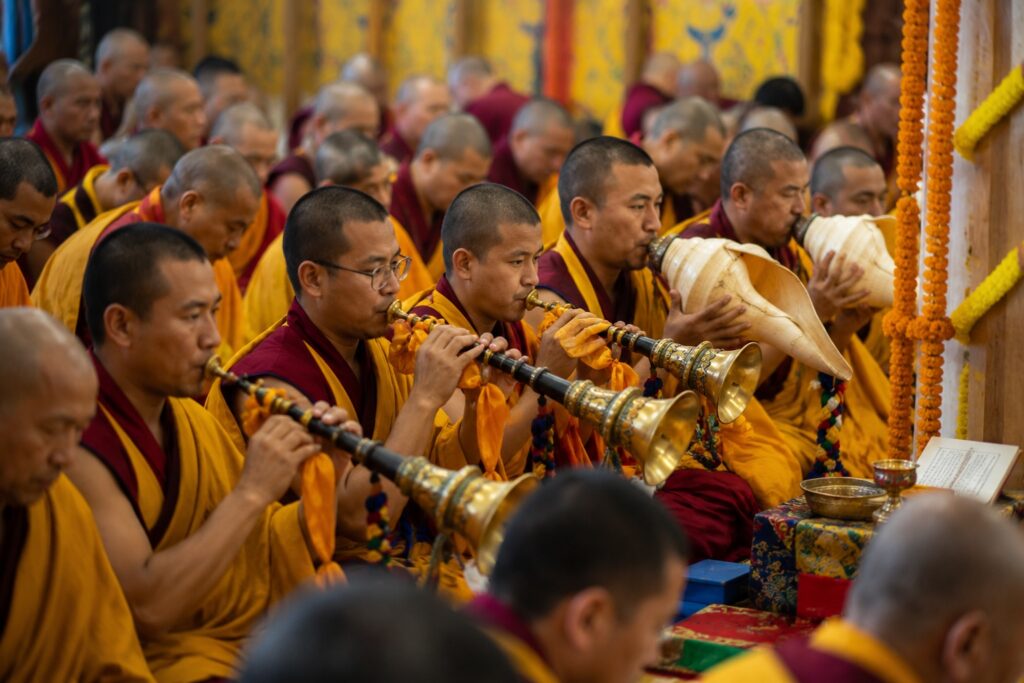
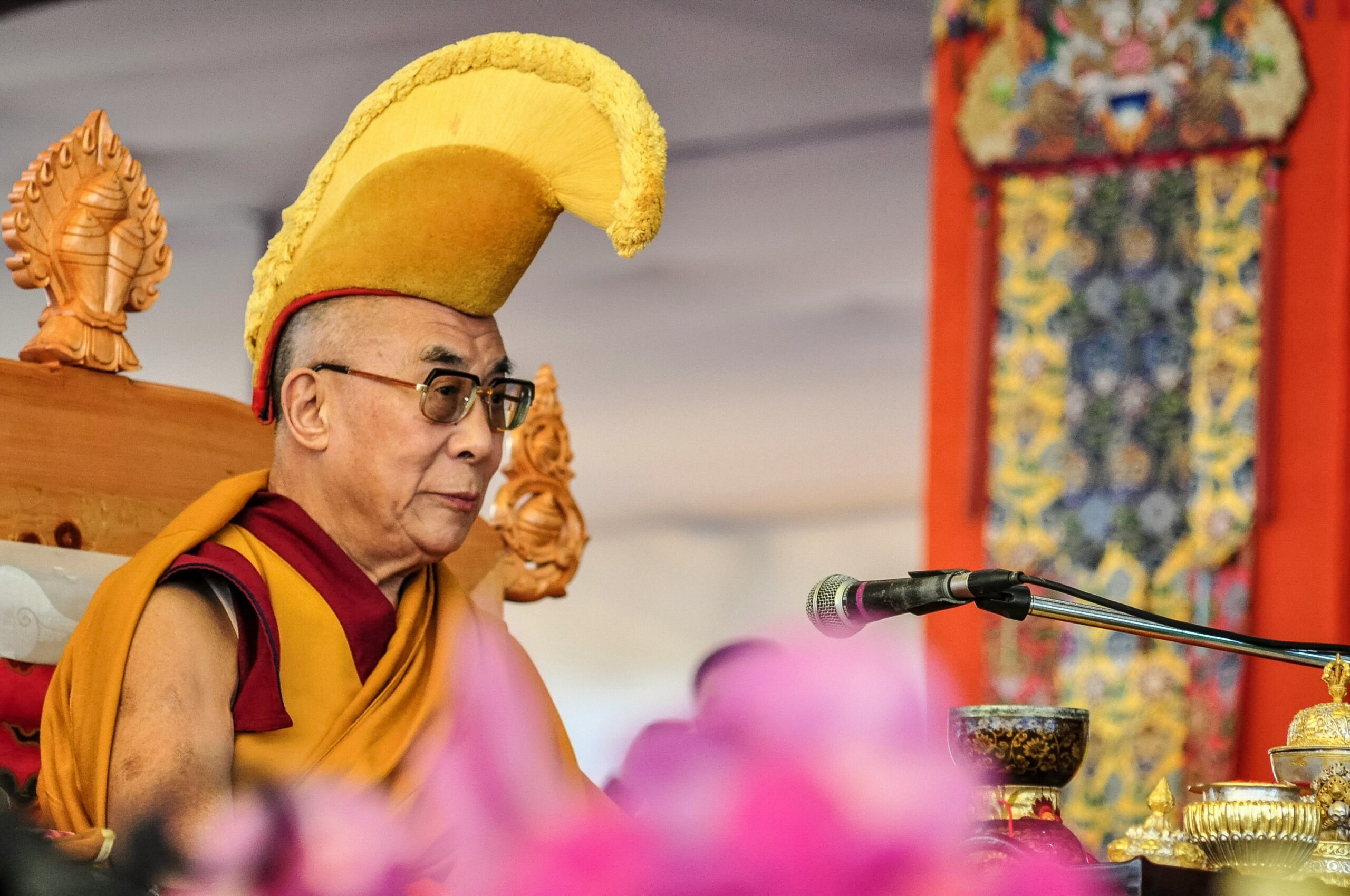
The Dalai Lama birthday celebration unfolds across roughly a week. The main public event is on July 6 at the Tsuglagkhang temple courtyard. His Holiness arrives mid-morning, accepts traditional offerings, listens to speeches from Tibetan and Indian officials, cuts a cake, and addresses the crowd. The week before features Long Life Offering ceremonies, religious conferences, and cultural performances.
If it’s your first time at the complex, our Dalai Lama Temple McLeodganj guide covers what to see inside, the timings, the kora walk and how to reach it, on any day of the year, not just the birthday.
The day starts before most visitors expect it to. By 5:30 a.m., monks in maroon robes are moving up the wet stone paths toward Tsuglagkhang. The Dhauladhar foothills hold mist; the air smells of butter lamps and rain-soaked deodar. Tibetan bagpipes echo off the courtyard walls, a ceremonial detail that sounds odd until you hear it in person. By 7 a.m., the lower temple area has filled. By 9 a.m., the Tibetan and Indian flags rise together to the national anthems, sung by thousands. When His Holiness appears, smiling at 91, the courtyard goes quiet for a moment before the celebration begins.
The actual structure follows the same rhythm year after year, with small variations.
- Days before (June 30 onward): Long Life Prayer Offerings by various Tibetan associations and welfare societies. These are open to the public, quieter than the birthday itself, and easier to access.
- July 5 evening: Cultural performances, sometimes a film screening (the 90th featured 4 Rivers 6 Ranges, a film about Tibet’s struggle for independence).
- July 6 morning: A Long Life Offering led by the Kashag, the cabinet of the Tibetan government-in-exile.
- July 6 mid-morning: The main celebration. Performances by the Tibetan Institute of Performing Arts (TIPA), speeches from Indian Union Ministers, the Sikyong (head of the Central Tibetan Administration), and visiting dignitaries. The cake-cutting. His Holiness’s own address, usually short and often unscripted.
- Days after (July 7–9): A three-day festival of Tibetan arts, crafts, traditional medicine, and educational programs.
Who you’ll see: Indian Union Ministers (Kiren Rijiju has attended consistently), the Chief Minister of Arunachal Pradesh, the Sikyong, and Richard Gere, Chairman of the International Campaign for Tibet, who’s attended for over thirty years. Past birthdays have drawn video messages from former US presidents.
What to look for: the Chema Changphu offering (a traditional Tibetan ceremonial gesture), the dual flag-raising (Tibetan + Indian, in that order), the mandala offering by the Tibetan Parliament Speaker, and the Ghoton theme song commissioned for the 90th birthday, likely to be performed again. For the broader cultural context, the broader Tibetan monastic ecosystem surrounds the celebration. The full proceedings of the 90th birthday are documented in the official record, useful if you want to know the exact rhythm of what’s coming.
Is McLeodganj Still Authentically Tibetan?
Yes, but with caveats. The Tibetan exile community in McLeodganj has lived here since 1959. The monasteries, the Tibetan-run cafés, and the prayer wheels at the temple are all real and active. What’s changed is the tourist layer on top. Israeli, Indian, and Western backpacker culture has built up over thirty years. The authenticity is still here; you have to look past the surface to see it.
The Tibetan exile community has lived here since 1959, when His Holiness arrived in Dharamshala after fleeing Tibet.
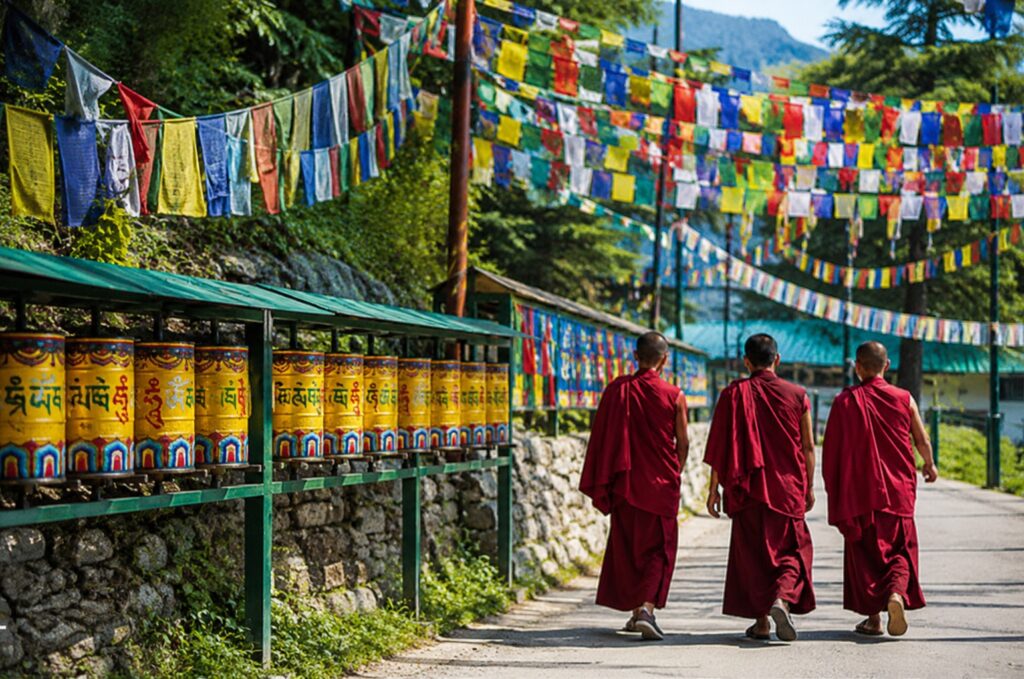
Most of what’s authentically Tibetan is still authentically Tibetan: Namgyal Monastery still functions as a working monastery, the prayer wheels at Tsuglagkhang are still spun by people who grew up in the diaspora, the Tibetan Institute of Performing Arts still trains the next generation in traditional dance, and the family-run Tibetan restaurants on Jogiwara Road still serve momos and thukpa from recipes that came across the Himalayas.
What’s changed is the layer on top. Backpacker culture, Israeli, European, and Western, has built up over thirty years, especially in Dharamkot just above McLeodganj. The café boom of the last decade brought espresso machines to streets where Tibetan tea once dominated. Some shop strips sell generic “Tibetan” trinkets that aren’t made by Tibetans.
The honest local take: the celebration itself is the most authentic moment of the year. Even longtime residents say so. The streets quiet down, the diaspora gathers from across the world, the cafés thin out for a few days, and McLeodganj feels closer to what it was twenty years ago.
If you want to see the most authentically Tibetan version of this town, come for the celebration.
For the spaces that remain genuinely rooted, where you’ll find the most authentically active Tibetan spaces covers the broader monastic ecosystem.
Can non-Buddhists attend the Dalai Lama’s 91st birthday celebrations?
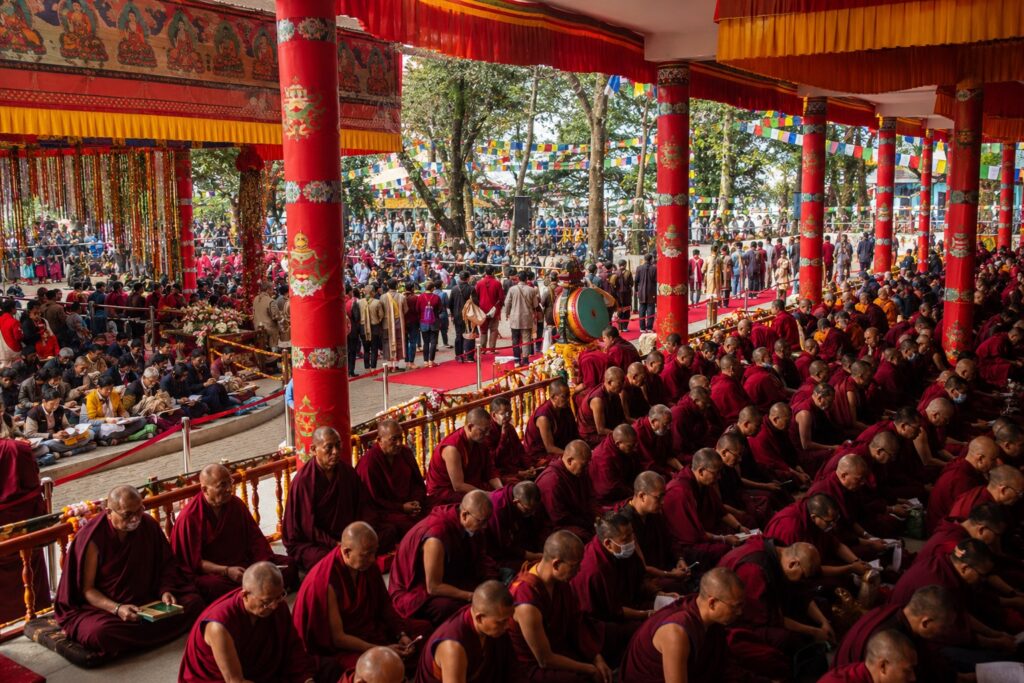
Yes, non-Buddhists, tourists, foreigners, and people of all faiths are welcome at the Dalai Lama’s birthday celebrations. The events at Tsuglagkhang are open to the public. You don’t need to be Buddhist, you don’t need to know the rituals, and you don’t need an invitation. What you do need is to register in advance and respect the temple’s basic etiquette.
The most common worry from first-time visitors is feeling out of place. They don’t know the rituals, don’t know the language, and don’t know whether they belong.
The honest answer: they belong fine. The Tibetan community in McLeodganj has welcomed pilgrims, tourists, students, and the simply curious for decades. Nobody at the temple is going to test you on Buddhist philosophy.
What separates a respectful visitor from an intrusive one isn’t knowledge, it’s attitude. Pay attention to what’s happening. Don’t talk loudly during prayers. Don’t push past monks. If you’re unsure what to do, follow the person nearest you. That’s it.
His Holiness himself often opens his addresses by referring to those gathered as “brothers and sisters from many faiths,” a framing he repeats almost every birthday. The celebration is designed to be inclusive; speeches are translated into multiple languages and broadcast on FM radio for anyone with a small receiver: English, Chinese, Hindi, Japanese, Korean, and Vietnamese. Bring a small FM radio (readily available in McLeodganj) and you’ll follow along fine. Language isn’t the barrier visitors fear it is.
How to attend the Dalai Lama birthday in McLeodganj
To attend the Dalai Lama 91st birthday in McLeodganj, register at the Tsuglagkhang temple courtyard 1–3 days before the event (9 a.m.–1 p.m. or 2 p.m.–5 p.m.). Foreigners need passport, Indian visa, and ‘C’ form copies; Indian residents need an Aadhaar copy. Registration costs Rs. 10. For the public blessing line on regular days, email ohhdl@dalailama.com weeks in advance.
This is the section visitors most need. Here it is in plain terms.
Registration for the celebration
You register in person at the Tsuglagkhang (Main Tibetan Temple) courtyard in the days leading up to the event.
| Requirement | Details |
|---|---|
| Registration hours | 9 a.m.–1 p.m. and 2 p.m.–5 p.m. |
| Foreign visitors | Passport copy, Indian visa copy, and ‘C’ form |
| Indian residents | Aadhaar copy |
| Fee | ₹10 |
| Deadline | Registration closes the day before the celebration |
Registration begins a few days before the celebration and ends the day before, so don’t leave it until July 6 morning.
Public blessing line (separate from the birthday)
If you also want to be in a blessing line on a regular Monday, Wednesday, or Friday morning during your stay, the only path is to email ohhdl@dalailama.com weeks, ideally months, ahead with your travel dates and reasons.
Be honest: at 91, His Holiness’s schedule has tightened significantly, and many requests aren’t accommodated. The blessing line is a separate process from registering for the birthday celebration.
Timing on the day
Arrive 6:00–6:30 a.m. for a 10 a.m. celebration if you want any chance of inner-courtyard seating. By 7 a.m., the front courtyard is already filling. Visitors arriving at 8 a.m. routinely don’t get past security into the inner area, a fact you’d rather know in advance than discover at the gate.
Plan the entire morning at the temple, not a window.
If you can’t travel
The celebration is webcast live at dalailama.com/live. Many of the 5,000+ people physically present don’t get a clear view either; the webcast is sometimes the better seat.
For the confirmed hour-by-hour schedule once the Office of His Holiness publishes it (usually 1–2 weeks before the event), see our Dalai Lama 91st Birthday Schedule (July 6, 2026): Day-of Timeline, coming closer to the date. For broader trip planning, getting to Dharamshala from Delhi, Chandigarh, or Bangalore covers the routes. The official Dalai Lama schedule lists confirmed events as the dates near.
Long Life Offerings, public teachings, and the birthday: what’s the difference?
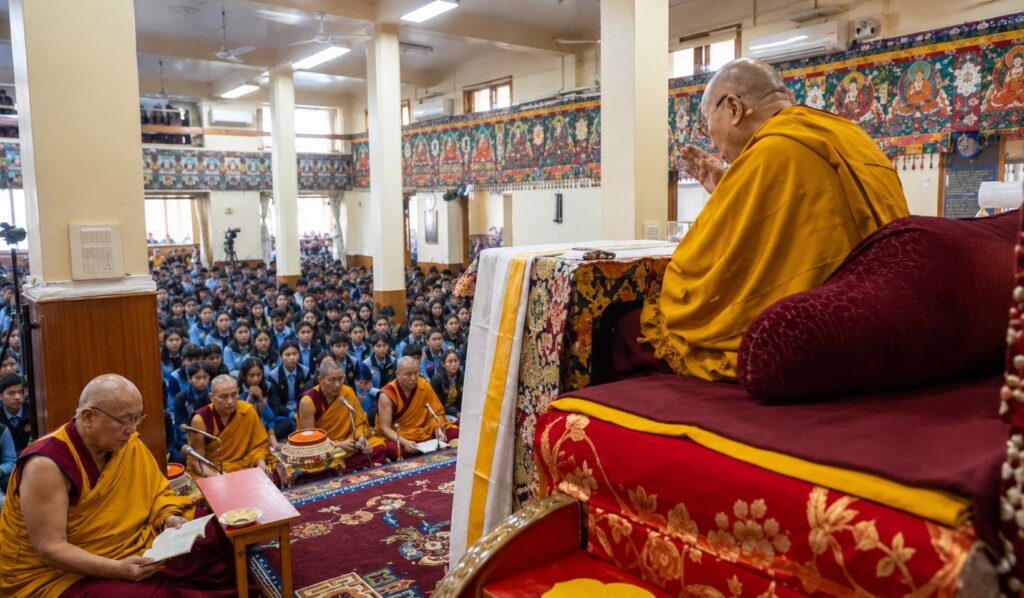
Long Life Offerings are short prayer ceremonies (1–2 hours) where Tibetan groups offer prayers for His Holiness’s longevity, open to the public with no registration needed. Public Teachings are multi-hour philosophical sessions on Buddhist texts, requiring registration and FM radio for translation. The Birthday on July 6 is the once-a-year cultural celebration with dignitaries, music, and His Holiness’s public address.
Most visitors come expecting to attend “a teaching.” In 2026, that’s mostly not what’s happening. His Holiness, at 91, has substantially reduced his teaching schedule. What’s happening instead is a different kind of event, and knowing the difference helps you plan.
| Event type | Length | Registration? | Best for |
|---|---|---|---|
| Long Life Offering | 1–2 hours | No | Quick visit, prayer focus |
| Public Teaching | 4–6 hrs/day, multi-day | Yes (Tsuglagkhang courtyard) | Buddhist students, philosophical depth |
| The Birthday (July 6) | Half day | Yes | Once-a-year cultural moment |
A Long Life Offering is a Tibetan ceremonial prayer for His Holiness’s longevity, sponsored by various associations and welfare societies. They run about 1–2 hours, no registration needed, and are easy to walk into. 2026’s confirmed dates in Dharamshala are February 23, March 25, April 22, and May 20. Visitors who can plan around these can stack one with the birthday and get two experiences for the trip.
A Public Teaching is the deep philosophical version: multi-hour, multi-day, often dense Buddhist text commentary. These require registration and an FM radio for translation. 2026’s public teaching dates (per the Tushita Meditation Centre’s calendar) are March 14, April 2, and October 4.
The Birthday sits in its own category, once a year, half-day cultural celebration with speeches, music, and His Holiness’s address. If you’re planning a July 2026 trip, it’s the birthday you’re coming for, not the teachings.
Visiting McLeodganj in July: the monsoon reality (and why it’s worth it anyway)
July in McLeodganj means heavy monsoon rain, slippery trails, occasional landslides on the Dharamshala-McLeodganj road, and 18–25°C temperatures. Most travel guides warn against July visits for sightseeing, but the Dalai Lama 91st birthday in McLeodganj is the one experience worth coming for despite the rain. You just plan for the weather instead of around it.
July is the wettest month in McLeodganj. Roughly 29 of 31 days see rain, sometimes light, often heavy enough to flood the lower roads. Temperatures stay between 18°C and 25°C, cool by Indian standards, but the humidity is constant; clothes won’t dry overnight. The mountains spend most days inside cloud.
What the rain actually affects
- Triund and other treks: Skip them in July. The trail turns dangerous; save trekking for September–November.
- Road conditions: Landslides on the Dharamshala-McLeodganj stretch happen most monsoon weeks. Plan for delays.
- Photography: The views you saw on Instagram were shot between October and May.
What the rain doesn’t affect
- The temple celebration. Last year’s 90th birthday took place during what BBC described as “ferocious monsoon rains.” More than 5,000 people came anyway, soaked through and singing the national anthem regardless.
- Indoor culture: cafés, monasteries, the Tibetan Library, prayer wheels under overhangs.
- McLeodganj’s atmosphere when the tourist crowd thins for the season.
Pack for it instead of around it: heavy-duty rain gear, quick-dry clothes, non-slip footwear, and a waterproof bag for the small electronic-free pouch you’ll carry through temple security.
Most travel blogs say “don’t come in July.” We say: come in July specifically for the celebration. Avoid July just for sightseeing. The complete trip-timing guide breaks down which months actually fit different kinds of trips.
For deeper monsoon planning, see our Dharamshala weather guide.
What to bring, what to wear at the Dalai Lama’s temple
Bring a cushion (you’ll sit on the ground for hours), a cup (tea is served customarily), a sunhat or umbrella, and an FM radio for translations in English, Hindi, Chinese, Korean, Japanese, or Vietnamese. Wear modest, respectful clothing: no shorts, no sleeveless tops, ideally muted colors. Electronic devices including phones and cameras are not permitted at major celebrations.
The list isn’t long, but every item earns its place.
Bring
- A cushion or thin mat: You’ll sit on stone or carpet for hours. No seating provided.
- A cup: Tea is served traditionally during long ceremonies.
- A sunhat or small umbrella: His Holiness himself often reminds the crowd to cover their heads.
- An FM radio: Translations broadcast in English, Hindi, Chinese, Korean, Japanese, and Vietnamese. Without one, you catch the energy but miss the words.
Don’t bring
- Phones, cameras, electronic devices: Security at major celebrations confiscates or holds them. No exceptions.
- Large bags: They slow security and rarely fit where you’ll sit.
Dress code
Modest and respectful. Cover shoulders and knees. Muted colors over bright. No shorts, no sleeveless tops, and no clothing with religious imagery from any tradition.
Footwear
Easy slip-on shoes. You’ll remove them often, at the entrance and inside specific halls. Sandals work in monsoon if they grip wet stone.
Tea and offerings
Tea is provided free; someone pours as ceremonies progress. Cash offerings to monastics are optional. There’s no expected amount.
For the temple’s official version of this list, see the official practical guidance.
Where to stay in McLeodganj during the Dalai Lama birthday week
Book accommodation in McLeodganj or Dharamkot at least 6–8 weeks before the birthday. The week of July 6 sees ~5,000 visitors crowd into a small mountain town, and hotels and homestays sell out. McLeodganj puts you closest to the temple (5-minute walk); Dharamkot is quieter and 15 minutes uphill. Lower Dharamshala is cheaper but a 30-minute commute on monsoon roads.
Three main areas, plus one quieter alternative
| Area | Best for | Trade-off |
|---|---|---|
| McLeodganj proper | Closest access to Tsuglagkhang | Busy and expensive |
| Dharamkot | Quiet stays and homestays | Uphill walk in heavy rain |
| Lower Dharamshala | Budget stays | Long monsoon commute |
McLeodganj proper
Closest to Tsuglagkhang, a five-minute walk from most rooms. Busiest, most expensive. If you want to leave for the celebration at 6 a.m. without monsoon road risk, this is where you book. Most rooms are basic; the trade is location, not luxury.
Dharamkot
Fifteen minutes uphill from McLeodganj. Quieter, more residential, with many homestays often run by Tibetan or Israeli expats. You’ll walk down to the celebration. Sounds romantic until you do it in heavy rain. Worth it for everything except the morning of July 6.
Lower Dharamshala
Cheaper hotels and more options, but the commute takes 30+ minutes on a normal day, an hour during monsoon traffic. Most visitors who book here regret it on celebration morning.
Khaniyara
A small village about 30 minutes from McLeodganj, deeper into the Dharamshala countryside. Quietest of the four areas, and the option that feels most like staying with someone who lives here rather than at a guesthouse.
Commute time on celebration morning is significant, and you’ll likely need a taxi rather than walking down.
Worth considering if your trip leans more toward slow travel than checklist attendance. This is also where Manoratham, our own homestay, sits. If a quieter Khaniyara stay sounds right for your trip, you know where to find us.
When to book
Six to eight weeks ahead minimum; three to four months for premium options. Last-minute searches in late June regularly turn up nothing usable.
If Khaniyara works for your itinerary, Manoratham takes direct bookings year-round through our website. Useful if you’d rather skip the last-minute platform scramble.
For specifics, see where exactly we recommend staying and our other homestay options in Dharamshala
What if you can’t get into the inner courtyard?
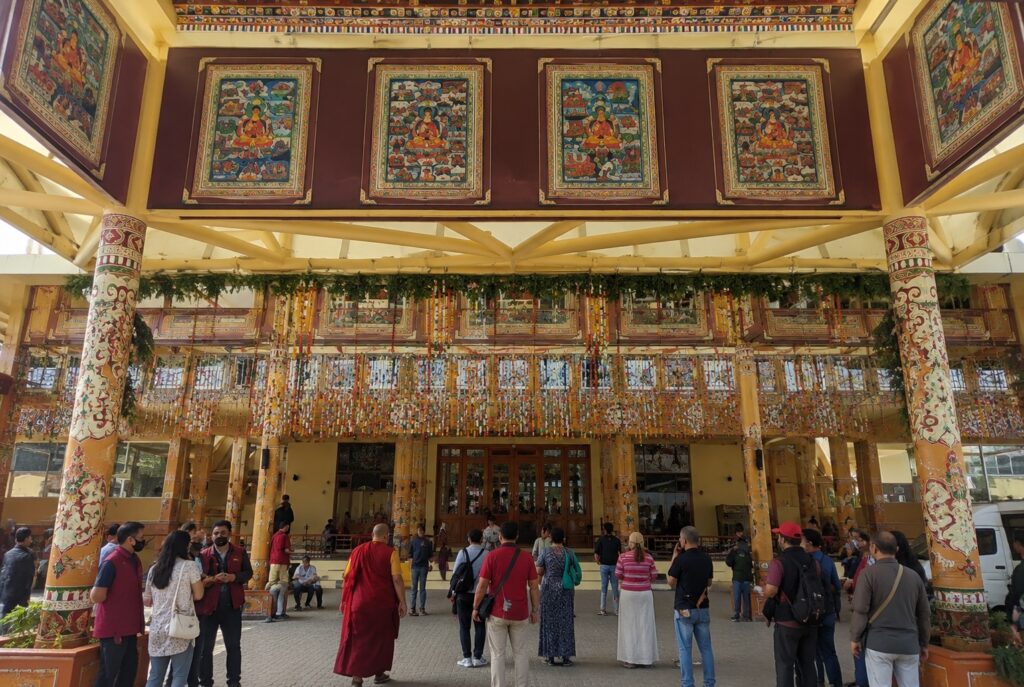
Many visitors arriving even by 7 a.m. find the temple complex full and sit in the lower temple area without inner-courtyard access. This is normal. The energy is still palpable from the outer areas, the celebration broadcasts on speakers throughout, and you can watch the live webcast on phone away from the security zones. McLeodganj’s cafés, monasteries, and prayer wheels offer meaningful alternatives.
Here’s the truth most blogs skip: of the 5,000+ people who show up, only a fraction actually see His Holiness up close. The inner courtyard at Tsuglagkhang holds maybe 1,500 comfortably. The rest sit in the lower temple area, surrounding paths, sometimes outside the gates entirely.
What does that look like? You hear the proceedings, broadcast on speakers throughout the complex. You feel the crowd’s energy. You don’t see His Holiness’s face up close, and you don’t get close enough for a Khata exchange. Visitors who attended the 90th birthday and ended up in the lower temple have written about feeling no less blessed than those in the courtyard. Take that for what it’s worth.
If even the temple complex is full when you arrive, McLeodganj has meaningful alternatives:
- Namgyal Monastery: The resident monastery within the complex, often quieter once the celebration starts.
- Bhagsu Falls: A 30-minute walk through wet forest; the falls run hard in monsoon.
- The Lingkhor: His Holiness’s traditional walking circuit around the temple complex, about 45 minutes with prayer wheels along the way.
- Coffee Talk and other Jogiwara cafés: Many broadcast the live webcast on July 6 morning.
Tempted to combine the trip with a Triund trek? In July, don’t. The route turns dangerous in heavy rain: slippery rock, leech-prone trails, and real landslide risk on the lower switchbacks. Save Triund for September–November.
If you’re planning it for another season, our guide to the Triund Trek Dharamshala: Actual Distance, Route and Cost (2026) breaks down the realistic route, timing, and expenses. For birthday-week alternatives that don’t require trekking, Bhagsu Falls, the Lingkhor, and Jogiwara Road’s cafés give you cultural immersion without the safety risk.
You came for the experience, and the experience is the place, even from the periphery. For cafés that stay open during the celebration and the realistic Triund trek picture, our other guides go deeper.
Final thoughts
The Dalai Lama 91st birthday in McLeodganj isn’t a tourist event you tick off a list. It’s a once-a-year moment in a town that lives quietly the rest of the year, and on July 6, 2026, it carries the weight of closing the Year of Compassion that His Holiness announced last July. That makes this one of the more meaningful birthdays to witness in recent memory.
Prepare practically. Expect the rain. Accept that you might not see Him up close. Come anyway.
If you make it to McLeodganj, find us. We live here, and we’re always happy to point friends in the right direction. For the rest of your trip, plan your Dharamshala visit using our itinerary before you arrive. The town is small enough that good planning makes the difference between a hurried visit and a meaningful one.
FRequently asked questions
How much does it cost to meet the Dalai Lama?
Meeting His Holiness is free; there is no fee for teachings, blessings, or audiences. The ₹10 registration at Tsuglagkhang is only an admin charge. Don’t pay anyone claiming special access. For the broader temple and monastery culture around the celebration, see our guide to Tibetan Buddhist monasteries in McLeod Ganj.
Can I take photos at the Dalai Lama temple during the birthday?
No. Phones, cameras, and electronic devices are usually held at security checkpoints during major celebrations. Most visitors choose to experience the event rather than photograph it. The Office of His Holiness publishes official images later on dalailama.com. For the town beyond the celebration, our Dharamshala Travel Guide 2026 covers what else to explore.
Is it safe to visit McLeodganj in July monsoon?
Yes, with caution. The town is generally safe, but roads, trails, and slippery paths need care during monsoon. Avoid Triund in heavy rain and keep plans flexible around landslides. Our Dharamshala weather guide and Triund trek guide explain the realistic July conditions in detail.
What is the Year of Compassion?
The Year of Compassion is a 12-month initiative announced by His Holiness on July 6, 2025, focused on compassion in daily life across faiths and communities. The 91st birthday formally closes that year-long observance, which is why the 2026 celebration carries unusual significance globally.
Is it better to stay in McLeodganj or Dharamshala for the celebration?
McLeodganj is best for proximity to the temple and avoiding monsoon commute delays on celebration morning. Lower Dharamshala is quieter and cheaper, while Dharamkot offers a middle ground. Our Best Dharamshala Hotels guide breaks down the pros, pricing, and atmosphere of each area in detail.
Can I write a letter to the Dalai Lama?
Yes. Letters can be sent to the Office of His Holiness, though personal replies are uncommon due to the volume received. For attendance or blessing requests, email ohhdl@dalailama.com well in advance with your travel dates and purpose of visit.
Is two days enough for the Dalai Lama birthday trip?
Two days works for the celebration itself: arrive July 5, attend July 6, leave July 7. But if you want monasteries, cafés, local food, and slower exploration, plan at least 4–5 days. Our Dharamshala itinerary guide helps structure a longer stay realistically.