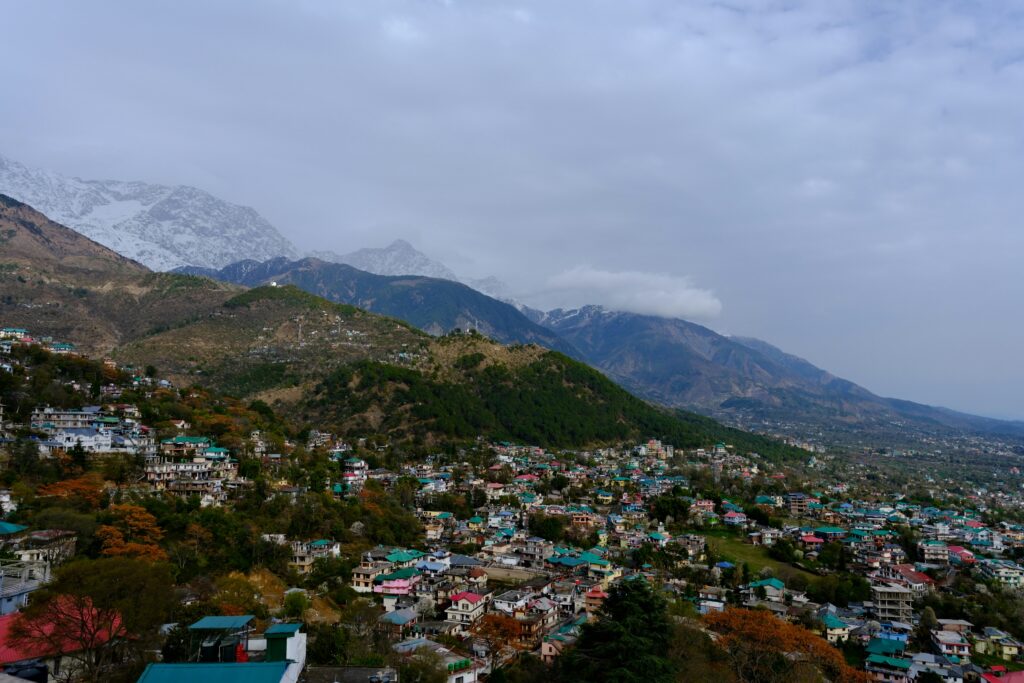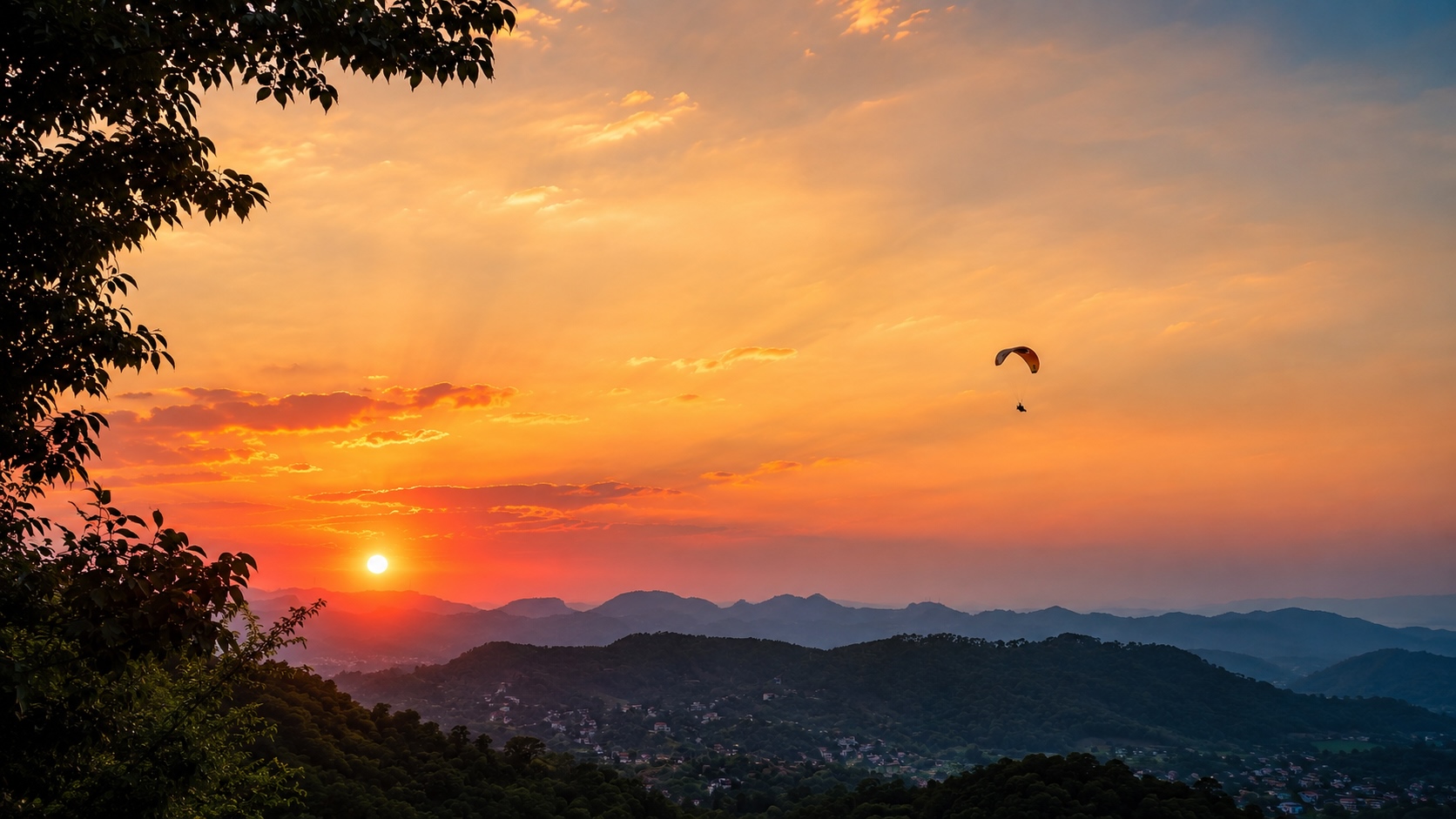
Standing at the edge at Billing, about to run off it with a pilot I’d met minutes earlier, was the most frightened I felt all day. The evening before my Bir Billing paragliding flight, I’d sat at the landing site and watched the gliders drift down one by one against the sunset, quietly noting whose landing looked smooth and whose looked rough, and it still hadn’t prepared me for that edge. I flew anyway, and this is the honest account I wish I’d had first: what it costs now, whether it’s actually safe, when to go, and what the flight really feels like, from someone who has done it rather than someone selling it.
In short: Bir Billing, in Himachal Pradesh, is the world’s second-highest paragliding site. A tandem flight with a certified pilot lasts about 15 to 20 minutes, taking off from Billing (around 2,400 m) and landing down in Bir. It costs from ₹3,000 per person in 2026, and the best months are October-November and March-June. It is generally safe with a licensed pilot, but it is a genuine adventure sport, not a joyride.
Table of Contents
Bir Billing paragliding at a glance
If you only have thirty seconds before you book, here is everything that actually matters.
- What it is: A tandem flight. You’re strapped to a certified pilot who does the flying, so no experience is needed.
- Where: Take-off at Billing (around 2,400 m), landing at Bir, in the Kangra valley below the Dhauladhar range, Himachal Pradesh.
- Time in the air: Roughly 15 to 20 minutes. The whole outing, with the drive up and the wait, takes 2 to 3 hours.
- Cost (2026): From ₹3,000 per person for a standard flight, with a GoPro video usually ₹500 to ₹800 extra.
- The ₹3,000 rule: Himachal Tourism has set ₹3,000 as the minimum fare, so a much cheaper quote is a reason to check the operator’s licence, not a bargain.
- Best time: October-November is the clearest and most reliable. March-June is the second window. Flying is generally suspended through the monsoon, roughly July to mid-September.
- Is it safe? Generally yes, with a licensed pilot in good weather, but treat it as the real adventure sport it is.
- Claim to fame: Asia’s highest and the world’s second-highest paragliding site, with about a 14 km glide from Billing down to Bir.
What paragliding in Bir Billing is actually like (my flight)
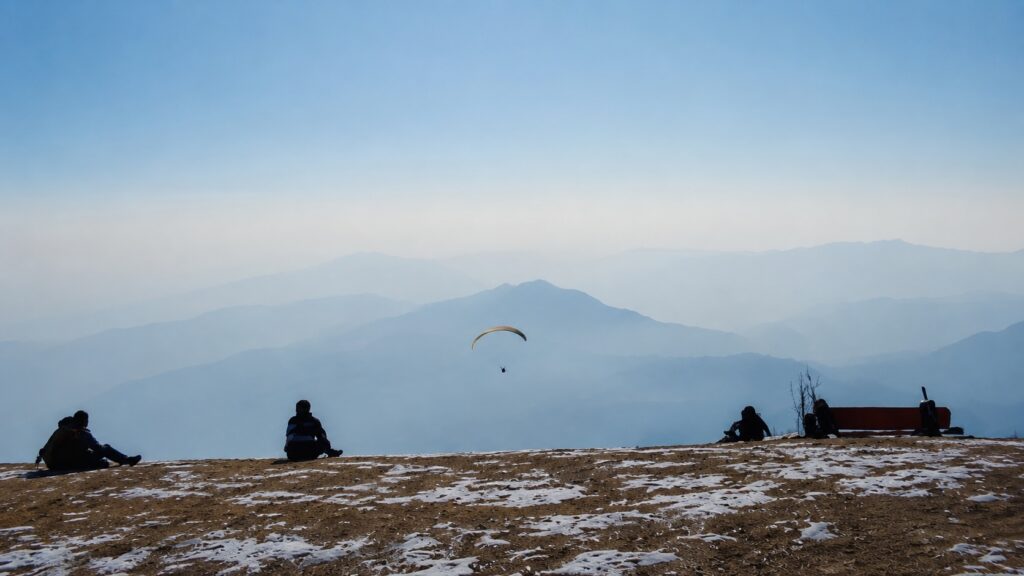
The honest version: the scary part is short. Waiting for your turn at the take-off point is the most nervous you’ll feel, the run off the slope is a blur, and then within seconds of leaving the ground it goes calm and quiet, and stays that way for the fifteen-odd minutes you’re up there. Here is how each part actually went.
Waiting your turn at the take-off site (the nervous part)
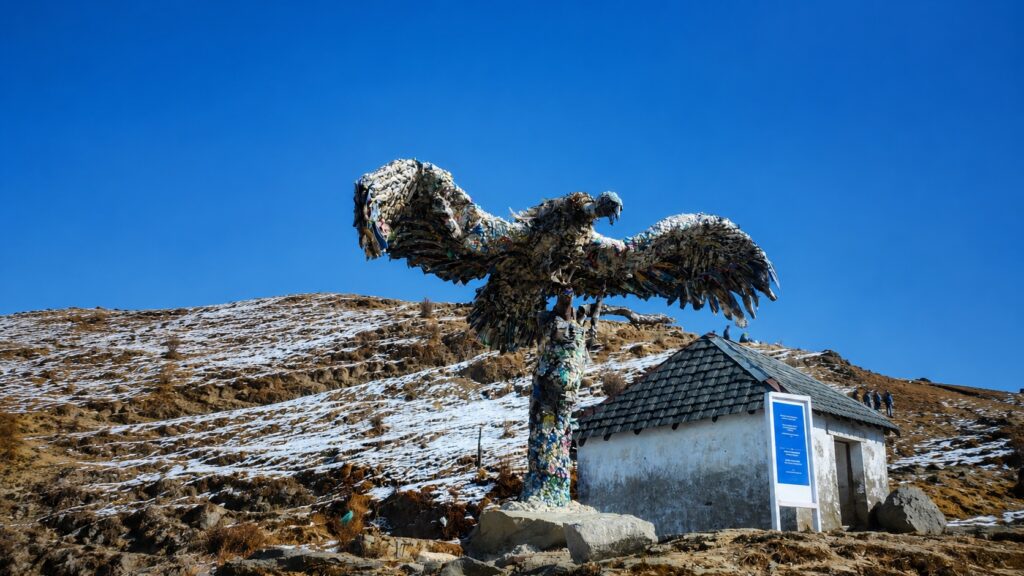
The waiting is the hardest part, harder than the flight itself. Once the jeep drops you at Billing, the dense forest of the drive suddenly opens out to sky and the whole Kangra valley below, and there are gliders everywhere, spread across the slope, half-inflated, lifting off one after another. A few little shacks sell chai, momos, and Maggi, and you can genuinely sit there for an hour just watching other people fly, which is exactly what winds you up. Your pilot harnesses you in, checks the clips, and then you wait for the right wind.
I won’t pretend standing at the edge isn’t frightening, it is. What I can tell you is that the fear peaks right there on the ground and doesn’t follow you into the air.
The take-off, why they scream “run”
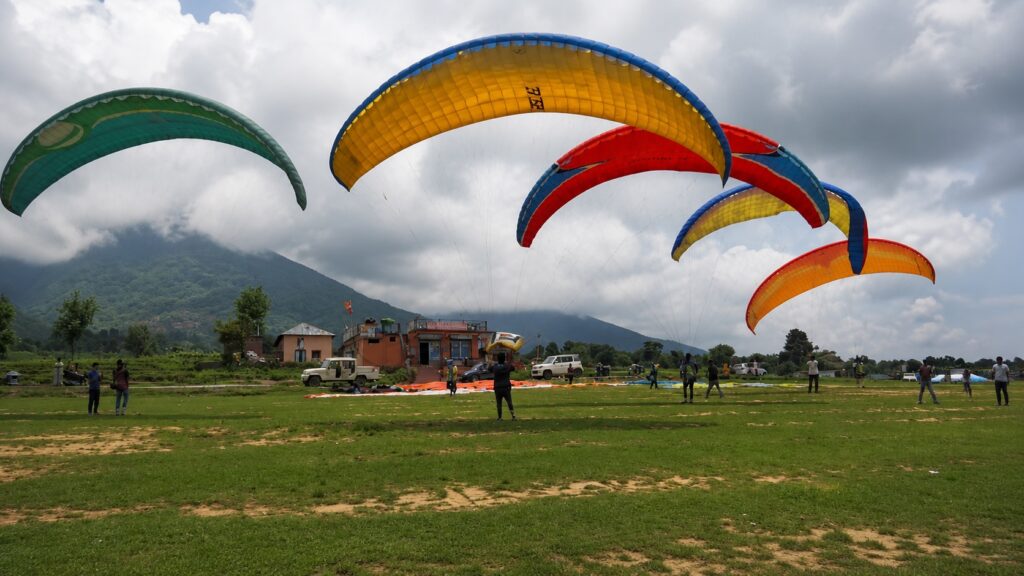
When your pilot says run, run, and don’t stop. The take-off is a short sprint down the rocky slope with the glider dragging behind you, and the pilots will shout at you to keep going, not because anything is wrong, but because that run is what fills the wing and lifts you both off the ground. It feels chaotic. You might stumble, the harness sits around your knees and trips people up, and I watched more than one person half-fall on the way down. If that’s you, don’t panic, you just get up and keep running.
Then, mid-stride, the ground simply isn’t under your feet anymore. There’s no jump and no stomach-drop, the slope falls away and you’re flying. That switch, from scrambling on rock to hanging in still air, is the strangest few seconds of the whole thing.
The glide, what nobody tells you about the calm
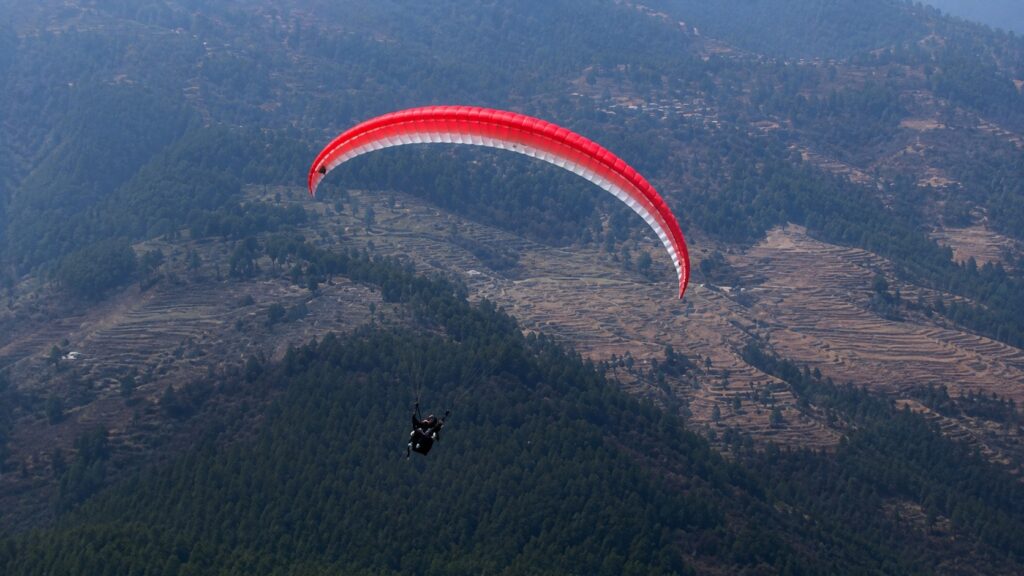
Once you’re up, it is astonishingly calm, and that’s the part no one warns you about. The harness settles into a proper seat, far more comfortable than it looks, and your hands are free. The panic from the take-off is simply gone. You drift over the rice fields and the Tibetan colony with the Dhauladhar range behind you, and it’s quiet enough to hold a normal conversation. If you’re nervous, tell your pilot you’d like it slow and steady and they’ll keep it gentle. They only do the spins and sharp turns if you ask. Mine was lovely company.
We talked the whole way down, and near the end he pointed out his own house on the hillside and we waved at his mother standing on the terrace. That is the moment that stayed with me, not the adrenaline, but that small, ordinary, human wave from the middle of the sky.
The landing, straighten your legs
Landing is gentler than you expect, as long as you do the one thing they tell you: straighten your legs out in front of you. Do that and you slide in sitting upright. Forget it and your legs fold under you as you touch down. The pilot calls it out as the landing site at Bir comes into view, an open field at Chowgan, on the edge of the Tibetan colony. Mine was completely smooth.
A photographer is usually already waiting there to shoot your landing. That’s a separate person from the in-flight video, which comes off the camera you hold yourself, and then it’s over. Harness off, feet on grass, a little dazed, already wanting to go back up.
What surprised me most
Five things I didn’t expect, and that the booking sites won’t tell you:
- It was far quieter than I imagined. I’d braced for a rush of wind and adrenaline. What I got, once airborne, was almost silence.
- The waiting was more stressful than the flying. Nearly all the fear sits on the ground before you launch. The flight itself is calm.
- Landing was easier than take-off. The run off the slope is the hard part. Landing just asks you to straighten your legs.
- The drive up was rougher than the flight. The winding road to Billing unsettled my stomach more than anything in the air did.
- Watching others fly first genuinely helped. Sitting at the landing site the evening before, seeing how ordinary it looked, calmed my nerves more than any reassurance could.
14 Things Nobody Tells You Before Paragliding in Bir Billing
The one thing I wish someone had told me: the nerve-wracking part lasts about ten seconds. After take-off the fear disappears surprisingly fast, and it’s the silence that stays with you. The rest is small, practical stuff nobody mentions, so here it is, the things I learned the hard way or wish I’d known before I flew.
- Fly early, on a light or empty stomach. The winding drive up and the movement in the air can both unsettle your stomach. I skipped breakfast and was glad I did.
- Sit at the front of the jeep if you get car-sick. It’s 20 to 30 minutes of tight, steep curves up to Billing, and the back seats feel every one of them.
- I didn’t think about footwear until I watched two people lose their slippers on the take-off run. Wear laced or buckled shoes, not sandals.
- Bring sunglasses with a strap. It’s bright and windy up there, with nothing to hold them on once you’re moving.
- Carry a jacket even in summer. The take-off site stays cold and windy, and the temperature drops noticeably on the drive up.
- I kept my phone zipped away the whole time, and I’d do it again. Anything loose in an open pocket is gone the moment you lift off, so zip it down or hand it to the pilot.
- Expect your own phone video to come out shaky. If you want steady footage, it’s worth paying for the pilot’s GoPro rather than filming yourself.
- I set aside a whole morning, and I was glad I hadn’t planned anything after. The flight is only 15 to 20 minutes, but the drive up, the wait for your turn, and weather delays eat 2 to 3 hours, so keep half a day free.
- Yes, you’ll probably scream on take-off. Most people do. It’s the running-off-a-slope part. Then it goes quiet almost at once.
- Landing isn’t the scary part. Just straighten your legs when the pilot tells you, so they don’t fold under you.
- The weather changes fast. It can be sunny at the landing site and raining at the take-off point, so flights pause and resume through the day.
- Ask about the weather-cancellation policy before you pay. Reputable operators generally offer a refund or a reschedule if the flying doesn’t happen, but confirm it rather than assume.
- Tell your pilot if you’d rather keep it gentle. They’ll happily skip the spins and sharp turns. The acrobatics only happen if you ask.
- Don’t choose on price alone. In my own research and conversations in Bir, operators charging well below the going rate (around ₹3,000) came up again and again as a red flag. Check the operator is licensed with Himachal Tourism, and honestly, booking through your hotel or homestay is far easier than haggling with a tout at the landing site.
If you remember only five things:
- Fly in the morning.
- Don’t pick the cheapest operator, check it’s licensed.
- Wear proper, secured shoes.
- Keep half a day free.
- Tell your pilot if you don’t want acrobatics.
Is Bir Billing paragliding safe? An honest answer
Quick answer: Most tandem flights in Bir Billing are completed safely with a licensed operator in suitable weather, which is how thousands of people fly here every season. But this is a genuine adventure sport, not a fairground ride, and it carries real risk, so how you book and when you fly matter more than luck.
The real safety record (what the numbers say)
Paragliding in Bir is regulated, but it isn’t risk-free, and it’s worth knowing both halves of that. Flying is overseen by Himachal Tourism and the Bir Billing Paragliding Association, and pilots are meant to be licensed and registered before they fly commercially. That structure is real, and it works most of the time.
It also has a serious side that the booking sites won’t tell you. Bir Billing’s safety has come under repeated scrutiny: in late 2023, three paragliders, a Russian, a Polish, and an Indian, died within a single week, and in October 2024 a Belgian pilot was also killed. Reports have pointed to weak oversight, operators flying illegally from non-approved sites, and flying in poor conditions. Travellers who fly at the busiest times also describe several gliders launching within moments of each other, which raises the chance of a mid-air tangle.
None of this means you shouldn’t fly. It means you should fly with a licensed operator, in calm weather, and not at the most crowded moment of the day.
How to fly safely, what actually reduces your risk
The single biggest thing you control is who you fly with and when, not the flight itself. Here is what genuinely lowers your risk:
- Fly with a licensed operator, not the cheapest tout. A price well under the standard rate is a reason to check credentials, not a saving.
- Fly early, in calm, clear weather. Mornings are usually the steadiest. Flights are paused for wind or rain for good reason, so don’t push a marginal day.
- Check your own harness and helmet before take-off. A quick look that everything is clipped and snug is fair. It’s your body in it.
- Listen to the briefing and run when told. A lot of trouble happens when nervous first-timers sit down or freeze on the take-off run instead of running through it.
- Ask for a gentle flight if you’re anxious. A good pilot will skip the spins. You never have to do acrobatics.
And the reassuring part, from my own flight: the fear peaks on the ground while you wait, and once you’re actually in the air it calms right down. If you’re travelling alone, Bir is one of the easier, friendlier places in the region to do this.
Bir Billing Paragliding Safety: What Makes a Flight Safer?
| Riskier | Safer |
|---|---|
| Booking the cheapest landing-site tout | A licensed, registered operator |
| Flying midday at peak crowds | An early-morning slot |
| Pushing a windy or unsettled day | Calm, clear weather |
| Freezing or sitting on the take-off run | Running through as briefed |
| Skipping the harness check | A quick pre-flight check |
Bir Billing paragliding cost in 2026 (and the ₹3,000 rule nobody explains)
A standard Bir Billing tandem flight costs from ₹3,000 per person in 2026 (the minimum rate set by Himachal Tourism), and most first-timers pay ₹3,000 to ₹4,500 including the jeep transfer. Longer flights run to ₹6,500, a GoPro video adds ₹500 to ₹800, and prices sit at the higher end during the October-November peak.
Bir Billing Paragliding Cost by Flight Duration (2026)
Compare the latest Bir Billing paragliding prices by flight duration, from the standard 15 to 20 minute tandem flight to longer cross-country experiences, so you know what to expect before booking.
| Flight duration | Typical 2026 cost (per person) |
|---|---|
| Short (15-20 min) | From ₹3,000 |
| Standard (20-30 min) | ₹4,200 |
| Extended (30-45 min) | ₹5,500 |
| Long (45-60 min) | ₹6,500 |
| Cross-country (60+ min) | ₹15,000 |
| GoPro video/photos | +₹500-800 |
Most first-timers take the short or standard flight, which is plenty. The longer flights are really for people who want extended airtime or cross-country conditions.
What’s included, and what costs extra
The base price covers the pilot, the gear, and the jeep ride up to the take-off point, but photos and video are usually where the extras creep in. When I flew, the jeep transfer from Bir up to Billing was included, and I paid ₹400 separately for the GoPro footage (that’s ₹500 to ₹800 now). Worth knowing: the shots of you landing are often taken by a different photographer waiting at the landing ground, while the in-flight video comes from the camera you hold yourself. Clarify what’s bundled before you pay, so a “₹3,000 flight” doesn’t quietly become ₹4,000 with add-ons.
The government price floor, why “cheap” is a red flag
When I flew in 2021, I paid ₹1,700, but that number is gone. In 2022, Himachal Tourism set ₹3,000 as the minimum fare for a standard flight, partly to stop uncertified operators from undercutting everyone on price. So in 2026, a quote noticeably below ₹3,000 isn’t a bargain so much as a question mark. It’s worth asking whether that operator is licensed and following the standard rate before you hand over cash.
How to book paragliding in Bir Billing (without getting scammed)
The simplest safe way to book is through your hotel or homestay the day before, rather than walking up to whoever shouts loudest at the landing site. When I flew, my hotel manager arranged it, and the operator’s jeep picked us up in the morning along with a few other guests. No haggling, no guesswork about who the pilot was.
If you’d rather arrange it yourself, that’s fine too. Just run through the same checks a good stay would do for you:
- Book the night before, through your accommodation or a licensed operator, not a landing-site tout.
- Ask that the pilot is licensed and registered with Himachal Tourism.
- Confirm the price. ₹3,000 or more for a standard flight. Treat a much lower quote with caution.
- Check what’s included, jeep transfer and video, and what costs extra.
- Ask the weather-cancellation policy. Reputable operators generally offer a refund or a reschedule if flying isn’t possible. Confirm it rather than assume.
If you’re staying over in Dharamshala and treating Bir as a day trip, your homestay or hotel there can usually set the whole thing up for you.
Best time for paragliding in Bir Billing (season + time of day)
The best time to paraglide in Bir Billing is October to November, when the post-monsoon air is clearest and the Dhauladhar views are at their sharpest, with March to June a close second. Flying runs roughly from mid-September to mid-July and stops during the monsoon. For the flight itself, an early-morning slot is usually the calmest.
The flying season (and when it’s closed)
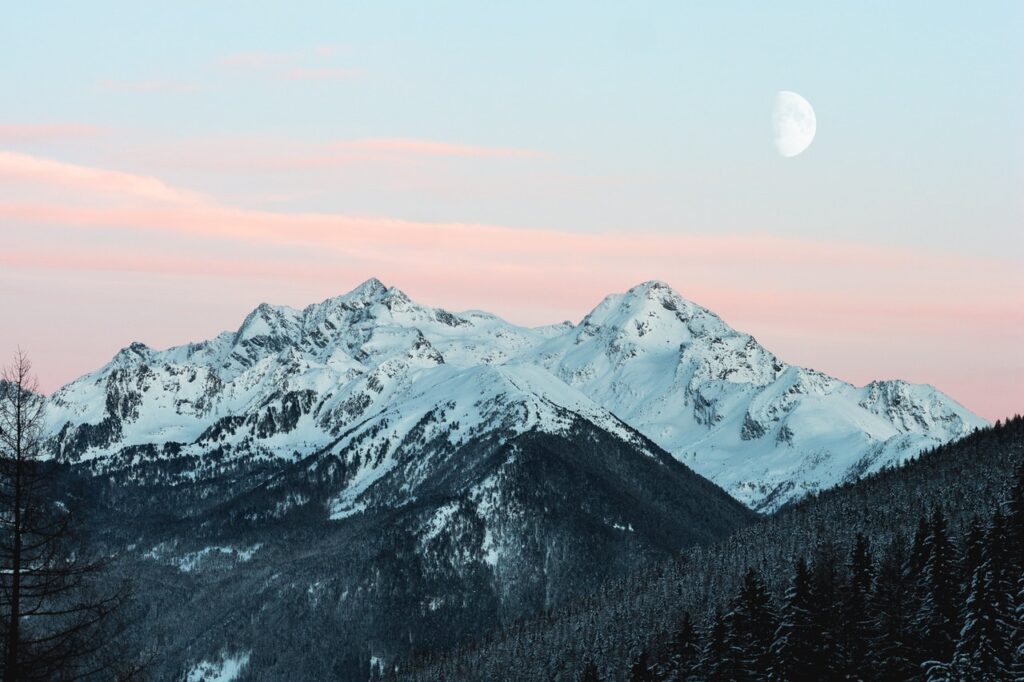
Bir Billing flies from about mid-September to mid-July, and closes through the monsoon. Heavy rain and low visibility from around July to mid-September make it unsafe, so operators suspend flights. Winter deserves its own mention. The take-off site at Billing often sits under snow even when Bir, down in the valley, is clear and sunny, as the photo below shows.
Flying still happens on bright, calm winter days, but only when the weather allows, and it is called off in heavy snow or high wind. So in peak winter, come prepared for real cold up top and don’t count on flying to a fixed schedule.
Within the open season, the conditions shift month to month:
| Month | Fly? | Conditions |
|---|---|---|
| Oct-Nov | Best | Clearest skies, stable air, best Dhauladhar views. |
| Mar-Jun | Very good | Mild weather, good for longer flights. |
| Dec-Feb | Only if weather permits | Cold and quiet. Snow is likely at Billing. Flying is suspended during heavy snow or high winds. |
| Jul to mid-Sep | Closed | Monsoon season, heavy rain, and poor visibility. |
Morning vs evening, what I’d choose and why
Fly in the morning for the calmest air. Come back in the evening for the best views. I flew early, on an empty stomach, and I’d do it the same way again. Mornings tend to have the steadiest wind, and doing the winding drive and the flight before you’ve eaten is easier on your stomach.
But if you want the postcard, the landing site at around 4 pm is the loveliest time to sit. The sunset over the valley with gliders drifting down is exactly the scene I opened this guide with. One honest caveat: mountain weather turns fast.
It can be sunny at the landing site and raining up at the take-off, so flights pause and restart through the day. Keep your plan loose and you’ll be fine. If you’re still working out when to visit the wider region, that’s a longer conversation.
How high is Bir Billing? The world’s second-highest paragliding site
Bir Billing is the highest paragliding site in Asia and the second-highest in the world. You take off from Billing at around 2,400 m (about 8,000 ft) and land down at Bir at roughly 1,400 m, a glide of about 14 km over 15 to 30 minutes in the air.
A quick clarification, since the two names confuse people: Billing is the take-off point up the hill, and Bir is the landing site and the town you actually stay in, about 14 km apart (there’s more on the two and everything else to do down there in our wider Bir guide).
It has the pedigree to match the height, too. Bir Billing hosted the Paragliding World Cup in 2015 and again in 2024, and the site holds cross-country distance records well over 250 km, though that’s for expert solo pilots, not your tandem joyride.
| Flight stat | Detail |
|---|---|
| Take-off (Billing) | ~2,400 m (~8,000 ft) |
| Landing (Bir) | ~1,400 m |
| Glide distance | ~14 km |
| Air time (tandem) | ~15 to 30 minutes |
| Ranking | Asia’s highest, world’s second-highest |
Weight limit, age and who should not fly
Most operators in Bir fly tandem passengers between about 30 and 90 kg, with a minimum age of 12. If you’re heavier, roughly 90 to 110 kg, you can often still fly at the pilot’s discretion with a bigger glider and around ₹500 extra, subject to your fitness and the wind that day. Paragliding generally isn’t advised if you’re pregnant, or have a serious heart condition, a recent major surgery, or severe vertigo.
| Detail | Requirement |
|---|---|
| Weight | ~30-90 kg standard; ~90-110 kg at the pilot’s discretion (+~₹500) |
| Age | Generally 12 to 60; younger children aren’t flown, and over-60s fly at the pilot’s discretion based on fitness |
| Not advised for | Pregnancy, serious heart conditions, recent major surgery, severe vertigo or anxiety |
| Carry | Aadhaar or a photo ID for the liability form |
So, can a 100 kg person do paragliding in Bir? Usually yes. Most operators will take you at the pilot’s discretion with a larger glider and a small surcharge, as long as you’re reasonably fit and the wind cooperates.
What to wear and carry for paragliding in Bir
Wear laced or buckled shoes and a jacket, and carry as little as you can, all of it secured. The take-off point is cold and windy even in summer, and once you lift off, anything loose is gone. Here’s the short list:
- Laced or buckled shoes. I watched sandals and chappals slip straight off people’s feet on the take-off run. This is the one I’d insist on.
- A jacket or layers. Billing stays cold and windy year-round, and the temperature drops on the drive up even when Bir is warm.
- Sunglasses, ideally with a strap. It’s bright and windy, with nothing to hold them on once you’re moving.
- Your phone, zipped away or handed to the pilot. Not loose in an open pocket.
- A photo ID (Aadhaar). You’ll fill a short liability form before flying.
- Leave behind loose bags, jewellery, and anything that can’t be zipped down.
How to reach the Bir Billing take-off (and the drive up)
You don’t drive to the take-off yourself. It sits at Billing, about 14 km uphill from Bir, and the operator’s jeep takes you up as part of the flight, a 20 to 30 minute ride. Getting to Bir in the first place: it’s roughly 65 to 70 km from Dharamshala (2 to 3 hours), or an overnight Volvo from Delhi to Baijnath, about 12 km away. If you’re planning the wider trip, our Dharamshala guide covers the routes in full.
The Bir to Billing take-off drive (what the road is really like)
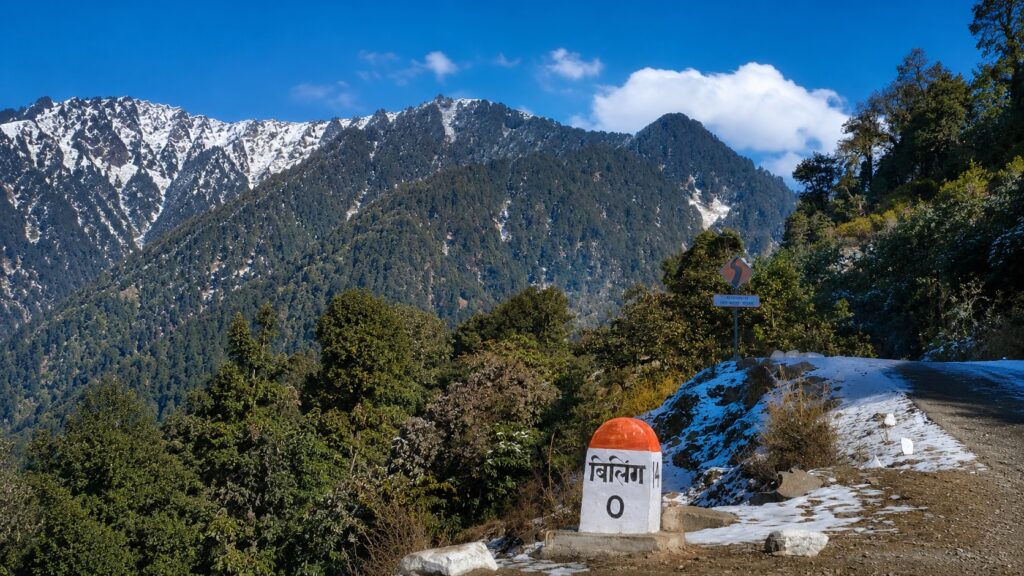
The drive up is short but memorable, and it’s where queasy stomachs suffer. It’s 20 to 30 minutes of steep, one-way, well-paved but bumpy road, winding through dense forest with the temperature dropping and the wind picking up as you climb. Then the trees fall away and it opens onto sky and the whole valley at once. At the top there are a few little shops for chai, momos, and Maggi while you wait your turn. If you’re prone to motion sickness, sit at the front of the jeep and, as I said earlier, skip the heavy breakfast.
The new Rajgundha backroad to the take-off
There’s now a second, quieter way up, and I’ve driven it myself. A newer road connects the Billing take-off directly with Rajgundha, so you can reach the site from that side instead of only from Bir. It’s a one-way, rocky-in-parts backroad with no shops along the way and patchy phone signal, more of a small adventure than a shortcut, but genuinely useful if you’re combining your flight with a trip out to Rajgundha or Barot.
Want more than a joyride? The P1/P2 paragliding course
If one tandem flight leaves you wanting to fly yourself, Bir is one of the best places in India to learn. P1 and P2 are the beginner certification stages: P1 covers ground-handling and first assisted hops, and P2 means you can fly solo independently in calm conditions. A basic course usually runs about 14 to 15 days. The new National Institute of Paragliding at Bir is set to bring formal, government-run training to the site. This is for people who genuinely want to learn to fly, not for a first-timer after a single joyride.
Where paragliding fits in your Bir trip
Fly one morning, then give Bir the rest of your time. Two to three days is the sweet spot. The flight itself is only a few hours. The town is where the slowness that makes Bir special actually happens. After you land at the edge of the Tibetan Colony, there are the cafes worth lingering in, the monasteries, Chokling and the beautiful Sherabling, and a longer list of things to do in Bir once the adrenaline settles.
The local move, if you’re not rushing, is to base yourself in Dharamshala and treat Bir as one stop in the wider Kangra Valley, a relaxed day or overnight trip.
And if the weather grounds you, which it will for someone reading this, the best fallback I know sits three kilometres away. Ahju halt is on the Kangra narrow-gauge line, the trains run happily on the overcast, unsettled days that keep every glider on the ground, and a ticket costs less than a coffee at the landing site. Here is what to do with a flying day that gets cancelled, timings included.
The honest verdict
Would I do Bir Billing paragliding again? Yes, without hesitation. It earns its reputation, and the calm once you’re airborne is worth the ten seconds of nerves on the slope.
Here is my honest steer on who it’s for. If you’re reasonably fit and even a little curious, do it, and that includes people who are scared of heights, because it turns out gentler and more peaceful than it looks once you’re up. If you have a serious heart condition, or you’re hoping for a white-knuckle adrenaline rush, this slow, drifting kind of flight may not be the one for you, and that’s worth knowing before you pay.
Whatever you decide, three things will save you the most trouble: fly early in the morning while the air is calm, book through your stay rather than a landing-site tout, and don’t be tempted by anything priced under ₹3,000. Get those right, and it’s one of the simplest, most rewarding hours you’ll spend in the Himalayas.
Also read
Planning the rest of your trip? These local guides pair well with a day in Bir:
- 12 Best Things to Do in Bir Billing Beyond Paragliding
- Cafe in Bir: Skip the Hype, Find the Good Ones
- A Complete Guide to Tibetan Buddhist Monasteries In and Around McLeod Ganj
- Dalai Lama Temple McLeodganj: A Local’s Guide 2026
- Namgyal Monastery: Inside the Dalai Lama’s Monastery
- Best Cafes in Dharamshala: McLeodganj, Dharamkot, Bhagsu and More
Frequently asked questions
How much does paragliding in Bir Billing cost?
A standard tandem flight starts at ₹3,000 per person in 2026, the minimum rate set by Himachal Tourism, and rises to around ₹6,000 or more for longer flights. A GoPro video usually costs ₹500 to ₹800 extra. Prices edge higher during the October-November peak.
Is Bir Billing paragliding safe?
Broadly yes, with a licensed pilot in calm weather, which is how most people fly here without incident. But it is a real adventure sport with genuine risk, and there have been fatalities. Choose a registered operator, fly early in settled weather, and follow the take-off briefing.
How many people have died paragliding in Bir Billing?
There is no official running total, but fatalities do happen. In late 2023, three paragliders died within a single week, and another pilot was killed in October 2024, incidents that drew national scrutiny of safety standards. Flying with a licensed operator in good weather is the best way to lower your risk.
What is the best time for paragliding in Bir Billing?
October and November are the best months, with clear post-monsoon skies and stable air, with March to June a close second. Flying runs roughly mid-September to mid-July and stops during the monsoon. For the flight itself, early morning usually has the calmest wind.
What is the weight limit? Can a 100 kg person do paragliding?
Most operators fly passengers between about 30 and 90 kg. Heavier fliers, roughly 90 to 110 kg, can often still fly at the pilot’s discretion with a bigger glider and around ₹500 extra, depending on fitness and wind. So a 100 kg person usually can, with prior approval.
What is the minimum age for paragliding in Bir?
The minimum age is generally 12, and many operators set an upper age around 60, above which you can often still fly at the pilot’s discretion depending on fitness. Younger children aren’t flown, and tandem-ing a child on a parent’s lap isn’t allowed. Either way, it’s worth checking with the operator first.
What should I wear for paragliding in Bir?
Wear laced or buckled shoes, since sandals and slippers slip off at take-off, and a jacket, as the take-off point is cold and windy year-round. Bring sunglasses (ideally with a strap), keep your phone zipped away, and carry a photo ID for the liability form.
How long does the paragliding flight last?
The flight itself lasts about 15 to 20 minutes for a standard tandem, though in the air it often feels shorter. Longer flights of 30 to 60 minutes are available. Budget 2 to 3 hours in total once you add the drive up and the wait for your turn.
Is 2 days enough for Bir Billing?
Two days is enough to fly and get a feel for the town: one day for paragliding with a weather buffer, and one to explore. Three days is more comfortable if you want the cafes, monasteries, and sunsets too.
What is P1 and P2 in paragliding?
P1 and P2 are beginner pilot certification stages. P1 covers ground-handling and first assisted hops. P2 means you can fly solo independently in good conditions. In Bir, reaching them takes a roughly 14 to 15 day course, for people who want to learn to fly, not just take a tandem joyride.
How high is Bir Billing? Is it the highest?
Bir Billing is the highest paragliding site in Asia and the second-highest in the world. Take-off at Billing is around 2,400 m (about 8,000 ft), and you land at Bir near 1,400 m, a glide of about 14 km down the valley.
Do I need to book paragliding in advance?
It’s best to book the day before, through your hotel or homestay or a licensed operator, rather than turning up cold at the landing site. Booking ahead means a confirmed pilot and a morning pickup, and it’s easier than haggling with a tout on the spot.