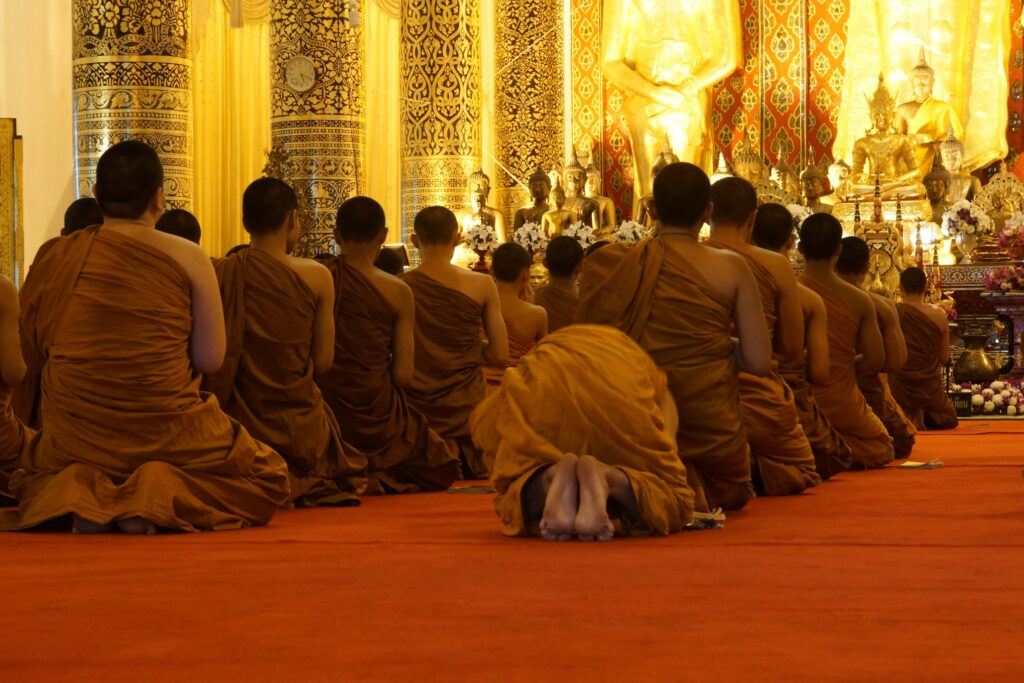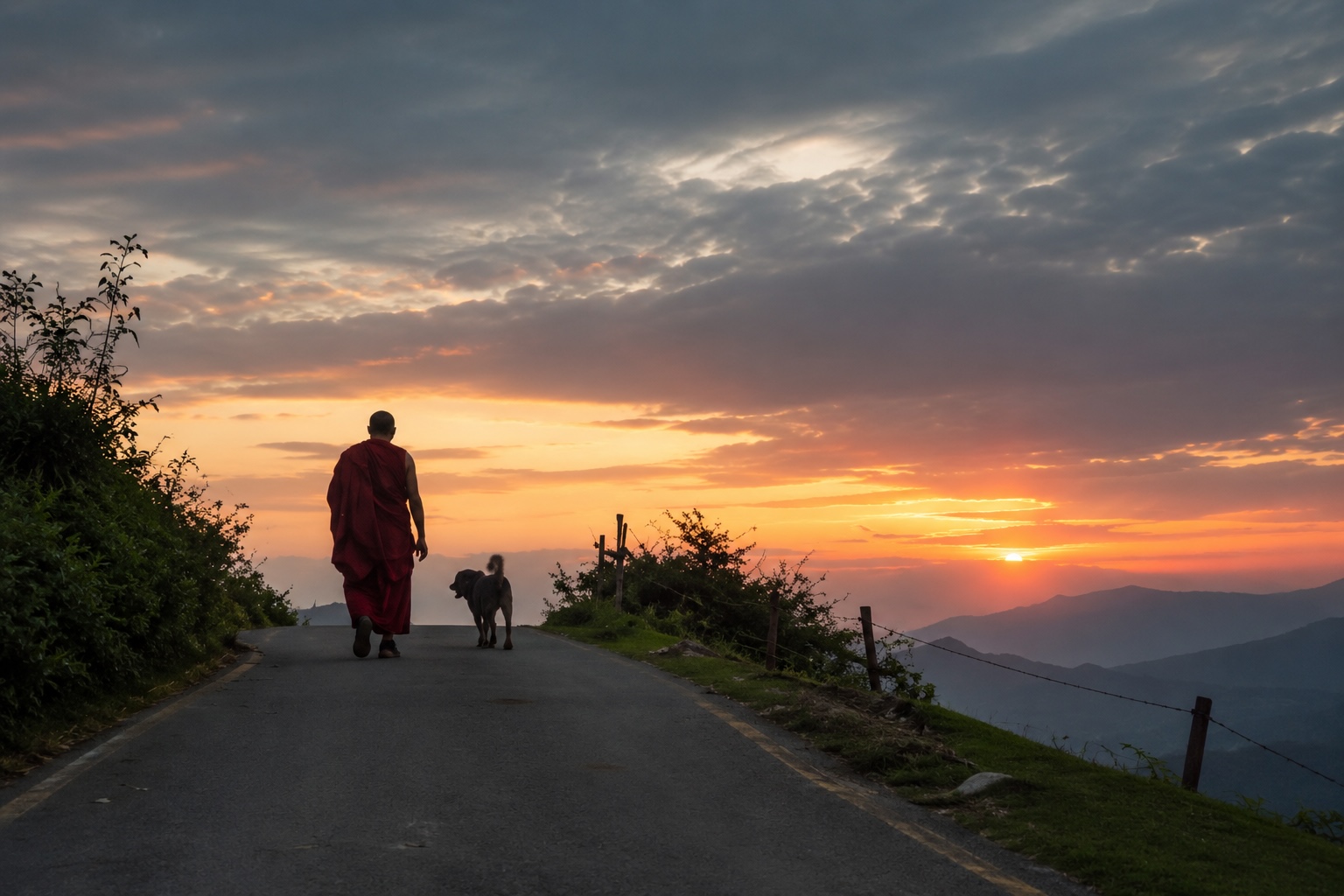
Every time I walk into the Bir Tibetan Colony, I catch the same quiet collision: paragliders drifting down over the valley while, just below them, monks file into a prayer hall and the afternoon chants begin. Most guides file Bir under “the paragliding capital of India” and stop there. They miss the bigger story, that this small refugee settlement in the Kangra valley quietly became one of the most complete corners of Tibetan Buddhism in exile.
Here’s what it actually is, from someone who lives just down the valley.
Table of Contents
Bir Tibetan Colony, Quick Facts
| Quick Fact | Details |
|---|---|
| Founded | Early 1960s, by Chokling Rinpoche (the 3rd Neten Chokling) |
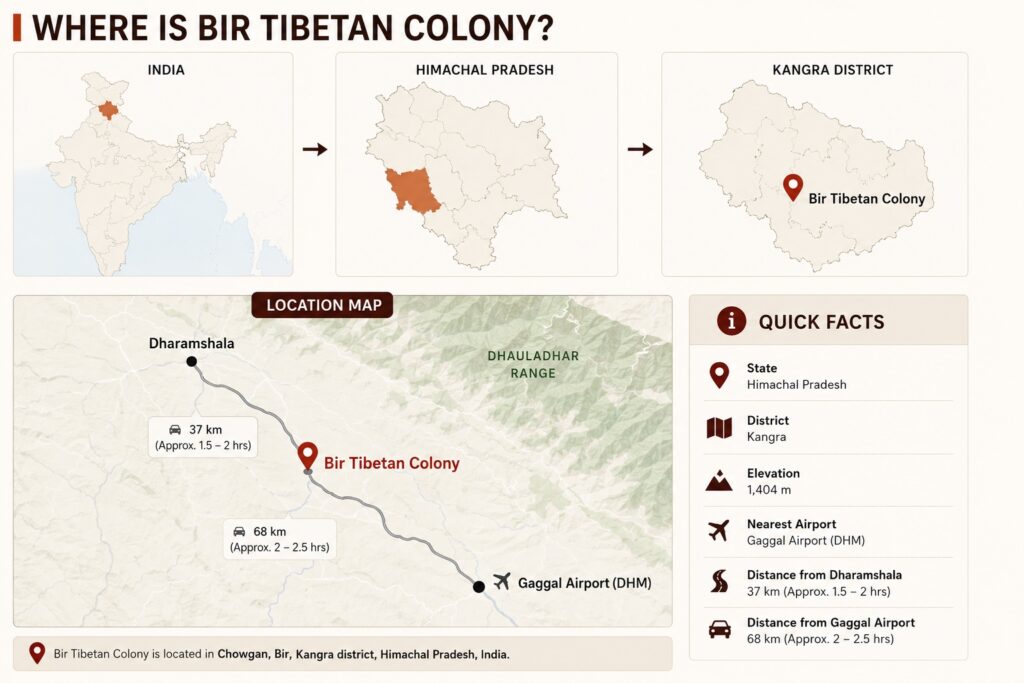
| Location | Chowgan (Chaugan) village, Bir, Kangra district, Himachal Pradesh 176077 |
| Monasteries | Around half a dozen major monasteries, plus several smaller ones |
| Lineages | Nyingma, Kagyu & Sakya, plus a Rime college (no Gelug, that’s McLeod Ganj) |
| Best time | October to June; Losar (Tibetan New Year, late Feb/early March) for masked dances |
| Entry | Free |
| Timings | Monasteries generally ~8 AM to 6 PM (prayer halls often 8:30 AM to 4:30 PM) |
| Distances | ~37 km from Dharamshala (under 2 hrs), 5-min drive / 20-min walk from the Bir landing site, ~68 km from Gaggal (Kangra) Airport |
Why Bir Holds Every School of Tibetan Buddhism but One
Here is what makes the settlement genuinely rare, and what almost no guide tells you: while McLeod Ganj is essentially a Gelug town, built around the Dalai Lama’s lineage, Bir became the exile home of the other major schools, Nyingma, Kagyu, and Sakya, plus one of India’s most respected non-sectarian (Rime) colleges. Between the two towns, an hour apart, nearly the whole of Tibetan Buddhism rebuilt itself in this one valley.
Walk the Colony and you can stand inside three lineages in a single afternoon:
- Nyingma (the oldest school), at Chokling Monastery, founded by an emanation of the great treasure-revealer (tertön) Chokgyur Lingpa, watched over by a giant statue of Padmasambhava.
- Kagyu, at Palpung Sherabling, the Indian seat of the 12th Kenting Tai Situpa, a regent of the Karmapa.
- Sakya, at the small, bright-blue Sakya Dirru monastery out in the fields.
- And the Rime (non-sectarian) tradition, at Dzongsar Khyentse Rinpoche’s college and the Deer Park Institute.
McLeod Ganj gives you the Gelug world and the Dalai Lama’s temple; Bir quietly holds the rest. If you only know the monasteries around McLeod Ganj, the Colony is the other half of the picture.
Bir vs McLeod Ganj: Which Is Better for Tibetan Culture, Monasteries & Spiritual Experiences?
| Bir Tibetan Colony | McLeod Ganj | |
|---|---|---|
| Main lineage(s) | Nyingma, Kagyu, Sakya + a Rime college | Gelug (the Dalai Lama’s seat) |
| Vibe | Quiet, rural, monasteries among fields | Busy hill-town, cafes, markets |
| Crowds | Low, calm | High, touristy |
| Best for | Slow monastery-hopping, study, stillness | Dalai Lama teachings, the buzz |
What is the Bir Tibetan Colony?
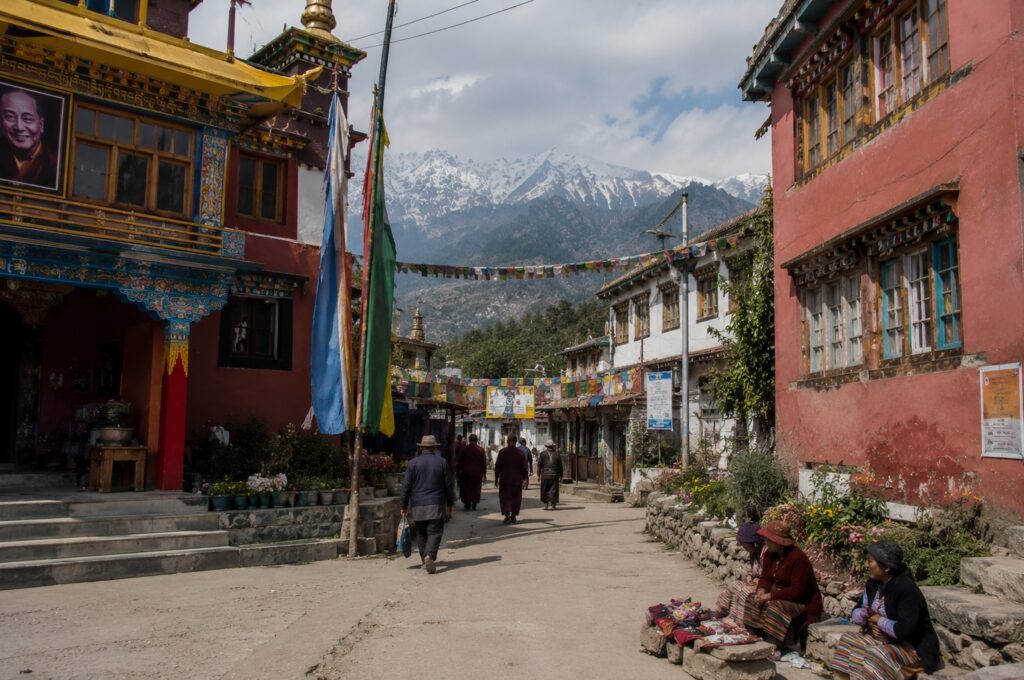
The Bir Tibetan Colony is a Tibetan refugee settlement in Chowgan village, on the south-western edge of Bir in Himachal Pradesh’s Kangra district, founded in the early 1960s and now known for its monasteries, Tibetan cafes, and handicraft workshops. Locals just call it “the Colony.”
The first time I wandered in, I’d come for the paragliding like everyone else, and got pulled in by the lanes instead. It’s small, you can cross the core of it in about ten minutes on foot, but dense with life: prayer wheels worn smooth by hands, faded flags strung across the road, momos steaming in a doorway, maroon-robed monks who nod as they pass.
After China’s occupation of Tibet, refugees from the Kham region of eastern Tibet resettled here when Chokling Rinpoche acquired around 200 acres of land that became the seed of the settlement.
It’s one corner of the much larger Tibetan story that runs across the region, the same one that shapes Dharamshala and the quieter villages beyond McLeod Ganj.
Monasteries of Bir: A Complete Guide to the Tibetan Buddhist Monasteries in Bir
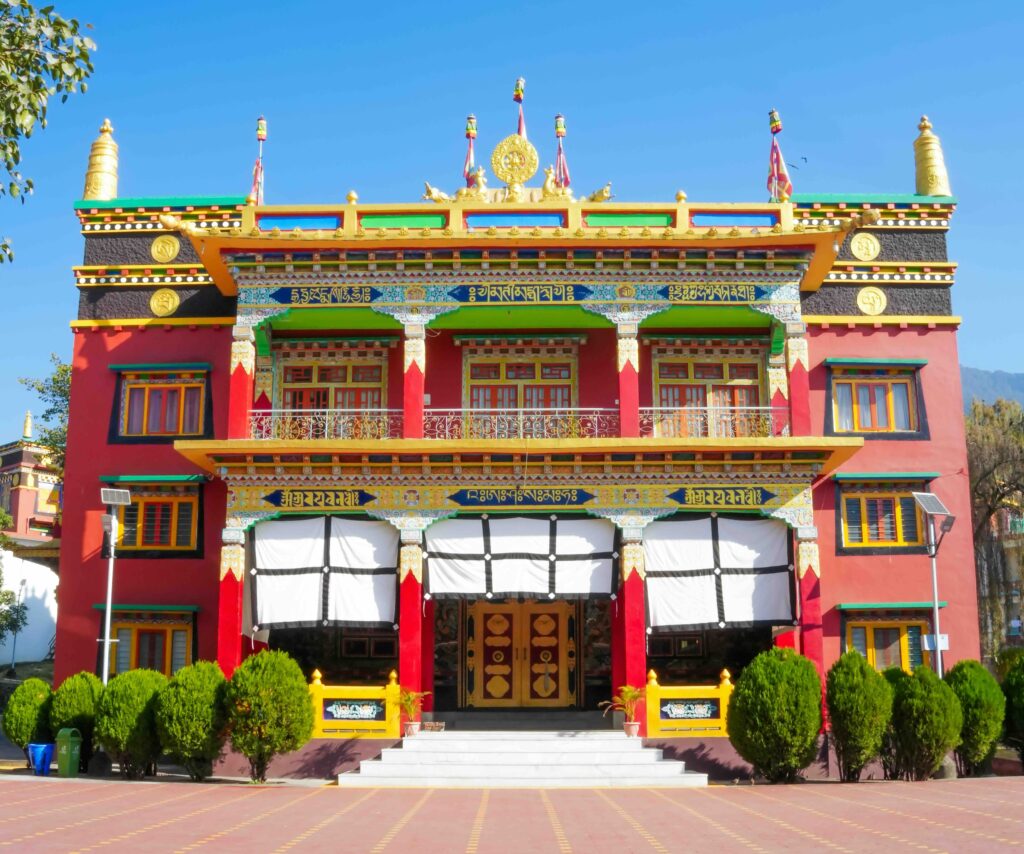
The main monasteries in Bir’s Tibetan quarter are Chokling, Palpung Sherabling, Sakya Dirru, the Palyul (Nyingma) monastery, and Tsering Dzong, most within a short walk of each other, with Sherabling a 6 km drive into the pine forest. Here they are at a glance, then what each is like to visit.
| Monastery | Lineage | Distance from Colony | Known for | Timings |
|---|---|---|---|---|
| Chokling | Nyingma | In the Colony (~1 km from landing site) | Padmasambhava statue, stupa, drubchen dances | ~8 AM-6 PM |
| Palpung Sherabling | Kagyu | ~6 km (Bhattu) | 12 m golden Maitreya, Tai Situpa’s seat | Hall 8:30 AM-4:30 PM, grounds ~6 PM |
| Sakya Dirru | Sakya | Colony, Drongtoe Rd | Bright-blue monastery, morning prayers | Daylight hrs (early AM best) |
| Palyul (Nyingma) | Nyingma | Main road, opp. Hotel Surya Classic | Built 1980, ~200 monks, cham dances | Daylight hrs |
| Tsering Dzong | Tibetan Buddhist | Behind Chowgan tea gardens (~2.5 km) | Prayer wheels, murals, sunset prayer-flag fields | Daylight hrs, free |
Chokling Monastery
It is the one I send everyone to first. It’s the heart of the Colony, the monastery whose founder, the 3rd Neten Chokling, started the settlement itself, and the moment you climb into the courtyard you understand why people linger. A giant golden Padmasambhava sits inside, chants carry out of the hall twice a day, and if your timing is lucky you’ll catch the drubchen, the eight-day cycle of ritual dances it’s known for across the Tibetan Buddhist world. (Trivia I love telling guests: the 1999 film The Cup was shot here.)
Palpung Sherabling
This monastery is worth the 6 km drive out to Bhattu on its own. The road climbs through pine forest until the gold roofs appear, and inside the main hall a two-storey, roughly 12 m golden Maitreya genuinely stops you. It’s the Indian seat of the 12th Kenting Tai Situpa, a 30-acre campus with around 750 monks, a monastic college and retreat centres, less a monastery than a quiet spiritual town. If it pulls you in, our full Sherabling Monastery guide has the timings, the route and everything to see inside.
The smaller ones reward a wander. Sakya Dirru, on Drongtoe Road, is a bright-blue monastery I found by accident one morning, just as the monks began their prayers. Palyul Choekhorling, the Nyingma monastery on the main road opposite Hotel Surya Classic, was built in 1980 and houses around 200 monks. And Tsering Dzong, behind the Chowgan tea gardens, has fields strung with prayer flags, one of the quietest sunset spots in Bir.
How to See the Colony in a Few Hours, a Self-Guided Walking Route
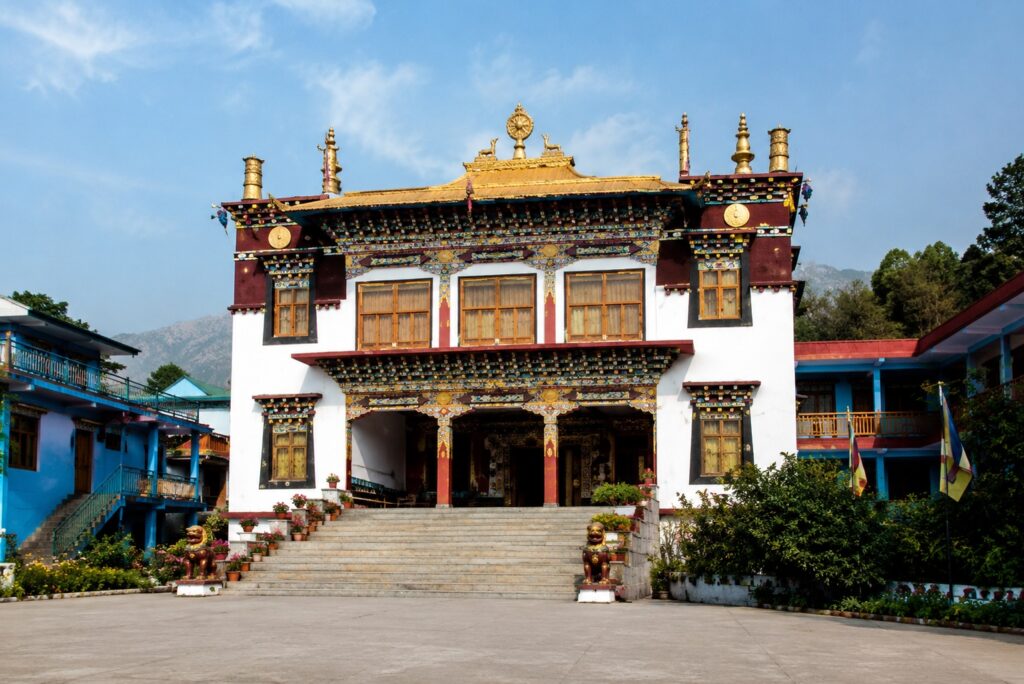
You can walk the heart of the settlement in about 2-3 hours: start at Chokling, loop through the Tibetan market and cafes, and finish at the landing site for sunset, with Palpung Sherabling a half-day add-on. Here’s the order I take friends.
- Start at Chokling Monastery (morning, ~30-45 min). Go early for the chanting; the courtyard light is best then too.
- Walk 5 minutes into the Tibetan market, prayer flags, handicraft and carpet shops, the Men-Tsee-Khang clinic.
- Lunch in the Colony (~1 hr), a Tibetan cafe for momos and thukpa (picks below).
- Wander to Sakya Dirru and Palyul (10-15 min on foot), quiet, almost always empty.
- Finish at the Bir landing site for sunset (5-min walk), the last paragliders coming down as the Dhauladhars turn gold.
If you have half a day, add Sherabling monastery as a separate trip (a 20-minute drive), not squeezed into the loop. The honest tip most guides skip: the Colony rewards slowness. Two hours of actually sitting beats five monasteries rushed.
Deer Park Institute, Where You Can Actually Study Buddhism
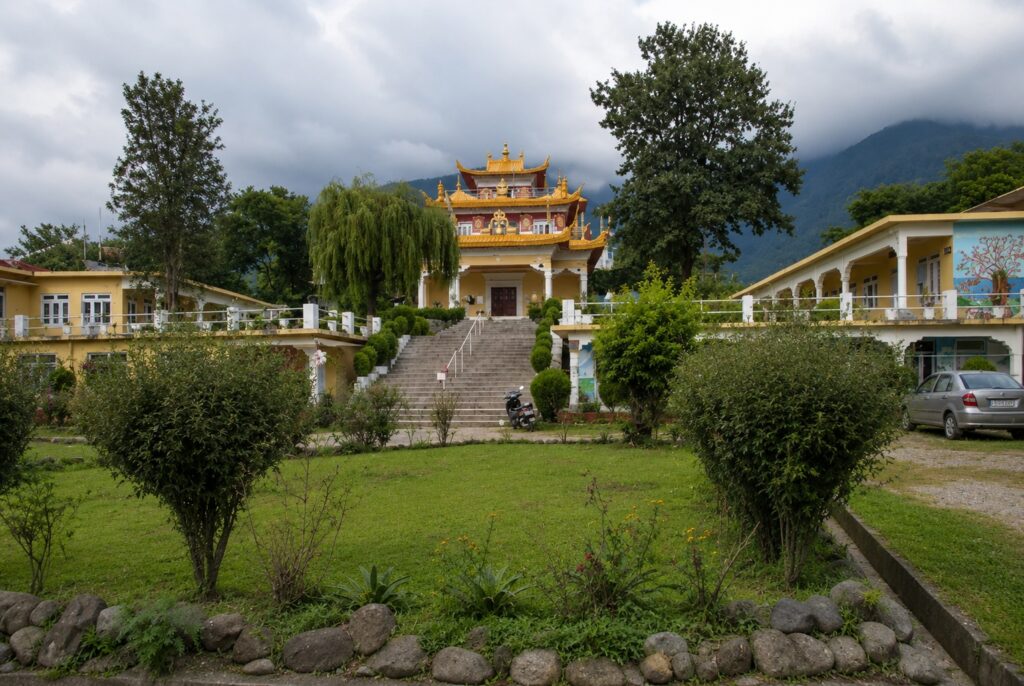
The Deer Park Institute, in the heart of the Colony, is a centre for classical Indian wisdom and Buddhist philosophy founded under Dzongsar Khyentse Rinpoche, and the surprising part is that it’s open to anyone, with short courses, talks, and retreats run mostly on a donation basis. I’ve sent more than one slow-travelling guest up there for a week and watched them come back changed. This is where Bir lets you actually sit and learn, not just look.
Tibetan Food & Cafes in the Colony
The Colony and the lanes down to the landing site are full of small Tibetan kitchens, and the honest truth, after a lot of eating here, is that the best food isn’t in the prettiest cafes. For momos, I send everyone to Ram Bahadur Cafe, a plain little joint where the smell of garlic-chilli chutney hits before the plate does, and the fried momos have a near-cult following (around ₹80 to 100).
For thukpa and “devil momos” in spicy garlic gravy, the bright-yellow Nyingma Restaurant near Gandhi Chowk fills with locals after evening prayers, not tourists, and the thukpa is properly balanced. When you’ve had your fill of momos, Kuckie’s Cafe does homely, simple food regulars swear by. The cafes nearer the landing site are lovely to sit in, but go for the view, not the plate. If you want the full rundown, which cafes across Bir are genuinely worth your time and which are only selling the sunset, see my honest guide to the cafes in Bir. More on regional food: famous food in Dharamshala.
Handicrafts & Tibetan Medicine (Men-Tsee-Khang)
Beyond the monasteries, the Colony’s lanes hold Tibetan handicraft and carpet workshops and a branch of the Men-Tsee-Khang, the Tibetan Medical and Astrological Institute, where you can buy traditional herbal remedies or sit for a consultation. It’s a quiet, genuine bit of living Tibetan culture, not a souvenir act, the carpets are hand-woven and the clinic is the real thing.
How to Visit, Timings, Etiquette & Getting There
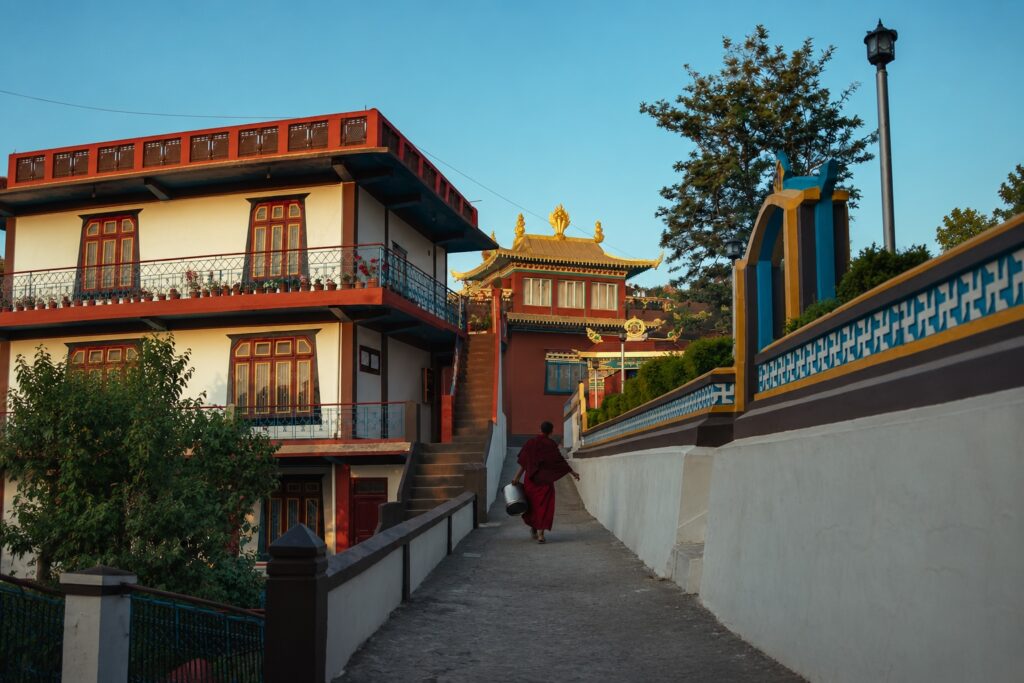
You can walk through the Colony any time; the monasteries are generally open ~8 AM to 6 PM and entry is free. It sits about 37 km (under 2 hours) from Dharamshala and a 5-minute drive below the Bir landing site. The best time to visit is October to June, and if you can time it, Losar (Tibetan New Year, late February or early March) is the most atmospheric, with masked dances at the monasteries.
A few things I always tell guests, because this is a living place of worship, not a sightseeing set:
- Keep silence inside prayer halls, and dress modestly (shoulders and knees covered).
- Ask before photographing monks or interiors, and never shoot during a ceremony.
- Walk clockwise around stupas and prayer wheels.
If you’re timing a trip around Tibetan events, the region’s biggest is the Dalai Lama’s birthday on July 6, celebrated most fully in McLeod Ganj, see our guides to the Dalai Lama’s 91st birthday and where to stay for it.
Where to Stay Near the Colony
You can stay right in the settlement, in simple guesthouses or the art-immersive Chokling ArtHouse attached to the monastery, or pick a quieter homestay in the fields for space and stillness over backpacker buzz. The monasteries themselves (Chokling, Sherabling) keep basic guest rooms for travellers who want to wake to the morning prayers. If you’d rather base in Dharamshala and day-trip, here are the best long-stay homestays in the region.
Tibetan Buddhist Terms You’ll Hear in Bir
A quick glossary, so the monasteries make more sense as you walk them:
- Gompa, a Tibetan Buddhist monastery or temple.
- Rinpoche, “precious one,” an honorific for a revered or reincarnate teacher.
- Tertön, a “treasure revealer,” a master who discovers hidden teachings; Chokgyur Lingpa, behind Chokling Monastery, was one of the greatest.
- Drubchen, a “great accomplishment,” an intensive multi-day group ritual (Chokling’s run about eight days, with masked dances).
- Maitreya, the future Buddha; the giant golden statue at Palpung Sherabling.
- Losar, Tibetan New Year (late February or early March), the year’s most festive time here.
Final thoughts: Come for the Paragliders, Stay for the Prayer Flags
Most people come to Bir to fly and if the paragliding is what brought you, here’s my honest first-hand guide to Bir Billing paragliding. The Colony is the reason to stay an extra day, maybe an extra week. And beyond the prayer halls, Bir has waterfalls, cafes, treks, and sunsets worth those extra days, here is my full guide to the things to do in Bir Billing.
In one quiet settlement you can walk from a Nyingma monastery to a Kagyu one to a Sakya shrine, eat momos made by hands that learned the recipe in Tibet, and sit in a courtyard while chanting you don’t understand somehow still settles you. McLeod Ganj has the fame; Bir has the stillness. When you plan your trip, build Bir in: our Dharamshala itinerary shows how to fit it, the Dharamshala travel guide 2026 sets the local scene, and my guide to the whole Kangra Valley places Bir within the wider region. Come for the paragliders. Stay for the prayer flags.
Frequently asked questions
Is the Bir Tibetan Colony worth visiting?
Yes. It’s one of the most rewarding stops in Bir, with monasteries from three major Tibetan Buddhist lineages, authentic Tibetan food, and a calm the paragliding crowd misses. Give it at least a half-day; slow travellers and spiritual seekers often stay far longer.
What is the Bir Tibetan Colony famous for?
It’s famous for its Tibetan Buddhist monasteries, especially Chokling and nearby Palpung Sherabling, along with handicraft and carpet workshops, the Deer Park Institute, and Tibetan cafes serving momos and thukpa. It is the cultural heart of Bir, beneath the village’s fame as a paragliding hub.
How many monasteries are in Bir?
Bir has around half a dozen major Tibetan Buddhist monasteries in and around the Colony, including Chokling (Nyingma), Palpung Sherabling (Kagyu), Sakya Dirru (Sakya), Palyul, and Tsering Dzong, plus the Dzongsar Khyentse college and Deer Park Institute nearby. Most sit within a short walk of each other.
Which monastery should I visit in Bir?
Start with Chokling Monastery in the Colony, the most beautiful and the village’s spiritual heart, then drive 6 km to Palpung Sherabling for its towering golden Maitreya. If you have time, add the smaller Sakya Dirru and Tsering Dzong.
What is the best time to visit?
October to June, when the weather is clear and pleasant. For the most atmospheric visit, time it with Losar (Tibetan New Year) in late February or early March, when the monasteries hold masked ritual dances and the whole settlement comes alive with celebration.
How do I reach the Colony from Dharamshala?
It’s about 37 km from Dharamshala, a 1.5 to 2 hour drive by taxi or local bus via Palampur and Baijnath. It makes an easy day trip, though staying a night lets you catch the monasteries at their quiet best in the early morning.
Can you stay in a monastery in Bir?
Yes. Some monasteries, including Chokling (via the Chokling ArtHouse) and Palpung Sherabling, keep simple guesthouse rooms on their grounds, ideal for an immersive, quiet stay. Book ahead, dress and behave respectfully, and expect basic, peaceful rooms rather than hotel comforts.
Is Bir better than McLeod Ganj for Tibetan culture?
Neither is “better”, they complement each other. McLeod Ganj is the Gelug heart, home to the Dalai Lama’s temple and Namgyal Monastery; Bir is quieter, holding the Nyingma, Kagyu, and Sakya monasteries plus a Rime college. For calm, immersive monastery time, Bir wins.