Ask almost anyone in McLeod Ganj for the Dalai Lama Temple and they will send you to the same gate as Namgyal Monastery, and that is exactly where the confusion begins. Namgyal Monastery is the personal monastery of the 14th Dalai Lama, tucked inside the Tsuglagkhang complex, the spiritual heart most visitors know as the Dalai Lama Temple, in upper McLeod Ganj, Dharamshala. I watch it happen all the time: visitors walk straight through its courtyard, take a few photos, and leave without ever realising this is a separate, living institution, the working monastery where the Dalai Lama’s own monks study, pray, and debate every day.
Most guides stop at the prayer-hall photos. This one goes further: what Namgyal Monastery actually is, its centuries-old history, the courtyard debates you can still catch most afternoons, and exactly how it differs from the temple it shares a courtyard with.
Table of Contents
What is Namgyal Monastery?
Namgyal Monastery is the personal monastery of the 14th Dalai Lama, located inside the Tsuglagkhang complex in McLeod Ganj, Dharamshala, Himachal Pradesh. It is also known as Namgyal Tantric College.
It belongs to the Gelug school of Tibetan Buddhism, the tradition often called the “Yellow Hat” school, and is the most significant of the many Tibetan Buddhist monasteries in and around McLeod Ganj, home to around 200 monks.
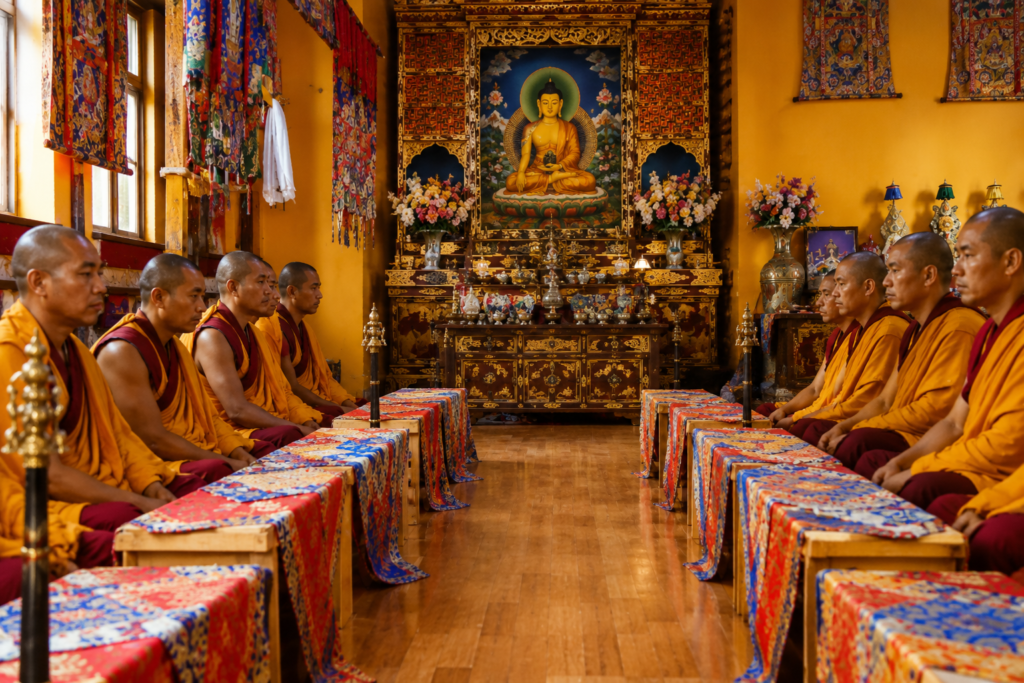
What sets it apart from an ordinary temple is its job: Namgyal does not exist to serve the public. It exists to perform the rituals, prayers, and ceremonies for the Dalai Lama himself. That is what “personal monastery” really means, and it is a role the monastery has held for centuries.
The name carries its purpose too. “Namgyal” means “victorious,” and the monastery, sometimes written Namgyal Dratsang, takes its name from the long-life deity Namgyälma.
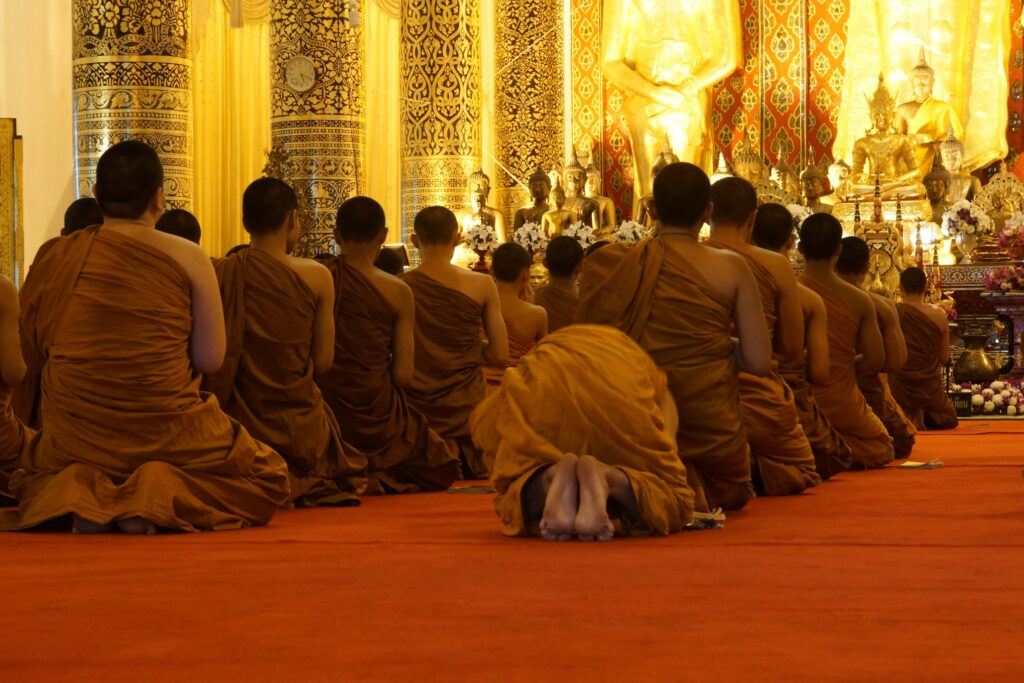
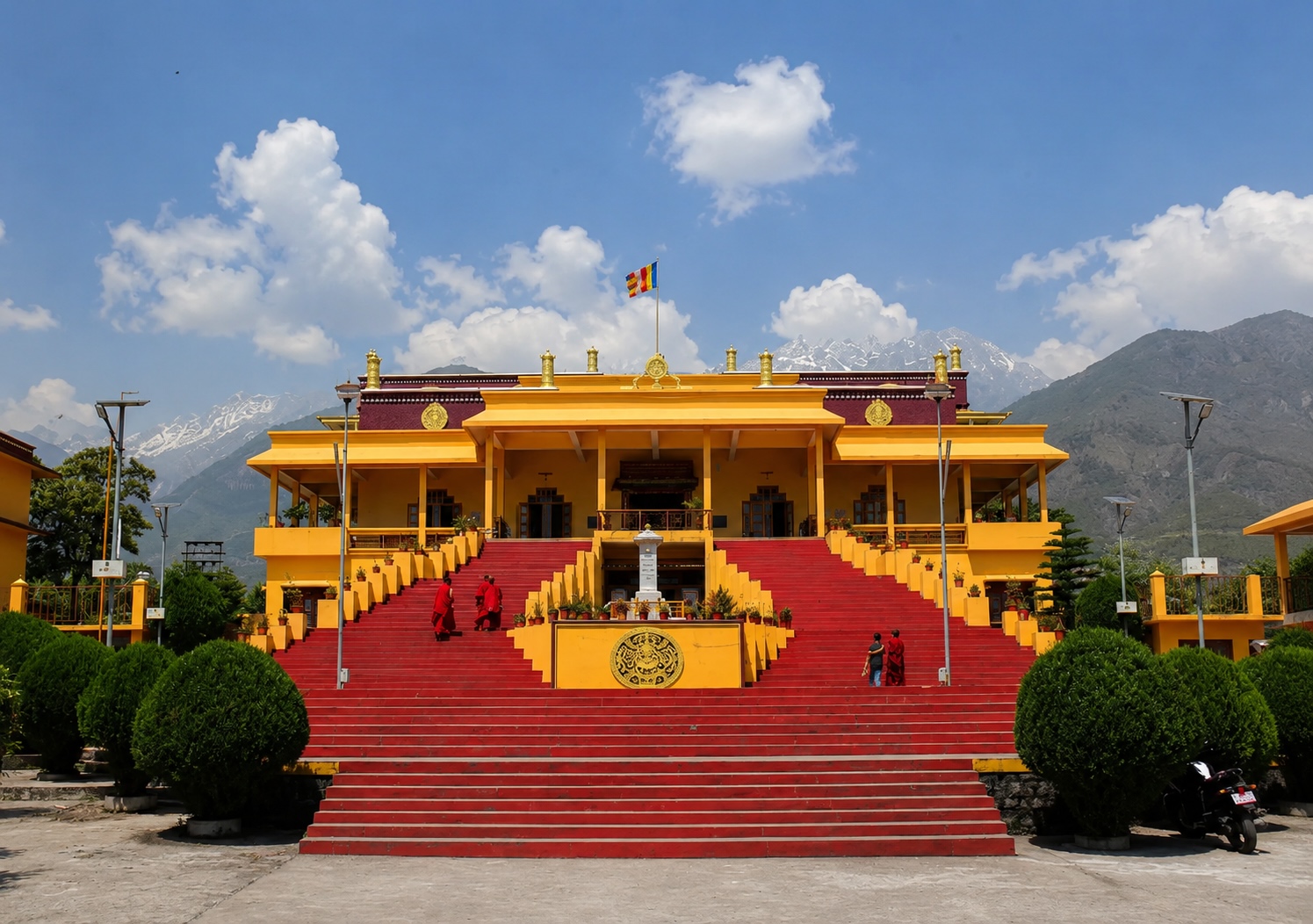
If you are picturing a grand, ancient structure, the first sight can catch you off guard. From the courtyard, Namgyal looks plain, almost modern, with simple concrete walls and a working building rather than a polished monument. But the significance was never in the architecture. It is in what happens inside: the low hum of monks at prayer, the smell of butter lamps, and, on most afternoons, the sharp crack of hands clapping as the monks debate.
Namgyal Monastery vs the Dalai Lama Temple: What’s the Difference?
No, Namgyal Monastery and the Dalai Lama Temple are not the same place. Namgyal Monastery is the monastic institution, the Dalai Lama’s personal monastery, while the “Dalai Lama Temple” is the popular name for the larger Tsuglagkhang complex that surrounds it. They sit side by side in the same compound, so most visitors see both in a single walk and assume they are one place.
Here is the cleanest way to hold the two apart:
- The Tsuglagkhang complex is the place: the main temple, the prayer halls, the Tibet Museum, and the kora (the circular prayer path). This is what people mean when they say “the Dalai Lama Temple.”
- Namgyal Monastery is the institution within it: the college of monks who actually run the rituals and study there.
You will see Namgyal called “the Dalai Lama Temple” almost everywhere online, and you will even find search results and AI answers that flatly call them the exact same thing. They are not.
It is an understandable mix-up because the two share a courtyard, and you never cross a gate or buy a ticket to move between them. But one is a building complex, and the other is a living community of monks.
When guests ask me which one they “really” visited, I tell them they almost certainly saw both: the temple is the part you walk into and photograph, and Namgyal is the part you notice when you hear the monks before you see them.
🔗 For the full layout of the complex, its timings, the kora, and how to attend the Dalai Lama’s teachings, see our Dalai Lama Temple McLeodganj guide.
The History of Namgyal Monastery
Namgyal Monastery was founded in 16th-century Tibet and re-established in McLeod Ganj after the Dalai Lama’s exile in 1959, which makes it one of the oldest continuously active Tibetan monastic institutions in the world.
If you look it up, you will run into two different founding stories, and both are partly right.
According to the monastery’s own records and Wikipedia, it was founded around 1564 as “Phende Lekshe Ling” by the Second Dalai Lama, Gendun Gyatso. It took the name “Namgyal” a few years later, around 1571, under the Third Dalai Lama, Sonam Gyatso, after his monks performed long-life prayers to the deity Namgyälma.
That is why so many guides say “founded in 1575 by the Third Dalai Lama.” They are describing the naming, not the original founding.
For centuries in Tibet, Namgyal was housed in the red section (the Potrang Marpo) at the very top of the Potala Palace in Lhasa, beside the residence of the Dalai Lamas. Its monks carried out the public ceremonies and state rituals of the Tibetan government.
That world ended in 1959. After the Tibetan uprising, the 14th Dalai Lama and around 55 Namgyal monks fled into exile, and the monastery was rebuilt here in Dharamshala, right beside His Holiness’s new residence.
Today it has grown back to roughly 200 monks, and it has opened branches well beyond India, in Ithaca, New York (1992) and Bodhgaya (1998), with a presence in Kushinagar too.
There is something quietly remarkable in that journey: a 450-year-old institution from Lhasa, carried over the Himalayas and rebuilt in our hills. In McLeod Ganj, the exile is not a history lesson you read on a plaque. It is the elders murmuring mantras on the kora every morning, many of whom made that crossing themselves.
Why It’s Called the Dalai Lama’s “Personal Monastery”
Namgyal is the Dalai Lama’s personal monastery because its monks exist to perform the rituals, prayers, and ceremonies for the Dalai Lama and for the welfare of Tibet, a role it has carried out for successive Dalai Lamas since the 16th century.
The phrase “personal monastery” sounds grander than the daily reality, so it helps to be concrete about what it means.
Namgyal is not a parish temple built to receive the public. It is the institution that handles His Holiness’s ceremonial life: the long-life prayers, the great tantric rituals, and the state ceremonies that have surrounded the Dalai Lamas for centuries.
Much of that work centres on five major tantric practices:
- Kalachakra
- Yamantaka
- Chakrasamvara
- Guhyasamaja
- Vajrakilaya
Namgyal is also unusual in being non-sectarian in spirit. Its monks are trained to uphold all four of the main Tibetan Buddhist lineages rather than just one. If you’d like to see those lineages as living, separate communities rather than one monastery’s curriculum, Bir’s Tibetan quarter, about an hour away, gathers Nyingma, Kagyu, and Sakya monasteries in a single settlement, from Chokling monastery to the great Kagyu seat of Palpung Sherabling.
And because the rituals follow His Holiness himself, Namgyal monks often travel with him and assist wherever he teaches.
That is the cleanest way to feel the difference from the temple beside it. The Dalai Lama Temple is where the public comes to worship; Namgyal is the working monastery that serves the Dalai Lama.
You sense it most when His Holiness is in town. In the days around his public teachings, the whole monastery seems to shift gear, busier, more purposeful, with the monks moving with the quiet focus of people with a job to do.
The Monks, Their Training, and the Famous Courtyard Debates
Namgyal’s monks follow a monastic education that runs well over a decade, ending in the degree of Master of Sutra and Tantra, and the dramatic courtyard debates visitors witness are a formal part of that training, not a performance for tourists.
Becoming a Namgyal monk is no small thing. Novices must pass entrance examinations, then commit to a roughly 13-year program of study.
A typical day is divided between:
- Ritual
- Philosophy classes
- Sacred arts
- Meditation
- Around two and a half hours of debate
Because Namgyal monks serve and travel with the Dalai Lama, their curriculum is more streamlined than at some monasteries, focused on the essentials of sutra and tantra, a syllabus the 14th Dalai Lama himself helped reshape.
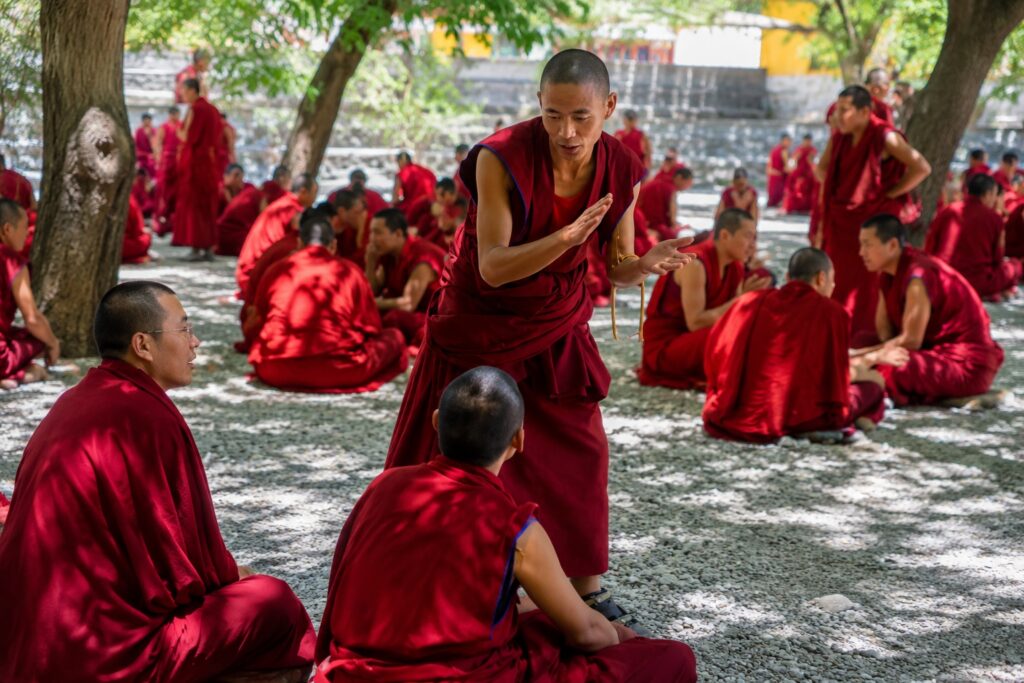
The debates are what most visitors remember.
Monastic debate is a core method of Tibetan Buddhist learning, a way of arriving at understanding through your own reasoning rather than accepting teachings blindly. The goal is never to defeat your opponent. It is to challenge assumptions, expose weak logic, and sharpen your grasp of the texts.
It works in two roles:
- The challenger stands, fires questions, and presses the other monk’s reasoning with sharp gestures and a loud clap.
- The defender sits and must answer logically and consistently, without dodging the question or changing the subject.
If you expected hushed monastery calm, the energy is a surprise: loud claps, animated gestures, rapid-fire questioning, and often laughter and easy smiles.
It can look confrontational from the outside, but it is focused and good-natured, far closer to an intense intellectual sport than an argument.
Every movement carries meaning:
- The clap marks the end of a challenge and forces the defender to respond. In Tibetan Buddhist symbolism, the right hand represents compassion and the left represents wisdom, so the clap itself is the union of wisdom and compassion.
- The foot stamp that often comes with it traditionally symbolises closing the door to ignorance and to lower rebirths, while driving the logical point home.
- The gestures are symbolic too. The outstretched left arm stands for wisdom, and pulling the mala (prayer beads) along the arm represents lifting beings out of suffering.
This is why debate matters so much here. It trains monks to think critically, test what they have memorised, and defend ideas through reasoning, cultivating wisdom and compassion at once.
His Holiness the Dalai Lama has often stressed that Tibetan Buddhism preserves a deep tradition of logic and reasoning, and the courtyard debate is how that tradition stays alive.
Debate is only one half of the training. Namgyal monks are also masters of the sacred arts, the intricate coloured-sand mandalas, ritual music, and the masked ritual dances.
If the masked dances draw you in, the Kagyu monastery of Sherabling near Bir is renowned for its cham, performed around Losar.
These were once performed only in secret, but the present Dalai Lama gave permission for the public to witness them, and Namgyal monks have since built sand mandalas in museums around the world.
If the monastic life here draws you in, the other Tibetan monasteries around McLeod Ganj each carry their own character and traditions.
Visiting Namgyal Monastery: Timings, Entry, and What to Expect
Namgyal Monastery is free to enter and open daily from 6:30 AM to 7:30 PM, with donations welcome. The best time to visit is early morning, when the prayer halls fill with chanting, or mid-afternoon, when you can catch the monks debating in the courtyard.
A relaxed visit takes about 45 minutes to an hour. There is no entry fee, though a small donation is always welcome.
Most people fold it into a half-day around the Tsuglagkhang complex, so if you are mapping out your trip, our Dharamshala itinerary shows how it fits into a 2, 3, 5, or 7-day plan
Because it is an active place of worship, the etiquette is simple:
- Dress modestly with your shoulders and knees covered.
- Remove your shoes before entering the prayer hall.
- Keep your voice low.
- Avoid photography inside the hall (the courtyard is usually fine).
A practical heads-up the guidebooks skip: the lane up to the complex is narrow and gets congested, and there is no parking at the monastery itself. Use the paid government parking at the start of the McLeod Ganj market square and walk up from there. It is only a few minutes on foot and far less stressful than nosing a car through the crowds.
And come early if you can. By mid-morning the courtyard starts filling with tour groups. At seven or eight in the morning, it still belongs to the monks and a handful of quiet early visitors.
🔗 This guide stays focused on the monastery itself. For how to reach McLeod Ganj, where to stay near the complex, and how to attend the Dalai Lama’s public teachings, see our Dalai Lama Temple McLeodganj guide. For routes into town from Delhi, Chandigarh, and beyond, see how to reach Dharamshala, and for the best season overall, our best time to visit Dharamshala guide.
Namgyal Monastery and the Dalai Lama’s Birthday (6 July)
Namgyal Monastery is at its most significant around 6 July, the Dalai Lama’s birthday, when its monks lead the long-life prayers and ceremonies that mark the day.
Birthday week is when the whole of McLeod Ganj turns toward the complex. Tibetans and well-wishers gather for long-life prayers, offerings, and cultural performances, and the monastery is at the heart of it.
One note for 2026: His Holiness turns 91 and may mark the occasion in Ladakh rather than Dharamshala, but the traditional prayers and ceremonies continue at the Tsuglagkhang complex regardless.
If you are planning to be here for it, read our Dalai Lama 91st Birthday in McLeodganj guide for what to expect on the day, and where to stay for the Dalai Lama birthday, since rooms book out weeks ahead.
Why Namgyal Monastery Stays With You
Namgyal is not the kind of place you tick off a list. You could see it in fifteen minutes, but you would miss the point.
Sit on the steps for a while. Let the chanting settle over you, watch a young monk lose then win a point in the afternoon debate, and you start to feel why this small monastery, carried out of Tibet and rebuilt on a Himalayan ridge, is the living heart of what people call “Little Lhasa.”
For the rest of your trip, start with our Dharamshala Travel Guide 2026, explore the other Tibetan Buddhist monasteries in and around McLeod Ganj, and slot it all into a plan with our Dharamshala itinerary.
And since the best of the monastery is an early morning, make a proper morning of it: a debate, a slow walk, and then breakfast at one of the best cafes in Dharamshala.
Frequently Asked Questions
Is Namgyal Monastery the same as the Dalai Lama Temple?
No. Namgyal Monastery is the Dalai Lama’s personal monastery; the “Dalai Lama Temple” is the popular name for the wider Tsuglagkhang complex around it. They sit side by side, so visitors see both in one walk and assume they are one place, but one is a community of monks and the other the temple complex.
Where is Namgyal Monastery, and which state is it in?
Namgyal Monastery is in McLeod Ganj, upper Dharamshala, in the Indian state of Himachal Pradesh. It sits inside the Tsuglagkhang complex at the southern end of McLeod Ganj, a short walk downhill from the main square. For how to get there, see our how to reach Dharamshala guide.
Who founded Namgyal Monastery and how old is it?
Namgyal Monastery was founded around 1564 in Tibet as Phende Lekshe Ling by the Second Dalai Lama, Gendun Gyatso, and renamed “Namgyal” about 1571 under the Third Dalai Lama, Sonam Gyatso. After the Tibetan exile of 1959, it was re-established in Dharamshala, which makes it more than 450 years old.
What are Namgyal Monastery’s timings?
Namgyal Monastery is open daily from 6:30 AM to 7:30 PM, and entry is free (donations welcome). The best times are early morning for the prayer chanting or mid-afternoon for the monk debates, and a visit takes about an hour. For the best season to visit overall, see our best time to visit Dharamshala guide.
Can you watch the monks debate?
Yes. The monks of Namgyal Monastery debate in the courtyard, usually in the afternoon, and visitors are welcome to watch quietly. Expect an energetic scene of loud claps, sharp gestures, and rapid questioning. It is a formal part of their philosophical training, not a performance, so stay respectful and avoid disturbing them.
Is there an entry fee for Namgyal Monastery?
No. Entry to Namgyal Monastery is completely free for all visitors, though donations are welcome and help support the monastery. There is no ticket for the prayer halls or the courtyard. The only thing you may pay for nearby is the government parking at the start of the McLeod Ganj market square.
Can you study or stay at Namgyal Monastery?
Namgyal Monastery is a working monastic college, not a guesthouse, so casual visitors cannot stay overnight there.
Serious students can explore courses through Namgyal’s own institutes, including its branch in Ithaca, New York.
For places to stay near the monastery in McLeod Ganj, see our hotel recommendations.
Is Namgyal Monastery Worth Visiting?
Yes, if you come for the atmosphere rather than grand architecture. The building looks plain, but the value lies in what happens inside: monks chanting at dawn and energetic debates most afternoons. Give it about an hour, ideally before the mid-morning crowds. Come expecting an ornate monument, and you may leave underwhelmed.
What Is There to See at Namgyal Monastery?
The main prayer hall, where monks chant, often at dawn, and the open courtyard where they debate most afternoons. It sits inside the wider Tsuglagkhang complex, so one visit also covers the Dalai Lama Temple, the Tibet Museum, and the kora prayer path. The architecture is plain; the real sight is the monastic life around you.
How Long Do You Need at Namgyal Monastery?
Plan for about 45 minutes to an hour. That is enough to sit in on the chanting or an afternoon debate, walk the courtyard, and take in the atmosphere. Most visitors fold it into a half-day around the wider Tsuglagkhang complex.
Can You Take Photographs at Namgyal Monastery?
Photography is usually fine in the courtyard but not inside the prayer hall, since it is an active place of worship. Dress modestly with shoulders and knees covered, remove your shoes before entering the hall, and keep your voice low.
How Do You Reach Namgyal Monastery?
Namgyal Monastery is inside the Tsuglagkhang complex at the southern end of McLeod Ganj, a few minutes’ walk downhill from the main square. There is no parking at the monastery itself, so use the paid government parking at the start of the McLeod Ganj market square and walk up. For routes into McLeod Ganj from Delhi, Chandigarh, and beyond, see our how to reach Dharamshala guide.