The first time a Kangra painting really stopped me, I was leaning in close enough to fog the glass over a small Radha and Krishna miniature in the Kangra Art Museum. You don’t realise from photos how tiny and detailed the work is. A whole grove of trees, a bend in the river, the fold of a dupatta, all worked into a piece of paper smaller than this page.
I live in Dharamshala, in the wider Kangra Valley, and those originals sit quietly in a museum in Kotwali Bazaar that most visitors walk straight past on their way up to McLeod Ganj. Here is the honest part: reproductions of Kangra paintings are everywhere now, but the real traditional art has become genuinely rare. So think of this as a local’s guide to what it is, its story and themes, how it is actually made, whether it is still alive, and where to see and buy the real thing.
Table of Contents
What is Kangra painting?
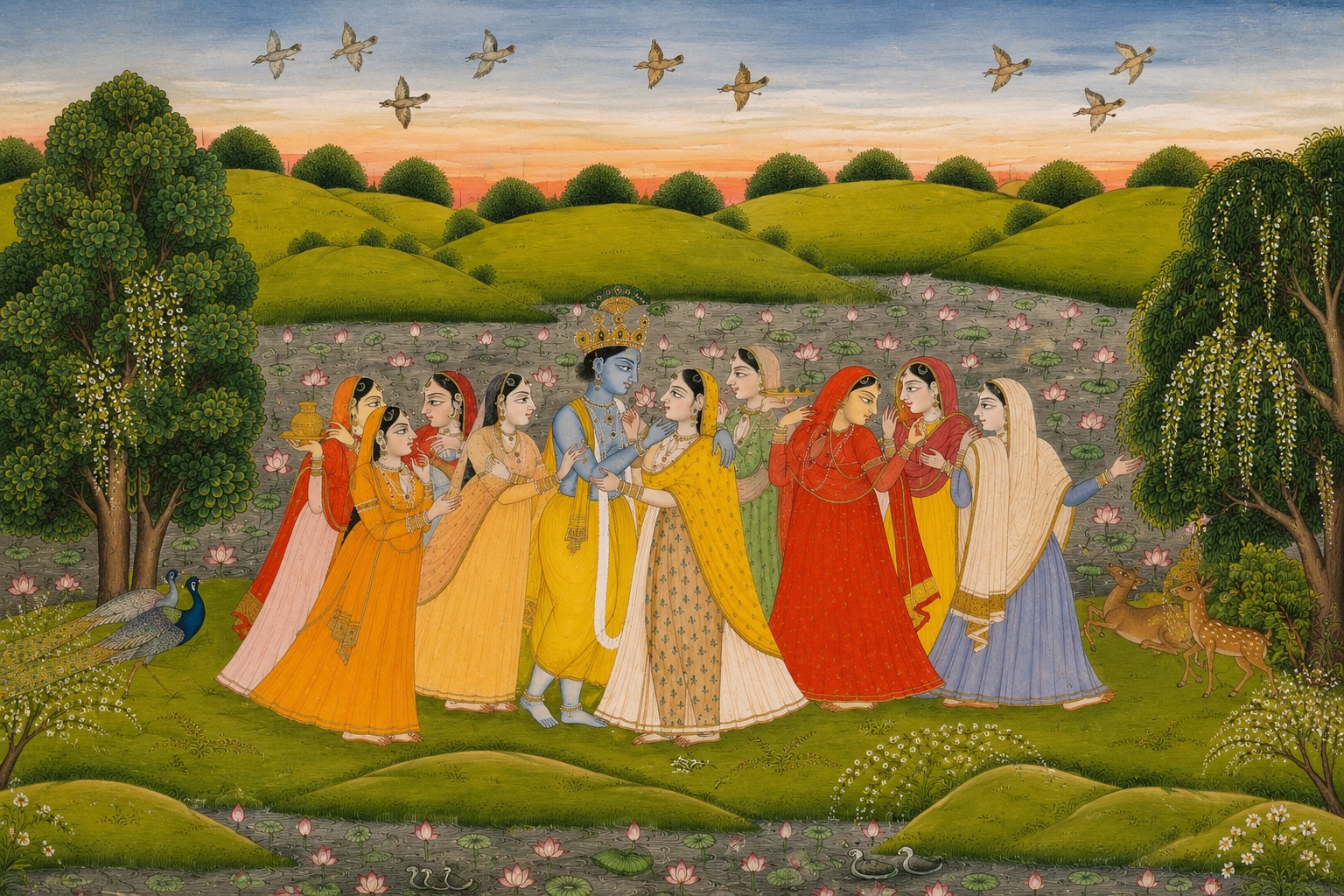
Kangra painting is a style of Indian miniature art from the Kangra region of Himachal Pradesh, part of the wider Pahari (hill) painting tradition. It flourished in the mid-18th century under Raja Sansar Chand and is known for its delicate line, soft natural colours, and tender themes of love and devotion, above all Radha and Krishna.
You will also see it called Kangra Kalam. In 2012 it was given a Geographical Indication (GI) tag, which formally ties the name to this particular region and the way the work is traditionally made.
What surprised me, standing in front of the real thing, is that these paintings work at two speeds. From across the room a piece of Kangra art can look almost plain: a calm figure or two set in a green landscape. Then you step closer and the detail is genuinely insane. Individual leaves, single strands of hair, the pattern printed on a hem. It is art that rewards you for slowing down, which is probably why so many people walk past it and miss the point entirely.
The history and origins of Kangra painting
Kangra painting did not appear out of nowhere. It is one branch of the larger Pahari painting tradition, the miniature art that grew across the small hill kingdoms of the western Himalayas between roughly the 17th and 19th centuries. Basohli, Guler, Chamba, Kangra: each hill state added its own hand.
From Pahari to the Guler-Kangra school
The Kangra style itself came out of Guler, a small state not far from here. The usual account is that painters trained in the Mughal manner drifted up into the hills as Mughal patronage weakened and found shelter in Guler’s court. One family in particular set the tone: Pandit Seu and his two sons, Manaku and Nainsukh. Their softer, more lyrical way of working slowly became the language we now call Kangra.
The golden age under Raja Sansar Chand
If you want a short answer to who made Kangra painting what it is, it is Raja Sansar Chand. Under his patronage in the late 18th and early 19th centuries, Kangra became the busiest and most refined centre of Pahari painting, so much so that the two names are often used almost interchangeably. His court commissioned work in such volume, and of such quality, that the whole style reached its peak here.
The masters, and the family behind them
What I find lovely about Kangra painting is that, unlike a lot of old Indian art, we actually know some of the painters by name. Nainsukh of Guler is the most celebrated, remembered for quiet, almost intimate studies of his patron. His brother Manaku took on the bigger mythological cycles. The family carried on through sons like Fattu and Khushala, and at Sansar Chand’s court, Purkhu of Kangra produced some of the finest Krishna and Baramasa series. It was less a single genius and more a family workshop passing a grammar down the generations.
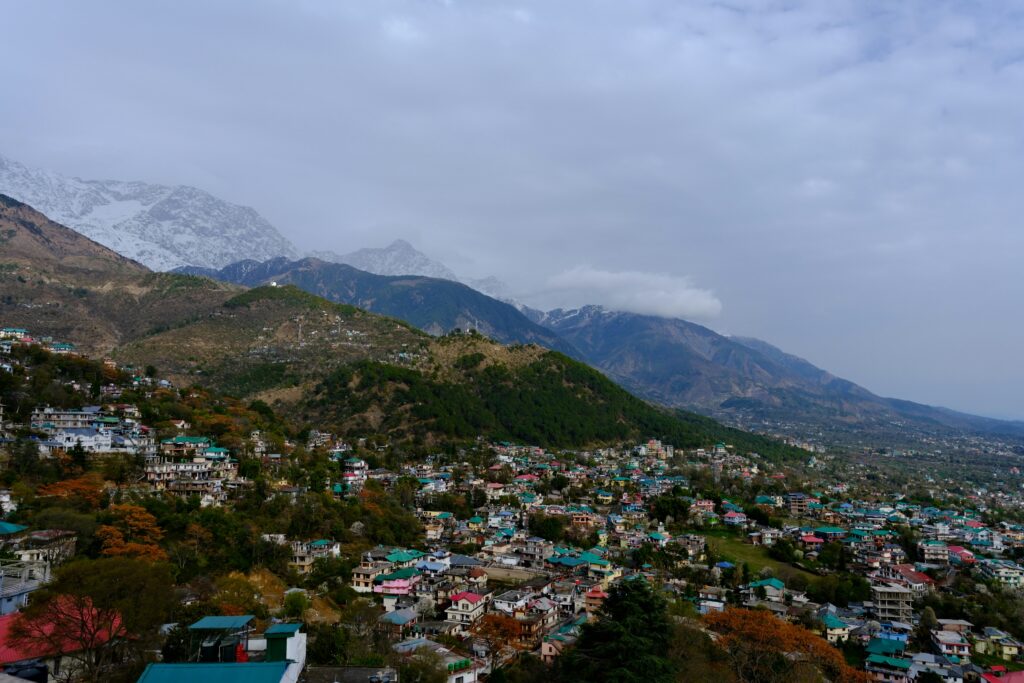
Something you start to notice once you know the valley: the sacred groves of Vrindavan in these paintings, where Krishna’s stories unfold, look suspiciously like the Kangra Valley in spring. The painters simply painted the world outside their window and let it stand in for a holy geography. Once you have seen the valley in April, you cannot really unsee it in the miniatures.
If that idea grabs you, there is one way to see that landscape at roughly the speed the painters saw it. The narrow-gauge line from Kangra runs straight through this country, the fields and water channels, the groves, the Dhauladhar standing behind all of it, and it moves slowly enough that you can actually look rather than glance. I took it one clear morning and spent most of it at an open window, which is when I understood why the valley looks different from the railway tracks.
One thing that stayed with me at the museum was that some of the stone and terracotta sculptures there looked far older than any of the paintings, and they are. A quiet reminder that Kangra’s story runs much deeper than these few centuries of miniatures.
What makes Kangra painting unique
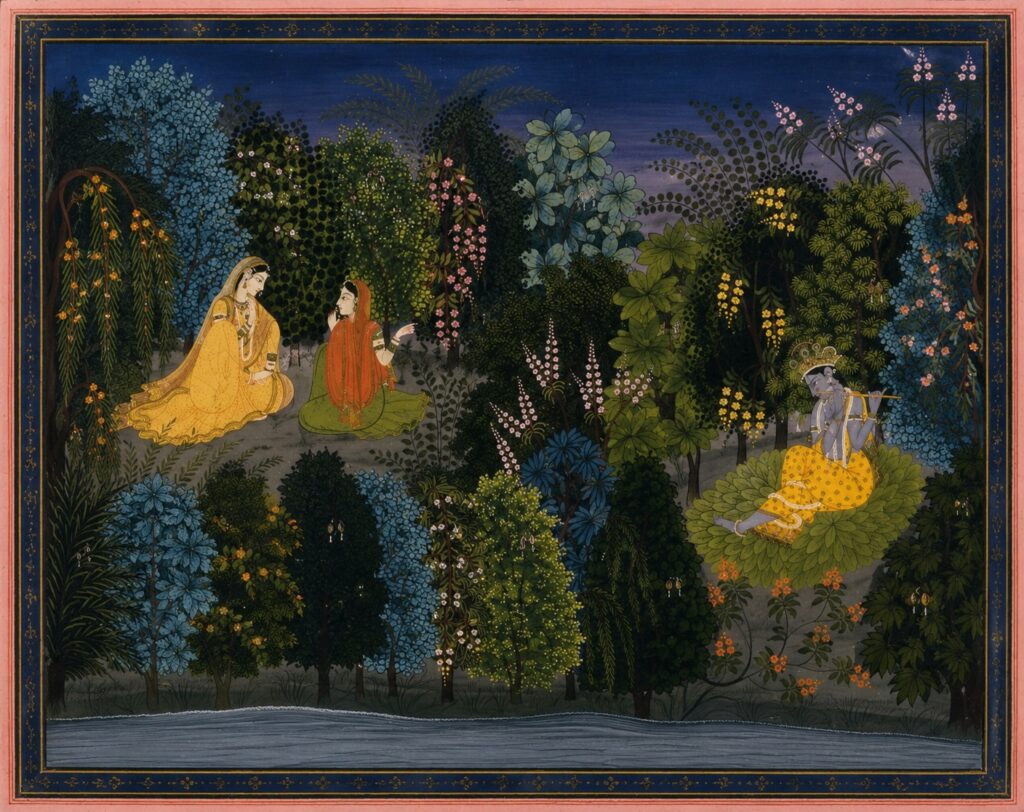
Once you have looked at a few, Kangra paintings become easy to recognise. A handful of things set the Kangra style apart from the other miniature schools:
- The line. Kangra artists were obsessive about line work. The edge of a veil, an eyelash, the curve of a riverbank, all drawn with a control that looks almost like calligraphy.
- Soft, natural colour. The palette is gentle rather than loud. Cool greens and blues, tender pinks and yellows, all made from minerals and plants, which is partly why the originals still glow after two hundred years.
- Emotion over grandeur. These are not stiff royal portraits. The whole point is bhava, the mood of a moment: a glance, the tilt of a head, a cloud gathering at the edge of the frame.
- Landscape that does the talking. The scenery is never just a backdrop. The trees, water and hills carry half the story, often the half the figures only hint at.
The detail is where it really lands. I spent far longer than I expected just studying the clothes and faces in the Radha and Krishna miniatures: the pattern on a sleeve, the way a fabric edge folds, the expression held in a face the size of a fingernail. That patience is the whole art, and it is exactly what separates a real Kangra miniature from the quick copies you will meet later.
Themes and motifs: what Kangra paintings are really about
I hadn’t realised how romantic Kangra paintings are until I stood in front of a wall of them. They are religious, obviously, especially the Radha and Krishna scenes, but they feel far more like paintings about love and longing than conventional religious pictures.
That is really the heart of it. The main subject of Kangra painting is the divine, romantic love of Radha and Krishna, what the old texts call shringara rasa, the mood of love. The stories come from Sanskrit and Braj poetry: the Gita Govinda, the Bhagavata Purana, the Rasikapriya. If you ever want to go deep, M.S. Randhawa’s Kangra Paintings of the Gita Govinda is still the book people reach for.
But the painters did not stop at retelling stories. Two ideas in particular stayed with me. The first is Ragamala, where a musical raga is turned into a painting: you take the mood of a melody and give it a scene, a time of day, a colour. I hadn’t understood that before, and I found it genuinely beautiful.
The second is Barahmasa, the twelve months, where each season becomes an emotional state, usually lovers meeting or waiting apart. It makes the paintings feel less like portraits and more like little stories, where even the rain and the landscape mean something. There is also nayika-bheda, the old classification of heroines by mood and situation, which gave artists endless ways to paint one woman waiting, hoping, quarrelling, forgiving.
That became my favourite thing to look for. You start by looking at Radha and Krishna, and then you notice the ridiculously tiny trees, birds and streams around them, and realise the season and the weather are carrying the emotion just as much as the figures are.
| Themes in Kangra Painting | What it represents |
|---|---|
| Radha and Krishna | Divine, romantic love (shringara rasa) |
| Gita Govinda / Bhagavata Purana | Krishna’s life and love, from classical poetry |
| Ragamala | A musical raga turned into a mood and a scene |
| Barahmasa | The twelve months as changing emotional states |
| Nayika-bheda | Types of heroine, classified by mood and situation |
How a Kangra miniature is actually made
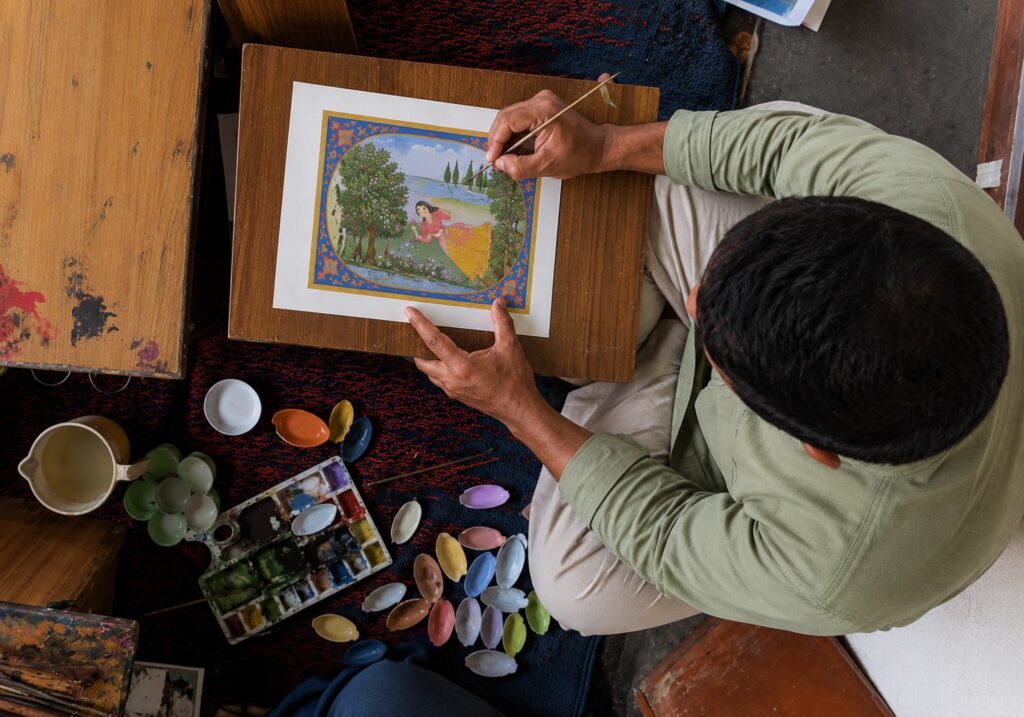
Part of why a real Kangra miniature costs what it does is the sheer slowness of making one.
It starts with the paper. Traditionally the artists used wasli, a handmade paper built up in layers and then burnished smooth, so the surface can take very fine work. The colours are not tubes of paint; they are pigments ground by hand from minerals and plants, which is why the greens and blues in the old paintings still look fresh two centuries on.
The work then moves in stages: a light sketch first, then the flat areas of colour, and only at the very end the minute detailing of faces, fabric and ornament. The finest lines are drawn with an extremely fine brush, traditionally made from squirrel hair, and gold or silver is used sparingly, just to catch the light on a piece of jewellery or a border.
What all of that adds up to is time. The people working through KAPS, the society here that still teaches the traditional method, put it plainly: leaves and bits of vegetation that look like a single patch of green from across the room are actually worked one by one. A proper miniature can take weeks, sometimes months. Once you know that, you look at these paintings completely differently.
It also explains the honest difference you will run into when you go shopping, which I will come to: the gap between a quick tourist “Kangra-style” piece and one made the slow, traditional way.
Is Kangra painting still practised today?
Yes, but with an honest catch, and this is the part most write-ups skip.
Kangra painting is still practised today, but it has not survived in the way you might assume. Reproductions are everywhere, so the images themselves have not disappeared at all. What has become rare is the number of people who still know the full traditional process properly, from preparing the paper to grinding the pigments to the years of practice the fine work demands.
That gap is exactly what KAPS, the Kangra Arts Promotion Society, exists to close. Through its Chitera Art School, it trains younger artists in the traditional technique, not just how to copy a Radha and Krishna composition, but how the paintings were genuinely made. The way they describe it, they are trying to make sure somebody still knows how to do this properly thirty or fifty years from now.
Worth clearing up a common confusion: KAPS is not the museum. It is a separate society, although the Chitera school has operated from facilities at the Kangra Art Museum. The way I think of it, the museum keeps the old paintings safe, and KAPS keeps the art itself alive. One looks after the past; the other makes sure it still has a future.
What I found most moving is that they are not treating Kangra painting as something already dead that belongs behind glass. Watch the artists at work and the whole thing makes sense: why it takes so long, and why the real ones are worth protecting.
The artists at Chitera aren’t always on site, so if you’re hoping to actually watch someone paint, message me before you go. I can usually find out whether anyone will be working that day, or point you to the right person to ask.
Message meWhere to see Kangra paintings
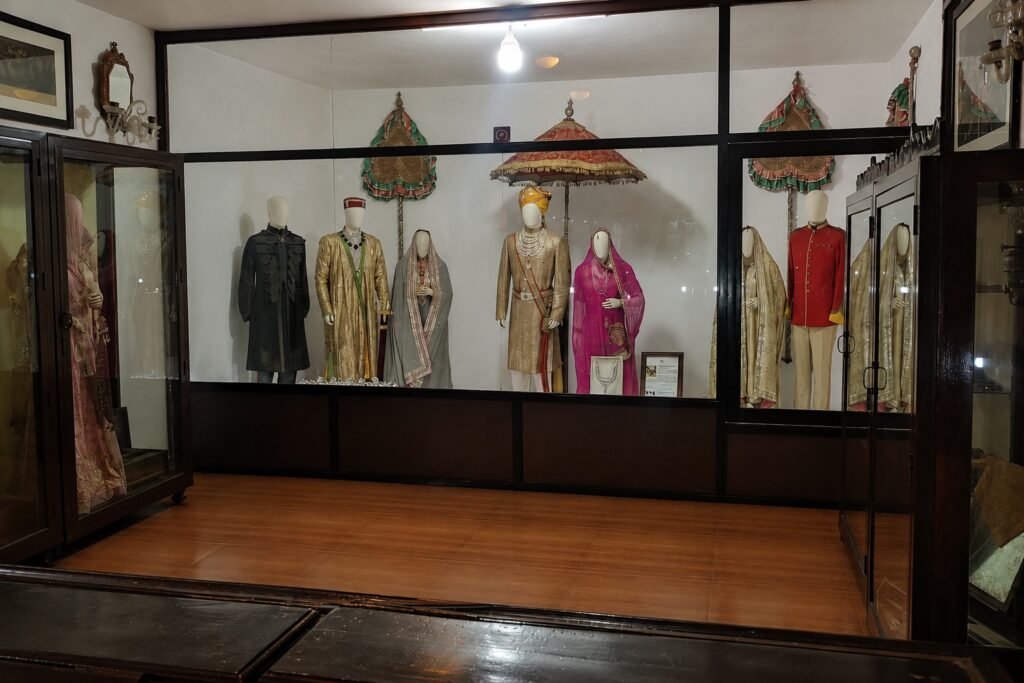
If you actually want to see Kangra paintings rather than only read about them, the easiest place is the Kangra Art Museum, down in Kotwali Bazaar in Lower Dharamshala. This trips up a lot of visitors: it is not up in McLeod Ganj where most tourists spend their time, but in the older market part of town below. (If you are still planning the trip itself, our Dharamshala travel guide covers where to base yourself.)
| Museum | Where | What you’ll see | Timings | Entry | Best for |
|---|---|---|---|---|---|
| Kangra Art Museum | Kotwali Bazaar, Lower Dharamshala | Kangra miniatures, plus sculpture, wood carving, coins, costumes | 10am to 5pm, closed Mondays & public holidays | Rs 50 (Indian nationals) | Seeing Kangra miniatures easily on a Dharamshala trip |
| Maharaja Sansar Chand Museum | Beside Kangra Fort, Kangra town | Royal artefacts and Kangra miniatures, run by the former royal family | 9am to 5pm | Rs 35 (pay by QR/online) | Combining with a Kangra Fort visit |
| National Museum | New Delhi | The largest, finest collection of Kangra and Pahari miniatures | Delhi museum hours | Delhi rates | Serious art lovers wanting the best originals |
The museum itself was nicer than I expected, and not at all overwhelming. You do not need hours here; thirty minutes or so is enough to see it properly. It is also usually very quiet, which is part of the charm, and you often have the miniatures more or less to yourself.
The Kangra miniatures were the highlight for me, especially the Radha and Krishna work. But what surprised me was how much else there is. It feels less like an art gallery and more like a collection of Kangra’s history: pottery, old jewellery, everyday utensils and musical instruments, intricately carved wooden panels with flowers and birds and one with Ganesha, old stone and terracotta sculpture, and a set of small bronze deity figures, some of them made for worship rather than display. I walked in for the paintings and left having spent just as long on everything else.
A few practical things worth knowing. Entry is Rs 50 for Indian visitors, a little more for foreign nationals, and there is a small extra charge (around Rs 100) if you want to photograph the galleries. Carry some cash to be safe. The museum is closed on Mondays and public holidays, which catches people out, so aim for a weekday morning. And since you are already in Kotwali Bazaar, it pairs nicely with lunch or a coffee in the market afterwards.
Practical details last checked: July 2026. Museum timings and fees do change, so it is worth a quick confirm before you go.
Honestly, if you are the kind of traveller who likes the quieter, less obvious corners of a place, the museum is exactly the sort of stop I put in our guide to the offbeat places most travellers miss.
Where to buy an authentic Kangra painting
This is the part I most wish someone had explained to me, because it is where the most money gets wasted. Remember the gap I mentioned earlier, between a quick tourist “Kangra-style” piece and one made the slow, traditional way? When you actually go to buy, that gap is the whole game.
How much does a real Kangra painting cost?
There is no single price, because it depends on size, the artist, and how much detail the work carries. When I looked, smaller genuine pieces started at around Rs 6,000 to 7,000, and they climb steeply from there for larger, more intricate work by established artists. Here is the useful rule: a real miniature takes weeks to make, so it cannot be cheap. If someone offers you a “hand-painted Kangra miniature” for a few hundred rupees, that has answered the question for you. It is a print or a rushed copy.
How to tell an original from a reproduction
You do not need to be an expert. You need to ask two questions: who painted this, and how was it made? A genuine seller can name the artist and tell you it was done on hand-prepared paper with natural pigments. A few things I look for:
- A name. Traditional pieces come from a specific, still-practising artist, not an anonymous “workshop.”
- The surface. Natural mineral colours have a soft, slightly uneven glow. Printed reproductions look flat and perfectly even.
- The detail up close. In a real miniature the tiny leaves and patterns are painted one by one, not part of a printed image.
- The price and the timeline. If it is cheap and available in bulk, it is not a traditional miniature.
When in doubt, ask the seller to tell you about the artist. Genuine sellers love that question. The ones selling reproductions tend to get vague.
Where I would actually look
If I were buying, this is the order I would go in:
- KAPS / Chitera first. They work directly with the artists still practising the traditional style, they sell that work, and they keep a current list of what is available. You can often watch the artists too, though message ahead, as they are not always on site.
- An artist’s own exhibition. My favourite way, honestly. I once bought at a show near Mall Road in Shimla where the painters were there with their work. You know exactly who made your piece and can talk to them about it.
- Naam Art Gallery in Sidhbari. I have been, and they do sell art, but if you specifically want a traditional Kangra miniature, ask about the artist and the technique before you buy.
- Kangra Painting Revival Forum in Dughiari also works on preserving and teaching the art. I have not bought from them myself, so I would call ahead if you are going specifically to buy.
The one thing I would not do is grab a random “Kangra painting” from a souvenir shop in McLeod Ganj. There is nothing wrong with a nice print as a keepsake, as long as you know that is what it is and are not paying original prices for it.
Make it a trip: a Dharamshala culture day
Exploring Kangra beyond the usual McLeod Ganj circuit? The Kangra Art Museum slots very naturally into a slower, more local kind of day.
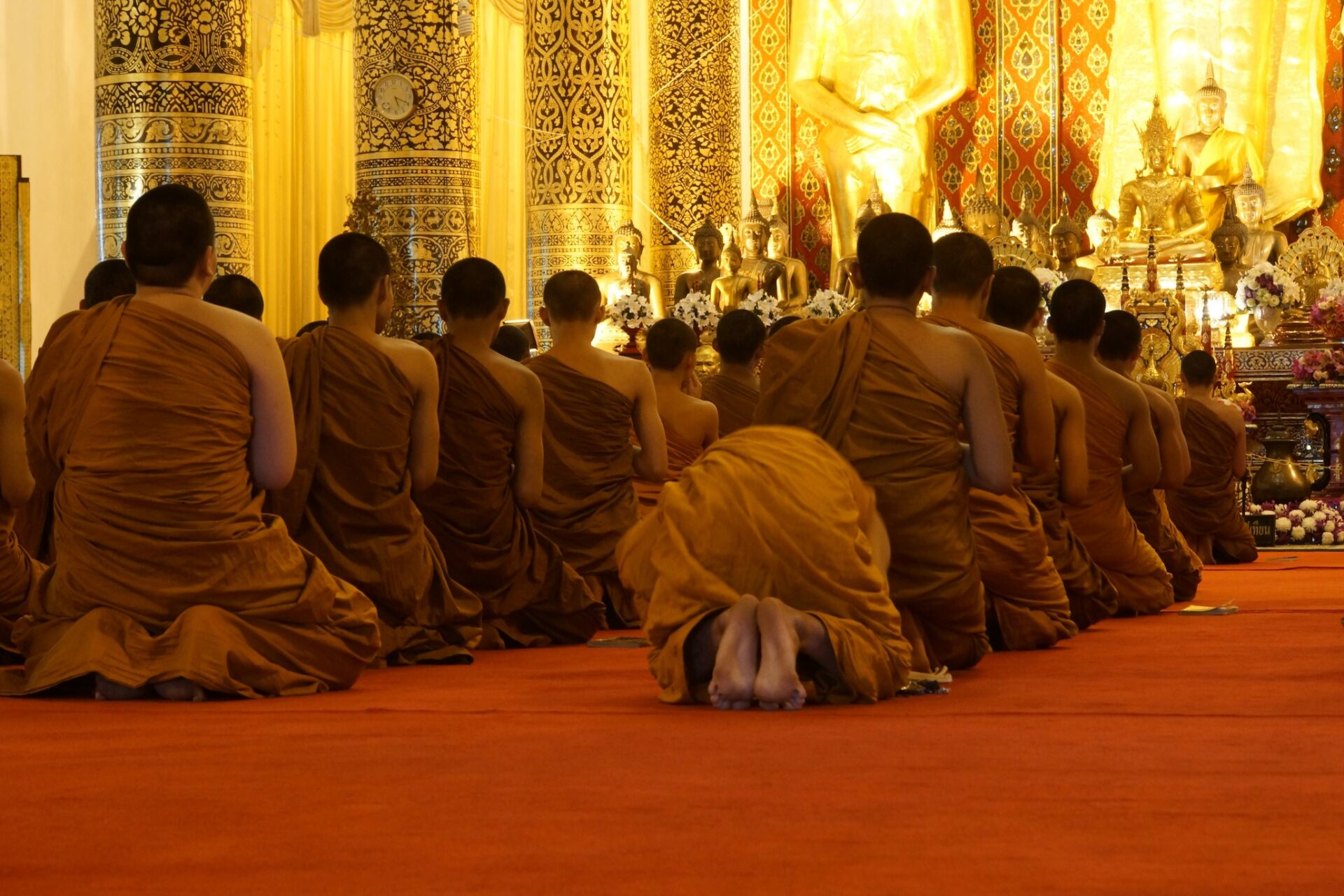
Here is roughly how I would put it together. Start at the museum in Kotwali Bazaar in the morning, while it is quiet, then have lunch down in the market. If you want more of Dharamshala’s cultural side afterwards, the Tibetan monasteries are an easy add, and they make a genuinely interesting contrast: Tibetan Buddhist art on one side, the Hindu, courtly world of the Kangra miniatures on the other. For where to eat, our guide to the famous food in Dharamshala will point you to the good local places rather than the tourist ones.
If you have a full day and a car, push out to Kangra town itself. The Kangra Fort and the Maharaja Sansar Chand Museum beside it turn this into a proper Kangra history day, well away from the crowds, and it is one of the best ways to see the wider valley the miniatures were actually painted in.
Honestly, this is exactly the kind of unhurried, local trip we had in mind with Manoratham Villa. If you are basing yourself here for a few slow days rather than rushing up and down to McLeod, our guide to the best homestays for long stays is a sensible place to start.
Quick planning notes:
- Go on a weekday morning; the museum is closed on Mondays and public holidays.
- Budget about 30 minutes for the museum itself.
- Carry some cash for tickets.
- Message KAPS ahead if you want to watch the artists at work.
A last word
Kangra painting is easy to walk past and easy to underrate, which is a shame, because an hour with the real thing is one of the quietest, most rewarding things you can do in Dharamshala. It is worth seeing properly, and worth buying properly if a piece genuinely moves you. If it does, buy from the people keeping the tradition alive rather than off a souvenir shelf.
If you are weaving this into a bigger trip, it sits inside everything else the region has to offer, which we cover in our full Kangra Valley guide.
Still unsure about anything? Ask me. Every trip is different, and the best advice often depends on the season, the day, or who you are travelling with.
Frequently Asked Questions
What is Kangra painting famous for?
Kangra painting is famous for its delicate line, soft natural colours, and tender, romantic themes, above all the love of Radha and Krishna. It is considered the most lyrical of the Pahari miniature styles, and it carries a Geographical Indication (GI) tag.
Who started Kangra painting?
There is no single founder. The style grew out of Guler, shaped by the family of Pandit Seu and his sons Manaku and Nainsukh, and reached its peak under the patronage of Raja Sansar Chand in the late 18th century.
What is the difference between Kangra and Pahari painting?
Pahari painting is the umbrella term for all the miniature art of the western Himalayan hill states, including Basohli, Guler and Chamba. Kangra is one school within that tradition, the later and most refined one. So every Kangra painting is Pahari, but not every Pahari painting is Kangra.
What colours are used in Kangra painting?
Traditional Kangra paintings use natural pigments ground by hand from minerals and plants: soft, cool greens and blues, tender pinks and yellows, with a little gold or silver for highlights. Those natural colours are why old pieces still look fresh after two centuries.
Is Kangra painting still practised today?
Yes, though the traditional process is now rare. Reproductions are everywhere, but few artists still know the full method. Groups like KAPS and its Chitera Art School in Dharamshala are working to keep the real technique alive.