Most people who come to Bir never actually walk into Chokling Monastery, and that has always struck me as odd, because the whole town grew up around it. Visitors land at the paragliding site, grab a coffee, and leave, never realising that the maroon-and-gold gompa a five-minute walk away is the reason a Tibetan Bir exists at all. I live an hour away in Dharamshala, and Bir is the day trip I push hardest on the travelers who stay with me, with Chokling at the top of the list every time.
It is the spiritual heart of the Bir Tibetan Colony, raised by the lama who founded the settlement itself, home to a towering golden Padmasambhava, and, for one improbable season in the late 1990s, the set of a film that travelled from this courtyard to cinemas around the world. What follows is Chokling the way I’ve come to know it, on foot, early, when the first chants carry across the lanes.
Table of Contents
Chokling Monastery Bir at a Glance: Essential Visitor Information
| Chokling Monastery, Quick Facts | |
|---|---|
| Official name | Pema Ewam Chokgyur Gyurme Ling |
| Founded | 1966 |
| Founder | The 3rd Neten Chokling Rinpoche |
| Present head | The 4th Neten Chokling Rinpoche |
| Lineage | Nyingma (Chokling Tersar) |
| Location | Chaugan, Bir, Kangra district, Himachal Pradesh 176077 |
| Timings | 9 AM to 6 PM |
| Entry | Free |
| Distances | About 1 km from the Bir landing site, 37 km from Dharamshala, 65 to 70 km from Gaggal (Kangra) Airport |
| Known for | A giant golden Padmasambhava statue, the film The Cup, and its drubchen ritual dances |
What is Chokling Monastery?
Chokling Monastery, officially Pema Ewam Chokgyur Gyurme Ling, is a Nyingma Tibetan Buddhist monastery in the Bir Tibetan Colony of Himachal Pradesh, founded in 1966 and known for its towering golden Padmasambhava statue and its drubchen ritual dances. Often searched as “Chokling Monastery Bir,” it is the spiritual heart of the settlement, and not to be confused with McLeod Ganj’s much smaller Dip-Tse-Chok-Ling an hour to the west.
Locals just call it Chokling, or simply “the gompa.” If you have wandered the lanes of the colony at all, you have almost certainly heard its chanting before you ever found its gate.
The History of Chokling Monastery: The Gompa That Built a Town
Chokling Monastery was founded in 1966 by the 3rd Neten Chokling Rinpoche, a Tibetan lama who, after fleeing the Chinese occupation of Tibet, bought around 200 acres in the Kangra valley and settled some 300 refugee families on it. That land became the Bir Tibetan Colony.
In other words, the monastery did not move into Bir; Bir grew up around the monastery, which is why I think of Chokling less as a sight to tick off and more as the founding stone of the whole settlement.
The Rinpoche was no ordinary lama. He was recognised as an emanation of Chokgyur Lingpa, one of the great tertöns, or “treasure revealers,” of Tibetan Buddhism, and the monastery carries his Chokling Tersar lineage within the Nyingma school.
While the monasteries around McLeod Ganj belong mostly to the Gelug school of the Dalai Lama, whose own seat is Namgyal Monastery, Chokling holds the Nyingma tradition, the oldest of Tibetan Buddhism’s four schools, which is part of what makes Bir feel like a different world an hour down the road.
When the 3rd Neten Chokling passed away in 1973, his eldest son, Orgyen Tobgyal Rinpoche, carried on the work and built much of the complex you see today. The monastery is now under the 4th Neten Chokling Rinpoche who, in a very Bir twist, is also a filmmaker. That film, and how it put this quiet courtyard on screens around the world, is coming up.
What You’ll See & Experience at Chokling Monastery
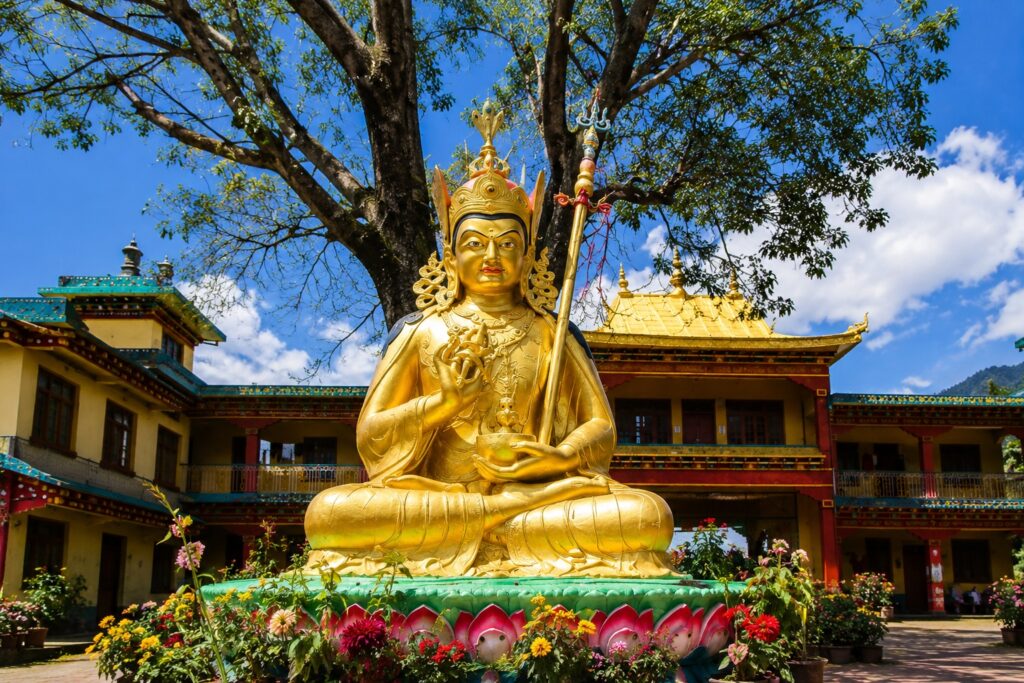
Step through the gate and the first thing that holds you is the giant golden statue of Padmasambhava (Guru Rinpoche), the 8th-century master who carried Buddhism into Tibet. It sits out in the open courtyard, cross-legged on a bright lotus pedestal ringed with flowers, framed by the monastery’s painted buildings and the hills behind, the kind of sight that stops you before you’ve decided to look.
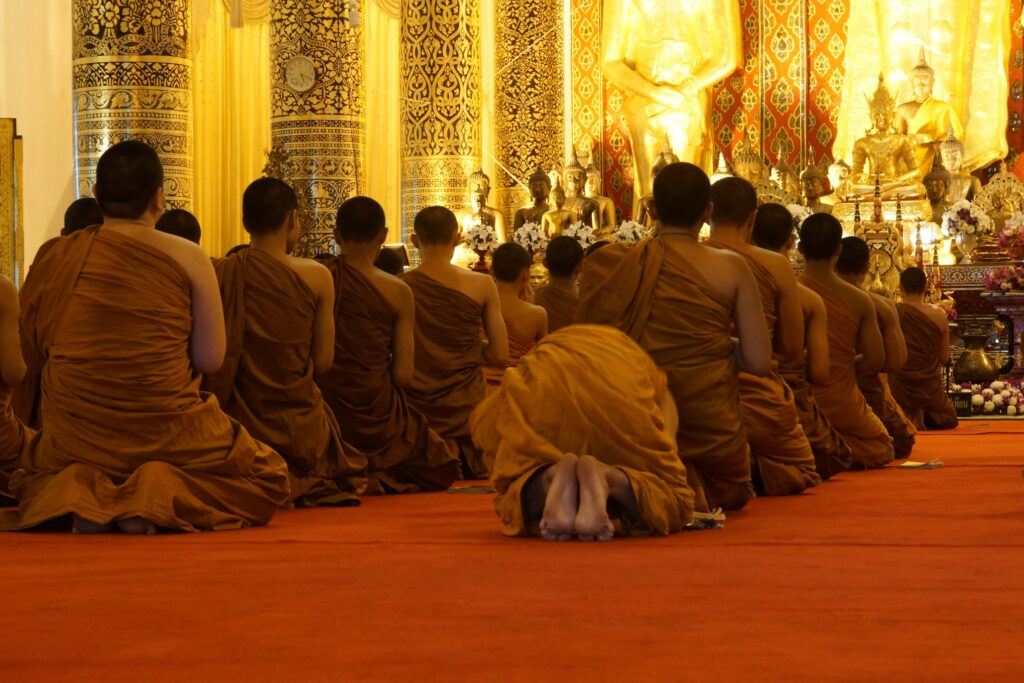
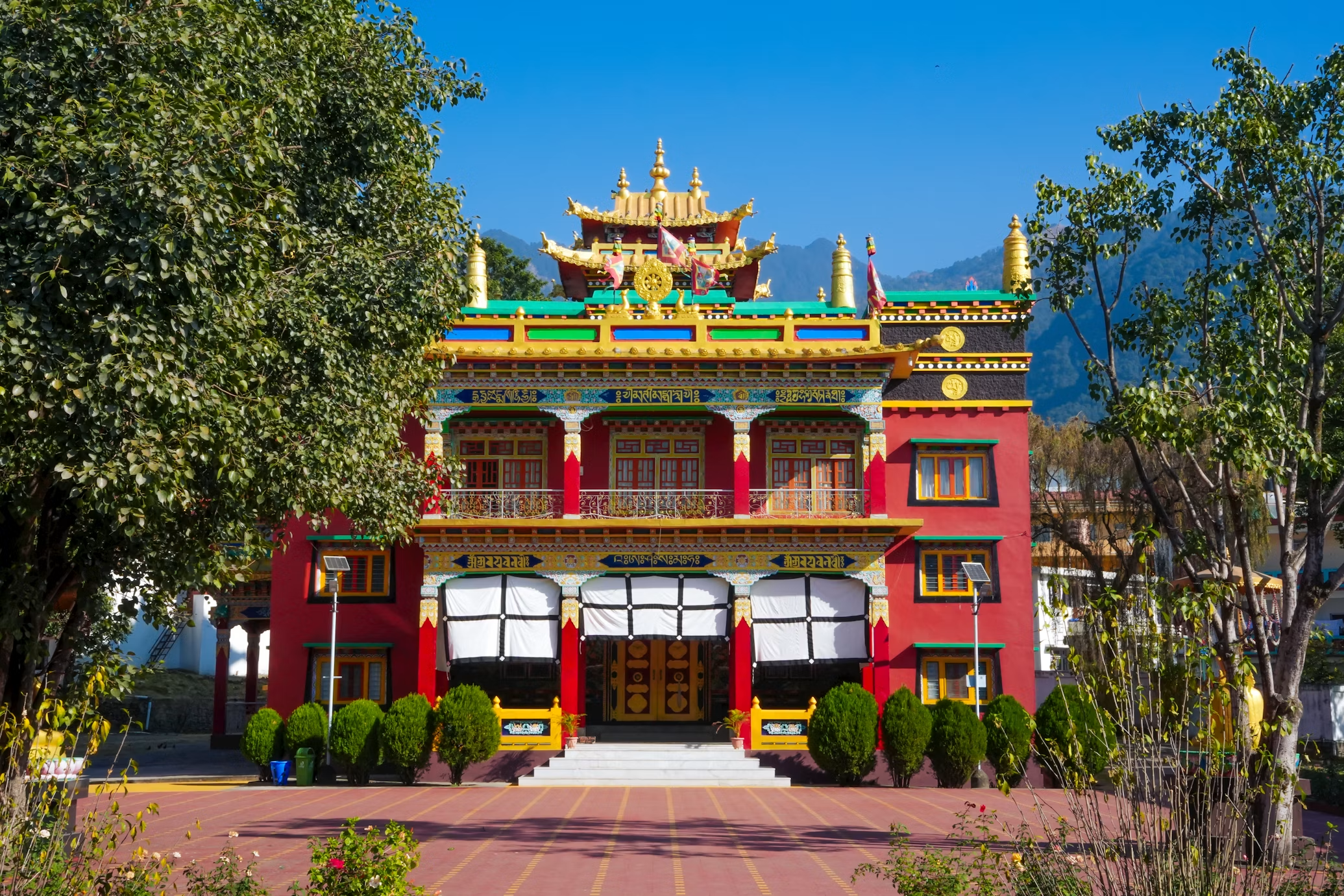
Behind it stands the main prayer hall, its facade lined with eight tall, ornately painted white pillars, where the monks gather to chant twice a day. If you do one thing here, sit quietly at the back during the morning or evening prayers and let the sound do the rest.
Outside, a large stupa anchors the courtyard, and behind the main complex sits a three-year retreat centre, where practitioners withdraw from the world for the traditional three years, three months and three days. You won’t go in, that part is closed and quiet by design, but knowing it’s there changes how the place feels: this isn’t a monument, it’s a working monastery with people deep in practice a few walls away.
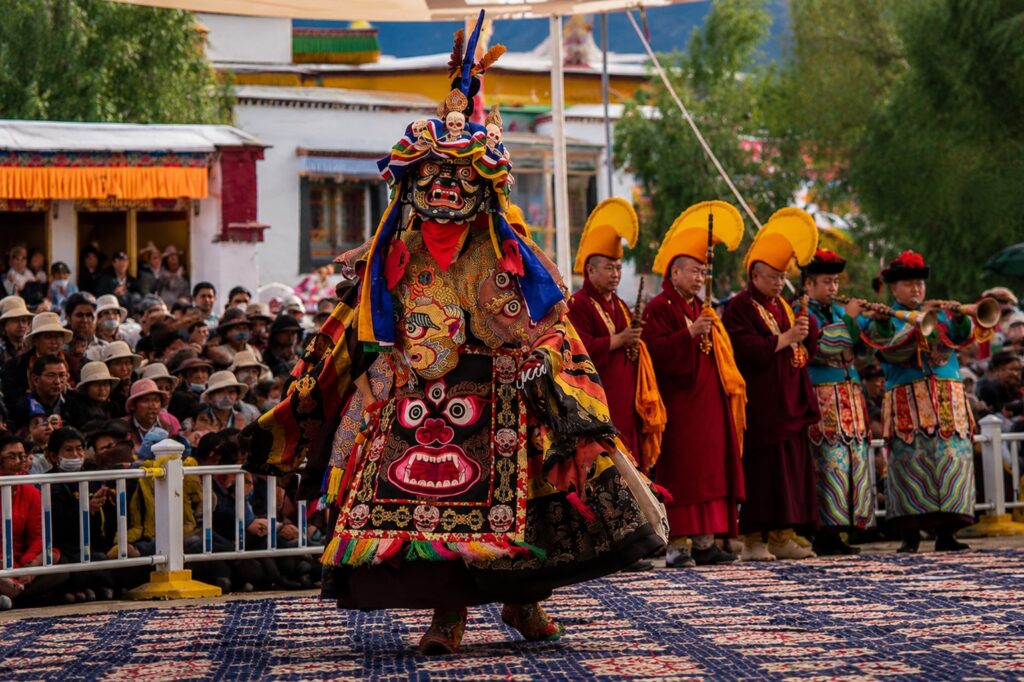
And if your timing is lucky, you’ll catch a drubchen. These are Chokling’s great set-piece ceremonies, eight days of continuous ritual, music, and masked cham dances that draw practitioners from across the Tibetan Buddhist world, and the monastery is genuinely renowned for them. They don’t run to a tourist schedule, but if one is on while you’re in Bir, drop everything and go; there is nothing else like the costumes, the horns, and the spinning dances in that courtyard.
Chokling Monastery and “The Cup”
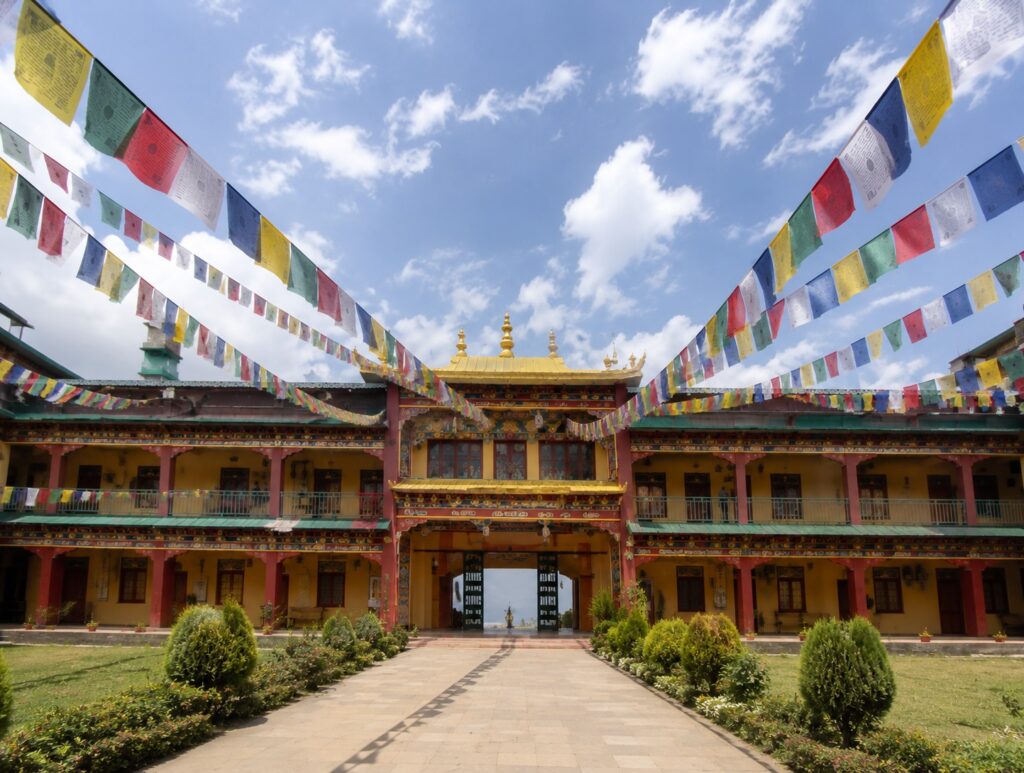
Chokling Monastery has one claim to fame that surprises almost everyone: it is where The Cup was filmed. The 1999 film, written and directed by the Bhutanese lama Khyentse Norbu, was shot almost entirely inside this monastery, and tells the gently comic, true-to-life story of football-mad young monks scheming to get hold of a television so they can watch the 1998 World Cup final. The monastery’s own 4th Neten Chokling Rinpoche, then a young man, acted in it.
What I love about the film is how little it had to pretend. The monks on screen were real monks, the courtyard is the courtyard you’ll be standing in, and the collision it captures, ancient ritual meeting modern obsession, is exactly the Bir I described at the start: paragliders overhead, prayer flags below.
Watch it before you visit and the gate, the halls, and the faces will feel uncannily familiar when you arrive. It is, quietly, one of the most charming films ever made about monastic life, and it happened right here.
Chokling Monastery Timings, Entry Fee & Etiquette
Chokling Monastery is open daily from 9 AM to 6 PM, and entry is free. You can walk the courtyard and visit the main shrine hall without a ticket or a guide; the only real cost is the respect you bring with you.
Because this is a living place of worship and not a tourist set, a few simple courtesies matter:
- Keep silence inside the prayer halls, especially during chanting.
- Dress modestly, with shoulders and knees covered.
- Ask before photographing monks or the interior, and never shoot during a ceremony.
- Walk clockwise around the stupa and the shrines, the way Tibetan Buddhists do.
If you can time your visit, Chokling’s most atmospheric day is Losar, the Tibetan New Year in late February or early March, when the monastery holds its masked drubchen dances. If the timing works, pair it with the masked cham dances at Sherabling monastery up the road, which also peak around Losar
Bir’s Tibetan community also marks the Dalai Lama’s birthday every July 6, though as a Gelug occasion its fullest celebrations are an hour west in McLeod Ganj; if that’s what you’re after, see our guides to the Dalai Lama’s birthday and the Dalai Lama’s temple.
How to Reach Chokling Monastery
Chokling Monastery sits in the heart of the Bir Tibetan Colony, about 1 km from the Bir landing site, 37 km from Dharamshala, and 65 to 70 km from the nearest airport at Gaggal (Kangra). Once you’re in Bir, it’s a short walk or a five-minute drive from almost anywhere in the colony.
Getting to Bir itself is the only real journey. The nearest airport is Gaggal (Kangra), about two hours away; the closest railhead is the small narrow-gauge station at Ahju, a few kilometres from the colony; but most travellers come by road, on an overnight bus from Delhi or Chandigarh, or down from Dharamshala.
If you’re basing in Dharamshala, Chokling makes an easy day trip, and it’s worth folding it into a wider Kangra route, rather than rushing in and out. Our Best Places to visit in Dharamshala guide covers the wider region if you’re planning from scratch.
Where to Stay: Chokling ArtHouse & Nearby
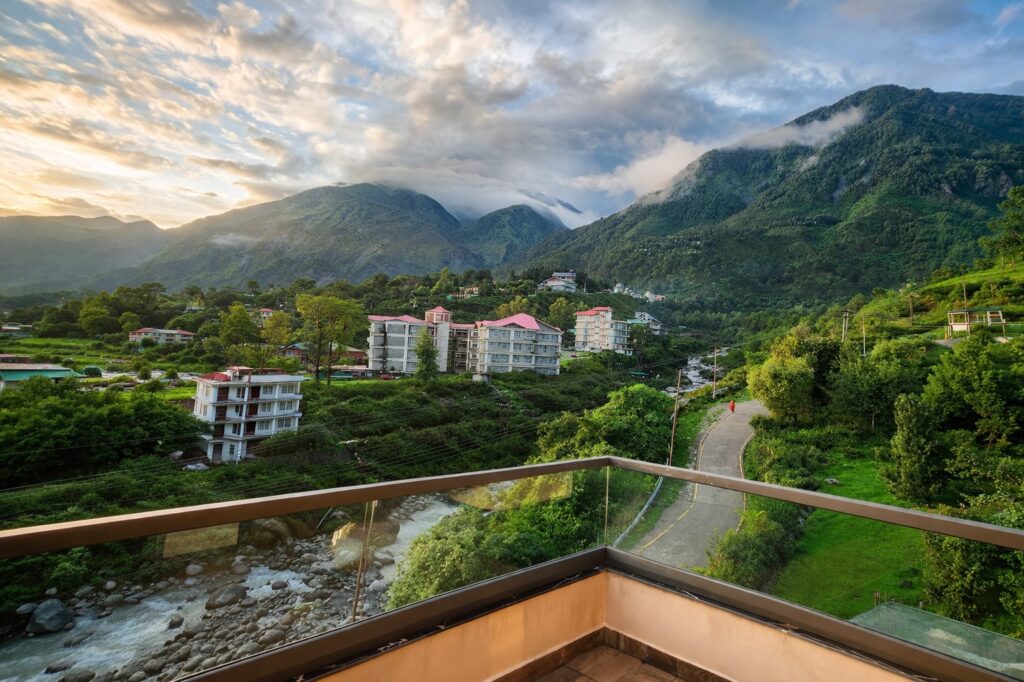
If you want to wake up to the chanting, you can stay right at the monastery. Chokling runs the Chokling ArtHouse, an art-immersive guesthouse on the grounds with dorms and private rooms, a lovely choice if a few slow days among prayer flags is exactly the point. Beyond it, the colony and the lanes down toward the landing site are dotted with small Tibetan-run guesthouses and cafes.
That said, plenty of travellers prefer to base in Dharamshala and treat Bir as a day trip or a one-night escape, which is honestly what I’d suggest for most people. If you’d like a calm, local base about an hour from Bir, you’re welcome to stay with us at Manoratham Villa, my own homestay in Dharamshala, the live-like-a-local version of a Himachal trip rather than a hotel.
Beyond Chokling: Bir’s Other Monasteries
Chokling is the obvious first stop, but it isn’t the only one. Bir holds monasteries from several Tibetan Buddhist lineages within a short walk or drive of each other, which is what makes the colony such a rewarding place to wander slowly. For the full map of them, our guide to the Bir Tibetan Colony lays them all out.
If you only have time for two, pair Chokling with Palpung Sherabling, the grand Kagyu monastery a short drive away in the pine forest at Bhattu, known for its towering golden Maitreya. Between them you’ll have seen both the heart of the colony and its most spectacular monastery, about as good a half-day of monastery-hopping as Himachal offers.
Tibetan Buddhist Terms You’ll Hear at Chokling
A quick glossary for the words that come up most here:
- Tertön, a “treasure revealer,” a master who discovers hidden teachings. Chokgyur Lingpa, the figure behind Chokling, was one of the greatest.
- Drubchen, a “great accomplishment,” an intensive multi-day group ritual. Chokling’s run about eight days, with masked dances.
- Chokling Tersar, the Nyingma practice lineage the monastery preserves, passed down from Chokgyur Lingpa.
For the wider Tibetan vocabulary, gompa, rinpoche, and the rest, see the glossary in our Bir Tibetan Colony guide.
Conclusion: The Monastery That Made the Town
If you remember one thing about Chokling Monastery, let it be this: the town came second. A single exiled lama built this gompa, and a whole Tibetan world, the colony, the cafes, the other monasteries, the prayer flags strung over the lanes, grew up in its shadow.
That is why I send every traveller here first, and why I’d rather you gave it a slow morning than a five-minute photo on the way to the launch site.
Stand in the courtyard when the chanting starts. Look up at the golden Padmasambhava. Remember that the world once watched a film shot on these very steps. Bir stops feeling like a place you fly off, and starts feeling like a place you arrived at.
When you’re ready to see the rest, the wider Bir Tibetan Colony is right outside Chokling’s gate, and our Dharamshala itinerary shows how to fit it into a proper Himachal trip. And when you want more than monasteries, my guide to the things to do in Bir Billing covers the waterfalls, treks, and sunsets that round out a trip, and my honest guide to Bir’s cafe scene sorts the spots worth your time from the ones only selling the sunset.
Chokling Monastery is the first stop, and the one you’ll remember.
Also Worth Reading
If Tibetan culture and Himalayan monasteries are what pull you to this region, keep going:
- Tibetan Buddhist Monasteries In & Around McLeod Ganj, the full monastery trail on the Dharamshala side.
- Dalai Lama Temple, McLeod Ganj, the spiritual centre of the Tibetan world in exile.
- Namgyal Monastery, the Dalai Lama’s own monastery, beside his temple.
- The Dalai Lama’s Birthday in McLeod Ganj, how July 6 is celebrated, and how to be there for it.
Frequently Asked Questions
What is the history of Chokling Monastery?
Chokling Monastery was founded in 1966 by the 3rd Neten Chokling Rinpoche, a Tibetan lama who fled the Chinese occupation, bought around 200 acres in the Kangra valley, and settled some 300 refugee families there, the land that became the Bir Tibetan Colony. It is now led by the 4th Neten Chokling Rinpoche and follows the Nyingma school’s Chokling Tersar lineage.
Which monastery should you visit in Bir?
Start with Chokling Monastery, the spiritual heart of the Bir Tibetan Colony, then add Palpung Sherabling, the larger Kagyu monastery a short drive away. If you have time for only one, make it Chokling; for the most spectacular, make it Sherabling.
Where is Chokling Art House?
Chokling Art House is on the grounds of Chokling Monastery, inside the Bir Tibetan Colony in Chaugan, Bir (Himachal Pradesh 176077), about 1 km from the Bir landing site. It offers dorms and private rooms for travellers who want to stay at the monastery.
What is the name of the monastery in Bir?
The main monastery in Bir is Chokling Monastery, officially Pema Ewam Chokgyur Gyurme Ling. Bir also has several others, including Palpung Sherabling (Kagyu) and the Sakya and Nyingma gompas of the Tibetan colony.
Which is the oldest monastery in Himachal Pradesh?
Chokling, founded in 1966, is relatively new. Himachal’s oldest Tibetan Buddhist monasteries are far older and lie in Lahaul and Spiti, notably Tabo, founded in 996 CE. Chokling’s importance is cultural rather than ancient: it founded the Bir Tibetan Colony around it.
Can you stay at Chokling Monastery?
Yes. The monastery runs the Chokling Art House on its grounds, with dorms and private rooms, so you can stay overnight and wake to the morning chants. Book ahead, dress modestly, and expect simple, peaceful rooms rather than hotel comforts.
Is Chokling Monastery worth visiting?
Yes. It is the most rewarding stop in Bir, with a giant Padmasambhava statue, daily chanting, a real founding story, and a turn as the set of the film The Cup. Give it at least an hour; slow travellers stay far longer.
Was The Cup filmed at Chokling Monastery?
Yes. The 1999 film The Cup, directed by the Bhutanese lama Khyentse Norbu, was shot almost entirely at Chokling Monastery in Bir, using the monastery’s own monks; the 4th Neten Chokling Rinpoche acted in it.
Is Bir’s Chokling the same as McLeod Ganj’s Tse Chokling?
No. Bir’s Chokling Monastery (Pema Ewam Chokgyur Gyurme Ling) is the large, famous Nyingma monastery that founded the Bir Tibetan Colony. McLeod Ganj’s Dip-Tse-Chok-Ling is a much smaller, separate monastery an hour to the west. When people say “Chokling Monastery,” they almost always mean Bir’s.